.svg)
2025 utility rebates reduce upfront costs for smart lighting controls — prescriptive, custom and bonus incentives that cut energy use up to 47–80% and speed payback.

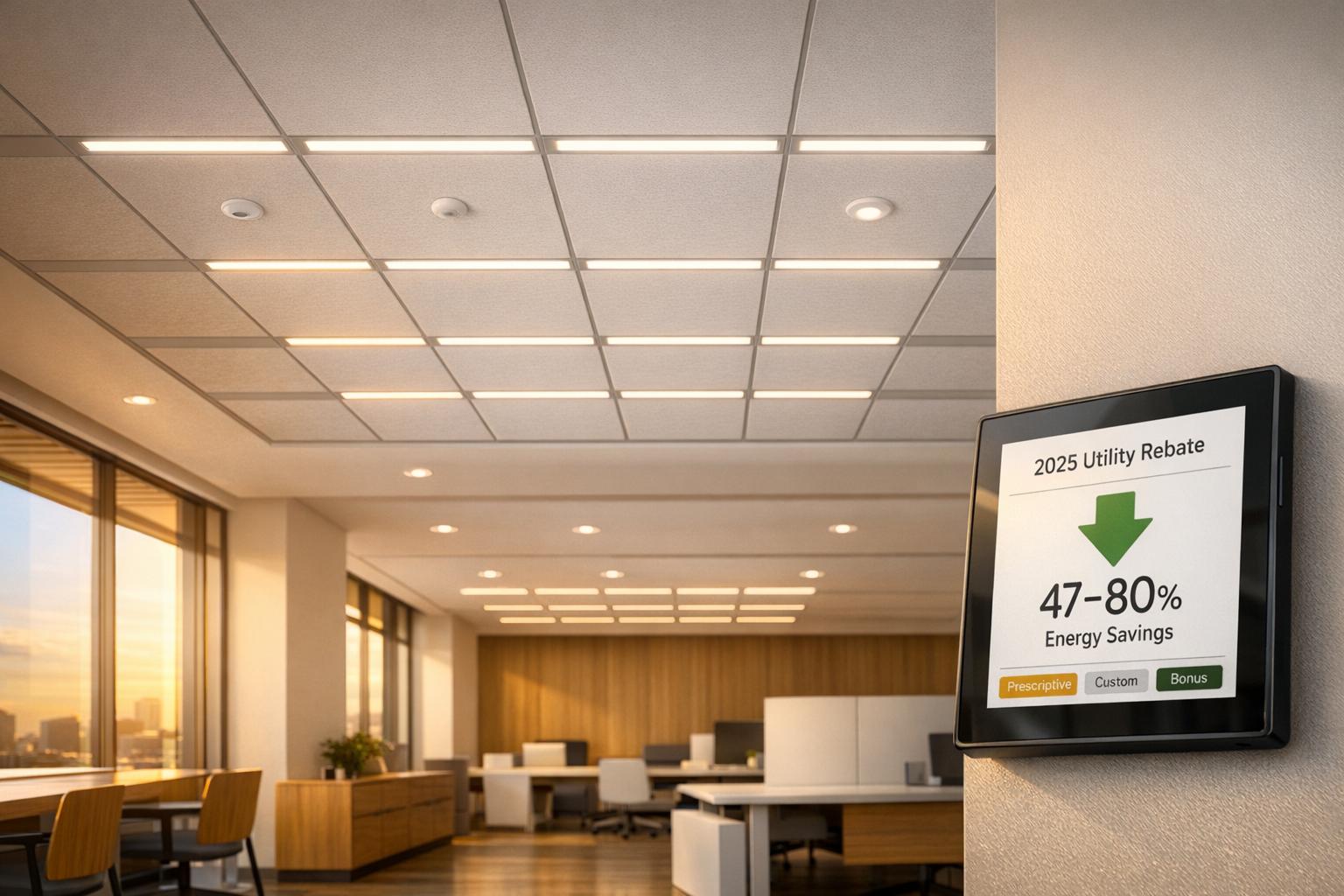
Utility rebates in 2025 made upgrading to smart lighting systems like Networked Lighting Controls (NLC) and Luminaire Level Lighting Controls (LLLC) more affordable. These programs aimed to reduce upfront costs, shorten payback periods, and encourage energy-efficient solutions. Key highlights include:
Rebate structures varied by region and included prescriptive, custom, and midstream options. Partnering with registered contractors ensured compliance and maximized incentives. By combining rebates with federal tax credits, facilities achieved faster returns on investment while meeting energy goals.
2025 Smart Lighting Rebate Statistics and Energy Savings Guide
Utility rebate programs now cover a significant portion of the United States, aiming to reduce the upfront costs of energy-efficient lighting systems and make advanced technologies more accessible to businesses. With LED lighting becoming the standard, utilities are now focusing on smart controls to achieve even greater energy savings.
These programs vary depending on the region and utility provider, but the goal remains consistent: to encourage businesses to move beyond basic LED upgrades and adopt integrated lighting systems that deliver measurable energy efficiency. In 2025, around 17% of rebate programs require contractors or distributors to be registered as "trade allies". So, before starting any project, make sure your contractor meets this requirement.
In 2025, a wide range of smart lighting control technologies qualify for rebates. Here’s a quick breakdown of the most common ones:
Some utilities have taken a stricter approach - Mass Save, for instance, stopped offering incentives for fixtures without controls for large commercial and industrial customers in 2025. This shift highlights the growing preference for performance-based lighting solutions.
In 2025, rebate programs generally fall into three categories:
Regional availability can vary widely. While urban areas often have multiple rebate options, rural regions may have fewer choices. Thanks to online portals, pre-approval times averaged just two weeks in 2025, streamlining the application process and making participation easier.
With LED lighting already widespread, utilities are prioritizing smart controls to achieve the deeper savings needed to meet ambitious energy goals. This shift is reflected in how rebate programs are structured. For example, only 20% of programs now list incentives for controlled and non-controlled fixtures side-by-side, highlighting the higher value of smart solutions.
Another trend is the introduction of bonus programs, which appeared in 5% of rebate offerings at the start of 2025. These bonuses can add anywhere from 10% to 100% on top of the standard rebate amount, significantly improving the financial appeal of projects. Additionally, rebate amounts for LED products increased by an average of 3% in 2025, keeping pace with rising technology costs while maintaining affordability for businesses.
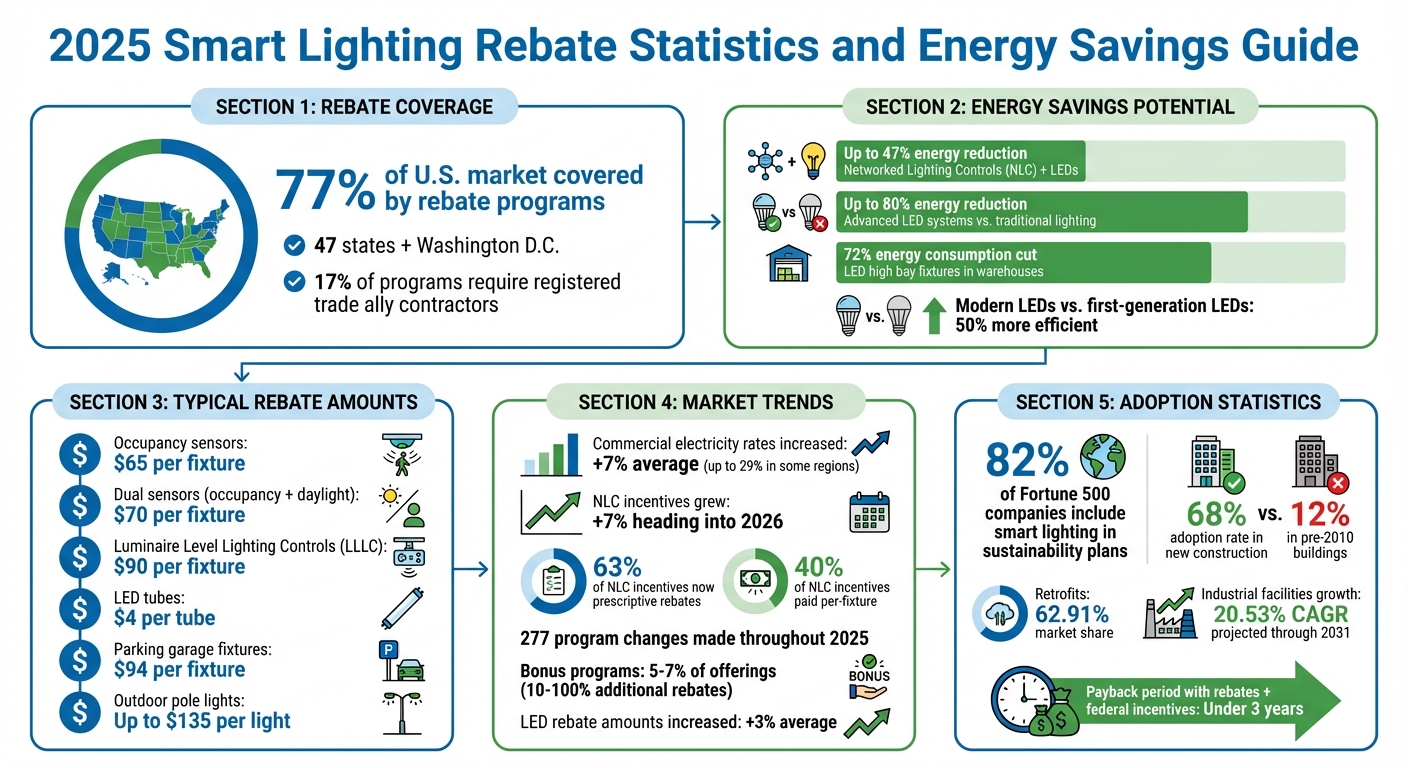
The rebates available in 2025 vary widely based on the type of lighting control system used. For example, adding an occupancy sensor to a standard 2x4 troffer fixture increases the rebate to $65 per fixture. Opting for dual sensors, which combine occupancy detection with daylight harvesting, bumps that figure up to $70 per fixture. At the top of the scale, Luminaire Level Lighting Controls (LLLC) offer rebates of $90 per fixture.
Rebates for other applications can be even higher. For instance, LED tubes typically earn $4 per tube, while parking garage fixtures qualify for $94 per fixture. Pole lights, often used in outdoor settings, can bring in as much as $135 per light. Industrial applications, such as replacing HID lamps with high-efficiency fixtures, also rank among the most rewarding rebate options. These incentives not only reduce upfront costs but also pave the way for substantial energy savings.
The higher rebate amounts reflect the impressive energy savings that advanced lighting control systems can deliver. For example, combining Networked Lighting Controls (NLCs) with LEDs boosts energy savings by as much as 47%. When paired with advanced controls, LEDs can reduce energy usage by up to 80% compared to traditional lighting systems. Even simpler systems, like occupancy sensors or daylight harvesting controls, contribute to noticeable energy reductions, though the actual savings depend on factors like building usage and existing infrastructure.
These energy reductions become even more critical as electricity rates continue to climb. In 2025, commercial electricity rates rose by an average of 7%, with some regions seeing increases as high as 29%. Advanced lighting controls help mitigate these rising costs, especially since modern LED systems are now up to 50% more efficient than the first-generation LEDs installed a decade ago.
The combination of rebates and energy savings significantly shortens payback periods for lighting upgrades. Utility rebates, when paired with federal incentives like Section 179D, often reduce payback periods for commercial projects to under three years. In warehouses, for example, upgrading to LED high bay fixtures has been shown to cut energy consumption by 72%, further accelerating the return on investment.
The rebate process has also become more efficient. Digital application portals now allow for pre-approval in as little as two weeks, while payment processing typically takes around two months. This streamlined system ensures that businesses can access funds more quickly, easing cash flow concerns during project implementation.
In 2025, 77% of the U.S. market was covered by active commercial lighting rebate programs, which spurred noticeable growth in the adoption of advanced control systems like Networked Lighting Controls (NLC) and Luminaire Level Lighting Controls (LLLC). Heading into 2026, the number of rebates available for these systems grew by 7%, reflecting both the increasing demand from facilities and a strong commitment from utilities.
A major shift occurred as utilities simplified rebate structures - 63% of NLC incentives transitioned to prescriptive rebates, using straightforward per-fixture calculations instead of complex, custom applications. This change significantly reduced the administrative burden, and now 40% of NLC incentives are paid on a simple per-fixture basis, making the process more accessible, especially for smaller projects. Large commercial and industrial facilities led the way in participation, largely driven by the need to manage rising electricity costs, which increased by an average of 7% in 2025.
The rebate landscape was dynamic, with utilities making 277 program changes throughout the year to adjust incentive structures in response to energy-saving goals and market trends. By early 2026, 7% of programs had added bonus incentives to encourage participation further. These developments highlight the evolving strategies to boost adoption and pave the way for understanding the factors driving or hindering the growth of smart lighting systems.
Regulations played a crucial role in shaping adoption. States like California, Oregon, and Colorado enforced fluorescent lamp bans that often required or incentivized pairing new LED installations with advanced controls. Corporate sustainability goals also fueled growth - 82% of Fortune 500 companies included smart lighting in their sustainability plans by 2025. These systems not only delivered energy savings of 50–75% compared to older setups but also provided valuable data for ESG reporting and space utilization analytics. These incentives, combined with rebate programs, reinforced the financial and operational benefits of adopting smart lighting.
However, adoption wasn’t without challenges. The upfront cost of intelligent lighting systems is 30–50% higher than traditional options, creating a financial hurdle for budget-conscious facilities. Installation complexity added another 15–20% to labor costs, and 35% of building owners reported difficulties integrating new controls with existing building management systems. Retrofitting older buildings proved particularly challenging - only 12% of commercial buildings built before 2010 had been fully retrofitted by 2025, compared to a 68% adoption rate in newly constructed buildings.
Commercial spaces such as offices, retail centers, and hospitals led the market in smart lighting adoption, driven by extensive use and strict building codes. Meanwhile, industrial facilities like warehouses and factories recorded the fastest growth, with a projected 20.53% CAGR through 2031. This growth was fueled by the high return on investment from high-bay fixtures and the increasing need for warehouse automation. While retrofits accounted for a 62.91% market share, new construction projects increasingly integrated smart controls from the design stage to comply with net-zero building standards.
Pairing LED upgrades with smart controls isn’t just smart - it’s a strategy that can lead to even greater savings and quicker payback periods. Facilities that integrate LED retrofits with smart controls in a single project often qualify for much larger rebates compared to lighting-only upgrades. This shift aligns with utilities’ growing focus on comprehensive systems that deliver deeper energy reductions. In fact, networked lighting controls can slash energy usage by up to 47%. Beyond the financial benefits, this approach simplifies the rebate application process, making it a win-win for facilities.
Regulatory changes are also nudging businesses toward these upgrades. For example, by 2025, states like California, Oregon, and Colorado will have banned fluorescent tubes, effectively mandating LED upgrades. Meanwhile, New York’s updated energy codes require buildings over 25,000 square feet to install advanced lighting controls, ensuring compliance while opening the door to top-tier rebates.
Energy audits are key to unlocking rebates without unnecessary delays. By 2025, about 17% of rebate programs will require facilities to collaborate with a registered trade ally or approved contractor. These professionals not only ensure compliance but also identify limited-time bonus opportunities that can significantly boost rebate amounts - sometimes by as much as 100%.
Take the "Flip the Switch" bonus program offered by Bright Energy Solutions in late 2025 as an example. From July 1 to December 31, rebates for DLC-qualified LEDs were doubled: 8-foot LED rebates jumped from $5 to $10, while custom retrofit incentives increased from $350/kW saved to $700/kW saved. Customers could also receive a $1,000 bonus cap per project, and contractors earned an additional $100 installation incentive for projects generating at least $250 in customer rebates.
"Incentive Rebate360's in-depth understanding of lighting technologies and available rebates has been instrumental in helping our clients realize faster paybacks on their upgrade projects. Their ability to navigate DLC requirements and incentive programs makes them a valuable extension of our team." – Justin Stouch, President, Stouch Lighting
Luminate Lighting Group takes rebate strategies to the next level by combining technical expertise with a client-focused approach. Their team conducts detailed energy audits to pinpoint opportunities for LED retrofits and smart controls, ensuring projects meet utility requirements and qualify for the highest incentives. Specializing in warehouse, industrial, office, and municipal spaces, they handle everything from photometric layouts and fixture specifications to code compliance and rebate applications.
Utility rebates for smart lighting controls in 2025 present a strong opportunity for facilities looking to upgrade while saving money. With around 77% of the U.S. covered by active incentive programs, reducing energy costs and achieving quicker payback periods is more accessible than ever. By combining LED retrofits with advanced controls like occupancy sensors and Networked Lighting Controls, facilities can cut energy use by up to 47% and qualify for rebates that are often three times higher than those offered for basic LED fixtures.
The industry is evolving quickly. Many utilities are phasing out incentives for basic LED systems, focusing instead on integrated solutions that deliver greater energy savings. States like California, Oregon, and Colorado have already banned fluorescent tubes, making the transition to LED and smart controls not just cost-effective but, in some cases, mandatory. Bonus programs, which can increase rebates by 10% to 100%, are available for a limited time, so staying informed about local utility updates is essential.
Navigating these programs can be complex, requiring technical expertise. With 17% of rebate programs now mandating collaboration with registered trade allies or approved contractors, partnering with experienced professionals is key to ensuring compliance and maximizing incentives. Luminate Lighting Group simplifies this process by offering energy audits, photometric layouts, and rebate application management, helping clients secure top-tier rebates while meeting code and sustainability standards.
Pairing utility rebates with federal tax credits and state programs can significantly shorten payback periods for upgrades. As Kaitlyn Dambrosio of Incentive Rebate360 explains, "Smarter lighting technologies are especially attractive for commercial customers looking to reduce costs while meeting sustainability goals".
Most commercial facilities across the U.S. can take advantage of smart lighting rebates, particularly when using ENERGY STAR or DLC-listed products. To qualify, it’s important to follow the correct application process and meet the outlined program requirements. Since eligibility criteria and potential savings differ by region, it’s a good idea to consult your local utility provider for precise details and guidance.
Networked and smart lighting controls often qualify for the most generous rebates. In some cases, these programs can offset up to 47% of energy savings, with even higher incentives available for systems that include integrated controls. These advanced setups not only boost energy efficiency but also enhance savings, making them a popular option for utility rebate programs.
You can combine utility rebates with 179D tax deductions to significantly cut costs on energy-efficient upgrades. Start by claiming utility rebates, which help lower the upfront expenses for projects like LED lighting installations. Once that's done, you can apply for the 179D deduction, which offers up to $5.00 per square foot for eligible projects. To make the most of these incentives, ensure you follow all program requirements and maintain thorough documentation to qualify for both.


