.svg)
Learn how Title 24 compliance can enhance energy efficiency and reduce costs for warehouses through effective lighting strategies.

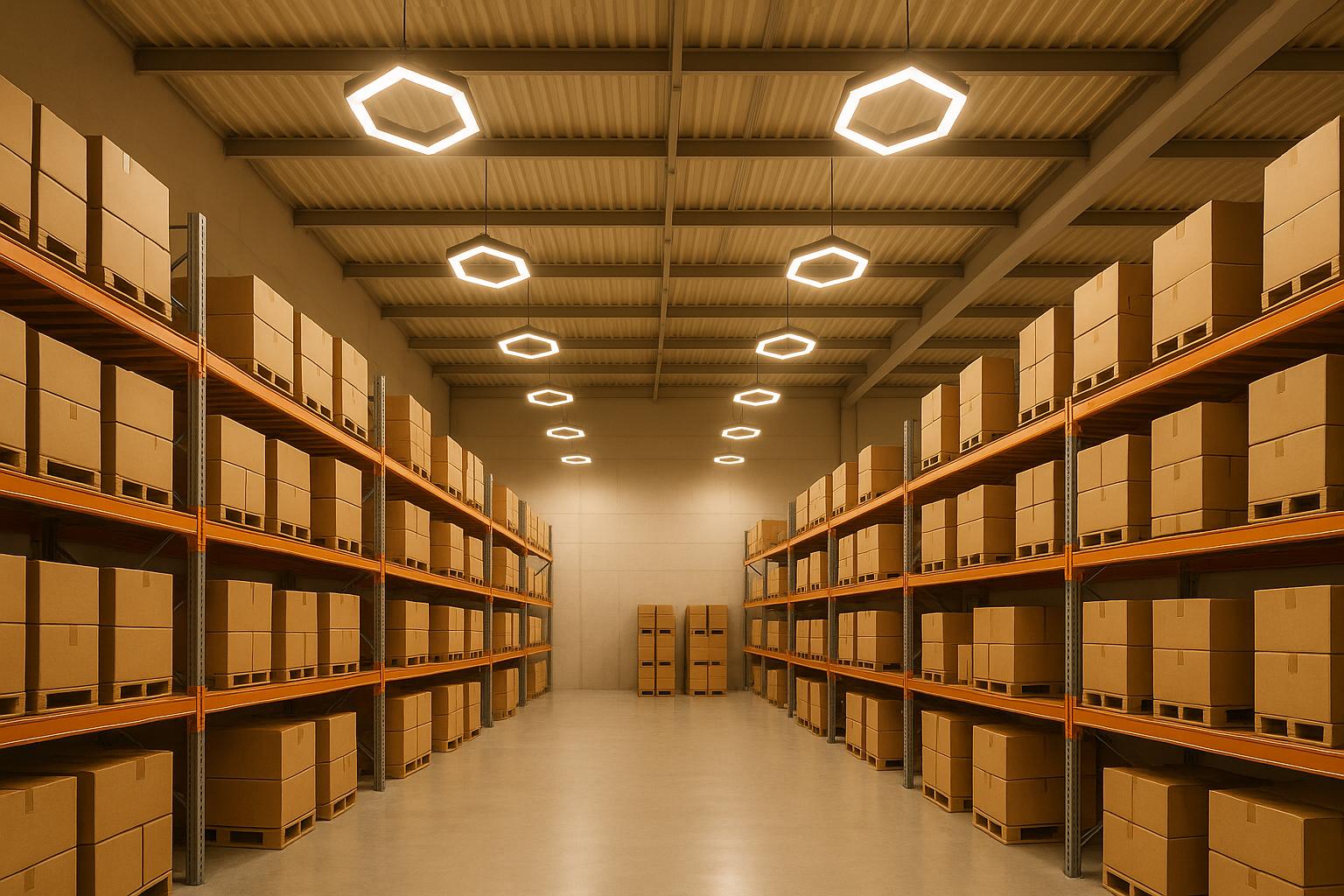
Title 24 is California's energy efficiency standard that applies to warehouses and other commercial buildings. Updated every three years (last in 2022), it sets strict rules for lighting systems, including energy use limits, controls, and zoning requirements. Here's what you need to know:
To comply, start with a lighting audit, design a compliant system, and complete final testing/documentation. Partnering with professionals ensures you meet all rules while maximizing savings and avoiding fines.
Under Title 24, big stores need to set up sensors in aisles and open spots to cut light use by at least 50% (or 40% for metal-type lights) when no one is there.
If your big store has roof windows or side windows that let in sun, sun-react systems are a must. These turn down or turn off lamps when there's enough daylight. This rule is used when the window zone is over 36 sq. ft. and has over 60 watts of lights.
Fix staff can use hand switches to skip these rules for up to two hours. All light systems must also support full dimming, but it changes with the type of light: LEDs (10–100%), CFLs (20–100%), and HID lights (one step from 50% to 70%).
Once these switch rules are set, the next step is to sort control zones right.
Title 24 says each control zone can only be 600 sq. ft. and 500 watts. Also, store aisles must have their own switches that don't mess with close spots.
Some spots don't have to follow normal zone rules. For example, exit lights stay full till no one is left to keep it safe. Plus, spots with just one light with no more than two lamps can skip some switch rules. Top-works metal lights might also have their own dim rules.
For stores over 10,000 square feet, Title 24 wants quick-act light systems. These should cut light use by at least 15% when the power firm says so, easing the load on the power grid in busy times.
Checking how much power your lights use is key to follow Title 24. The Area Type Method sets a max watt per sq. ft., and LEDs or fix-ups can help keep under the cap while also getting money back and tax cuts.
Guard lights outside can use more power but must keep to tight save and switch rules. For sunk lights and boxed lights, bulbs must follow Joint Add (JA8) needs to be seen as save lights.
If a fix-up job changes 10% or more of the lights or has 40 or more lights, the whole set must meet Title 24 rules. Working with pros like Luminate Lighting Group makes sure your big store follows all rules about light use and gets all rebates and tax perks.
Setting up your warehouse lights to match Title 24 rules might seem hard, but splitting it into three easy steps can make it simple. By keeping to these steps, you can make sure your light system fits all needs with no extra worry or mix-up.
First, go through a full check of your now light set. This step helps you spot what's not working well and pick the fixes that will help most.
Next, work on a light set up that fits Title 24 rules and gives good light.
After making your plan, try it out and write down your fixes to show you follow rules.
The last step is to check that your setup meets all Title 24 needs and make sure you have all papers needed for permits and price cuts.
Working with pros like Luminate Lighting Group can make this easier. Their OK-ed electricians can make sure you follow rules while keeping your work running smooth.
At the end, this step could get you back some cash and tax cuts too. Many services give cash back for LED changes and smart controls, which helps with the initial costs. Also, the 179D tax cut might be used for projects that meet Title 24 rules, giving you more money benefits.
Navigating Title 24 lighting requirements for warehouses can feel daunting, especially when dealing with intricate technical details. Partnering with lighting professionals not only simplifies the process but also helps you avoid costly mistakes and potential compliance delays.
A successful Title 24 compliance project starts with a detailed lighting audit. During this process, experts conduct a thorough on-site assessment to evaluate your current lighting system.
One key focus of the audit is measuring your warehouse's Lighting Power Density (LPD). This analysis pinpoints areas where your system falls short of Title 24 standards, such as zones that may need occupancy sensors or upgraded controls. It also highlights opportunities to reduce energy use and improve efficiency.
For example, companies like Luminate Lighting Group offer free on-site assessments, providing customized LED retrofit plans and energy savings projections. These audits not only identify inefficiencies but also create a clear path to compliance while maximizing your financial returns.
The audit process also considers the unique needs of your warehouse. High-traffic areas that require consistent lighting or spaces with variable occupancy can benefit from tailored control strategies. These solutions ensure compliance with Title 24 without disrupting daily operations.
This initial assessment serves as the foundation for designing and implementing a complete, compliant lighting system.
Full-service lighting providers handle every stage of your Title 24 compliance journey - from initial design to final documentation - ensuring all components work seamlessly together.
Professional lighting design goes beyond selecting LED fixtures. Experts craft lighting layouts that optimize light distribution and establish proper control zones, meeting the specific needs of warehouse aisles and open spaces.
To minimize disruption, licensed electricians schedule installations during off-hours or low-activity periods, keeping your operations running smoothly. Their expertise ensures the retrofit process is efficient and stress-free.
"Luminate Lighting Group exceeded my expectations with their exceptional professionalism, prompt attention to detail, clear communication, and responsive team, which made the entire LED Lighting Installation process seamless. Their dedication to delivering high-quality Commercial Lighting solutions ensured that our needs were met expertly and efficiently, every step of the way." – T. Fiddler, Project Manager
Another critical aspect is the integration of advanced controls. Properly installing and programming occupancy sensors, daylight controls, and demand response systems requires technical precision. Professionals ensure these systems are zoned, calibrated, and tested thoroughly to meet Title 24 standards.
Once your compliant system is in place, professional expertise extends to unlocking financial benefits.
One of the biggest advantages of working with lighting professionals is their ability to help you take full advantage of financial incentives. Many warehouse owners miss out on rebates and tax deductions simply because they aren’t aware of the programs or how to apply.
Lighting professionals stay up-to-date on rebate opportunities, handle the paperwork, and ensure you receive reimbursements promptly. For instance, the 179D tax deduction allows building owners to deduct up to $1.88 per square foot for energy-efficient upgrades that meet specific technical standards.
Post-upgrade, clients often report energy savings of 50–80%. Combined with rebates and tax incentives, these savings frequently result in payback periods of two years or less.
Utility companies also offer rebates for LED retrofits and advanced controls. Professionals know which programs offer the best returns and can structure your project to maximize these incentives.
Beyond installation, professionals provide ongoing support, including warranty details, maintenance guidance, and help with future compliance updates or code changes. This ensures your lighting system remains efficient and compliant for years to come.
Meeting Title 24 standards is a game-changer for California warehouses. It not only aligns your facility with the state’s rigorous energy efficiency mandates but also slashes operational costs. Through a structured approach involving audits, design, and proper documentation, you can ensure compliance while addressing key elements like lighting power density limits, mandatory occupancy controls, and zoning requirements. These standards are designed to eliminate energy waste and boost efficiency.
Upgrading to Title 24-compliant systems can reduce energy consumption by 20–50%, which translates to noticeable savings on utility bills and improved operational efficiency.
"Upgrading to energy-efficient LED lighting is one of the fastest ways to lower operating costs. Many of our clients see energy reductions of 50–80%, along with improved light quality, reduced maintenance, and better workplace safety." - Luminate Lighting Group
To sweeten the deal, rebates and federal programs, such as Section 179D, enhance the financial benefits of these upgrades. The combination of energy savings and financial incentives makes compliance a win-win for warehouse operators.
Title 24 compliance isn’t optional for California warehouses - it’s required. But beyond being a legal obligation, it sets a high bar for energy efficiency that other states often look to as a benchmark. Compliance focuses on practical measures like high-performance LED fixtures, occupancy sensors that reduce lighting power by at least 50% in unused areas, and strict limits on lighting power density to prevent unnecessary energy use.
For warehouse operators, navigating these requirements can feel overwhelming. That’s where professional lighting services come in. Companies like Luminate Lighting Group take the guesswork out of compliance. From energy audits to detailed documentation, they manage the entire process, ensuring you capture every available rebate and tax deduction.
The benefits of compliance go far beyond just meeting the code. LED lighting systems not only cut maintenance costs with their longer lifespans but also improve workplace safety with better light quality. Plus, they support your sustainability efforts by reducing your facility’s carbon footprint.
Being proactive about Title 24 compliance doesn’t just help you avoid penalties - it ensures your warehouse operates at peak efficiency. The energy savings, combined with financial incentives and operational upgrades, make these lighting improvements a smart investment that pays off for years to come.
Partnering with experienced lighting professionals ensures your project is handled efficiently and meets all technical requirements. Their expertise in navigating rebate programs, tax incentives, and compliance guidelines makes the process smoother and maximizes both energy savings and financial returns for your warehouse.
Upgrading your warehouse lighting to meet Title 24 standards comes with a host of advantages. For starters, it can significantly cut down on energy costs by improving efficiency. Better lighting quality also means enhanced visibility, creating a safer and more productive environment. Plus, with longer-lasting lighting solutions, you’ll spend less time and money on maintenance.
On top of these practical perks, complying with Title 24 ensures your warehouse aligns with California's energy regulations. This not only supports a more sustainable workplace but may also open the door to utility rebates and tax incentives - making it a smart investment all around.
When you work with seasoned lighting professionals, you’re not just upgrading your warehouse lighting - you’re ensuring it meets Title 24 energy code requirements while improving energy efficiency. These experts take care of everything, from designing and installing the system to obtaining permits and guaranteeing compliance throughout the process.
Beyond compliance, these professionals can help you tap into financial perks like utility rebates and 179D tax deductions. They simplify the process by pinpointing eligible incentives, handling the paperwork, and submitting everything on time. This means you can enjoy significant savings without the hassle of navigating the complexities yourself.
To make sure your warehouse lighting complies with Title 24 standards, begin with a thorough lighting assessment and energy audit. This step helps pinpoint inefficiencies, catalog current fixtures, and estimate potential energy savings.
Working with specialists like Luminate Lighting Group can make this process much easier. They offer end-to-end LED retrofit solutions, covering everything from design and installation to permitting and rebate handling. This ensures your lighting system is not only compliant but also energy-efficient and budget-friendly.


