.svg)
Check if your office lighting meets recommended brightness levels for comfort, focus, and everyday productivity in just a few quick inputs.

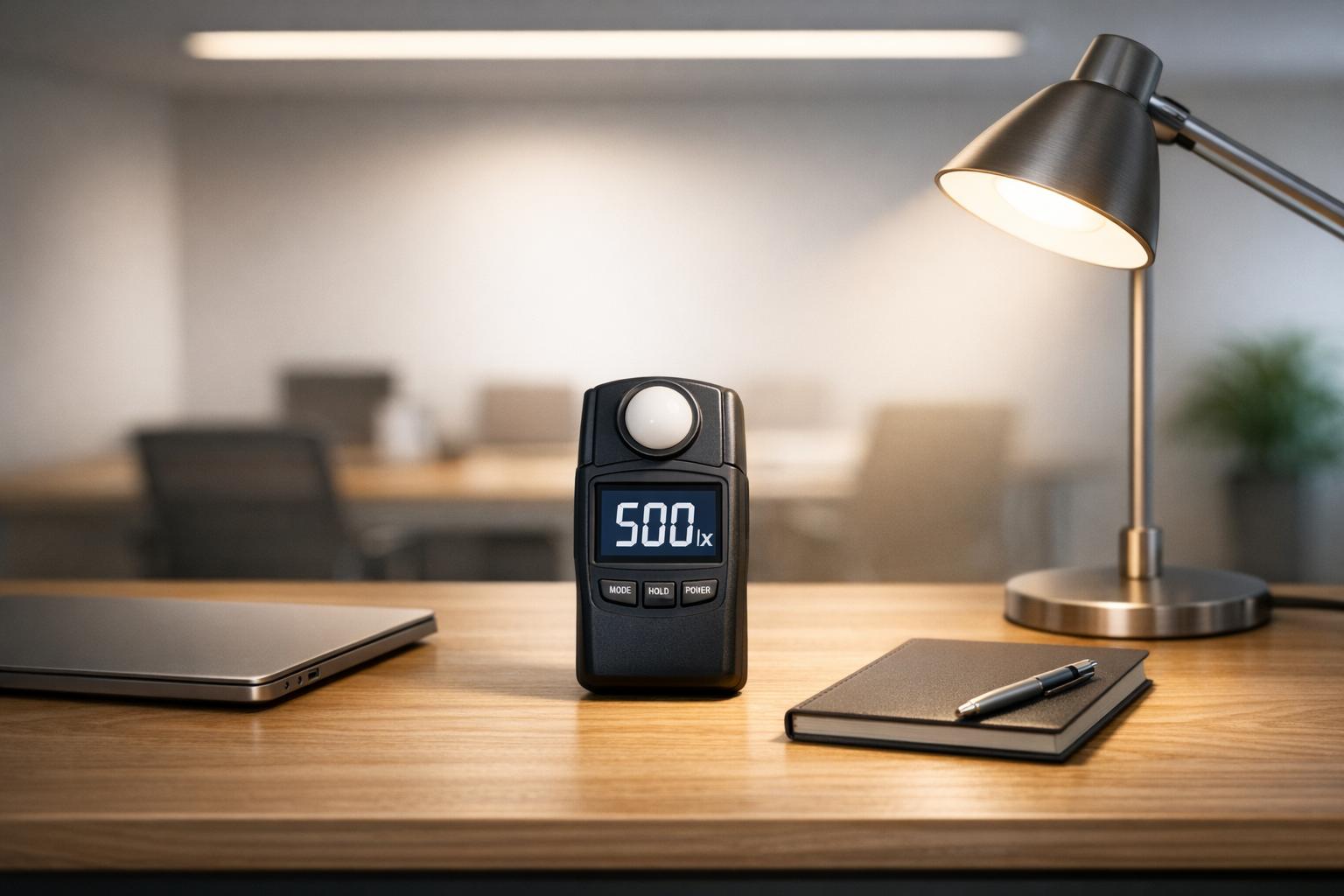
A comfortable workspace starts with lighting that supports focus without creating strain. This Office Lighting Performance Checker helps you estimate whether a room has enough light for typical office tasks by using simple inputs like area, fixture count, wattage, and fixture type. Instead of guessing, you can get a quick foot-candle reading and compare it with the commonly recommended range for office work.
Poor lighting can affect more than just visibility. It can make reading harder, increase fatigue, and leave a space feeling dull or uneven. On the other hand, balanced illumination helps people stay comfortable during long workdays. That’s why many teams use an office lighting calculator or brightness checker before making fixture upgrades.
This workplace lighting tool estimates total lumens, converts that output into foot-candles, and shows whether the result meets the standard range of 30 to 50. If the level is too low, you’ll get a simple recommendation for improvement. Whether you’re reviewing an office renovation, checking a small workspace, or comparing LED and fluorescent fixtures, this Office Lighting Performance Checker gives you a practical starting point in just a few seconds.
Foot-candles measure how much light actually reaches a surface area. In a workplace, that matters because it helps show whether desks, meeting areas, and task zones are bright enough for comfortable reading, screen work, and general productivity. A higher lumen output doesn’t always tell the full story on its own, so foot-candles give you a more useful way to judge lighting performance in the room.
That range is commonly used as a practical benchmark for general office work because it balances visibility and comfort. Too little light can lead to eye strain, fatigue, and a dim working environment. Too much light can create glare or make a space feel harsh. The 30 to 50 foot-candle range is a solid starting point for offices where people spend long hours reading, writing, or working on screens.
Not completely. It’s best used as a quick screening tool to estimate whether your office lighting is likely in a reasonable range. It can help you spot obvious under-lighting and make early decisions about upgrades. For detailed planning, fixture layout, glare control, daylight impact, or code compliance, a professional lighting assessment is still the better next step.


