.svg)
Convert lux to foot-candles or foot-candles to lux instantly with simple, accurate results and adjustable decimal precision.

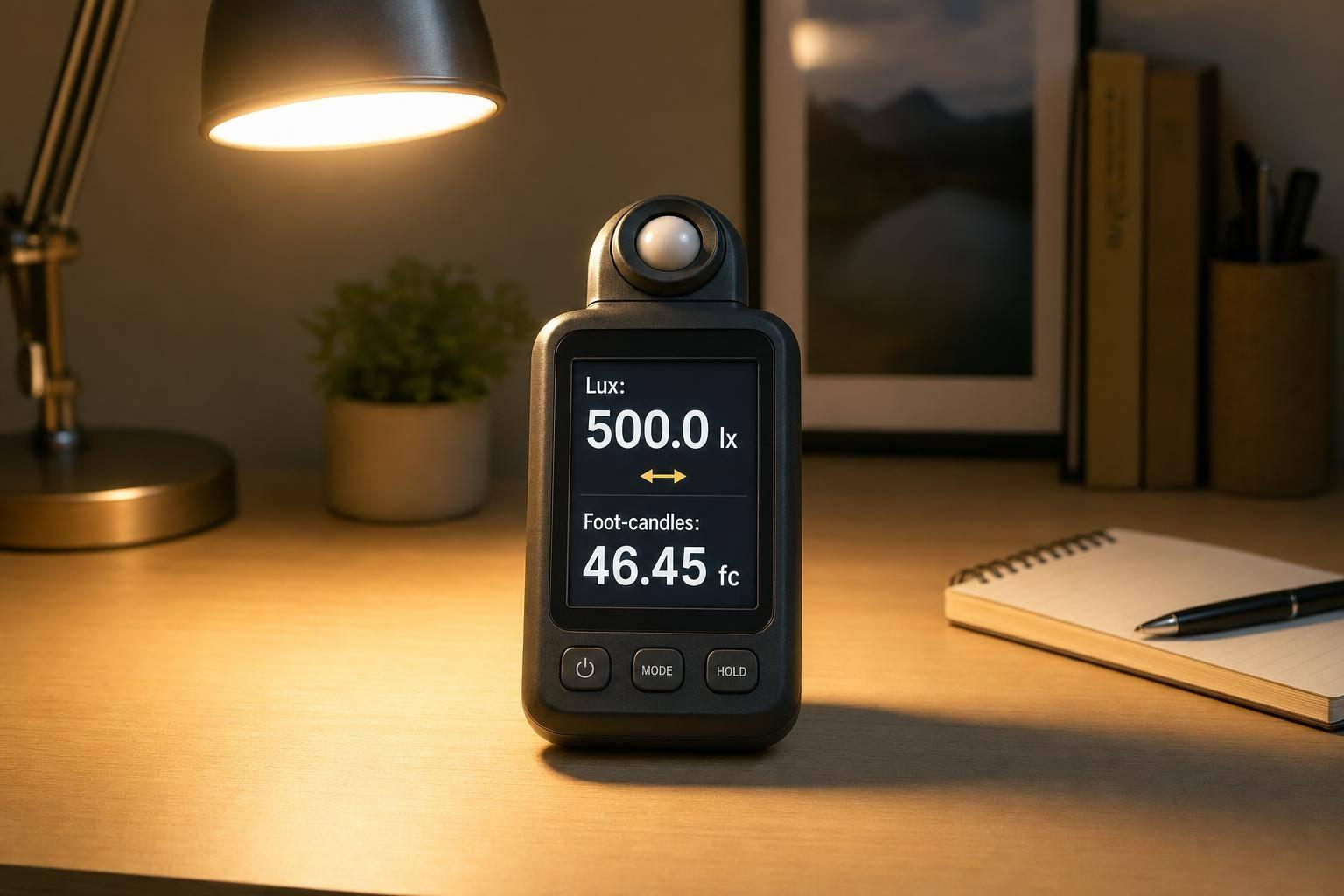
Working with lighting measurements often means switching between metric and imperial units. This Lux to Foot Candles Converter helps you do that instantly, whether you're reviewing building plans, checking workplace lighting levels, or comparing fixture specifications. Instead of stopping to calculate by hand, you can enter a value, choose the unit, and get a precise result right away.
Lux and foot-candles both measure illuminance, but they appear in different industries, standards, and regional documents. That can make even simple comparisons frustrating. A reliable lux to foot-candles converter removes the guesswork and keeps your workflow moving. It's especially useful for electricians, architects, photographers, facility teams, and anyone dealing with lighting performance.
This tool uses the standard conversion factor of 1 foot-candle = 10.76391 lux. It also displays the formula used, which makes the result easier to understand and double-check. If you need cleaner output, you can choose your preferred decimal precision. For quick, no-fuss lighting unit conversion, this illuminance calculator keeps the process clear and accurate.
Lux and foot-candles both measure illuminance, which is the amount of light falling on a surface. The difference is the measurement system behind them. Lux is the metric unit, while foot-candles are used in the imperial system. They describe the same concept, just on different scales, so converting between them is common in lighting design, construction, and facility management.
To convert lux to foot-candles, divide the lux value by 10.76391. That number comes from the standard relationship between square meters and square feet in illuminance measurement. If you're going the other direction, from foot-candles to lux, multiply by 10.76391 instead. This tool handles both directions instantly and shows the formula used so the result is easy to verify.
You might need it any time lighting specs, regulations, or product documents use a different unit than the one you're working with. For example, one lighting guide may list recommended levels in lux, while a fixture spec sheet may use foot-candles. A fast converter saves time, reduces manual math errors, and helps you compare values with confidence.


