.svg)
Fix glare, dark spots, and high energy costs in libraries with LED retrofits, shelf and task lighting, and smart controls.

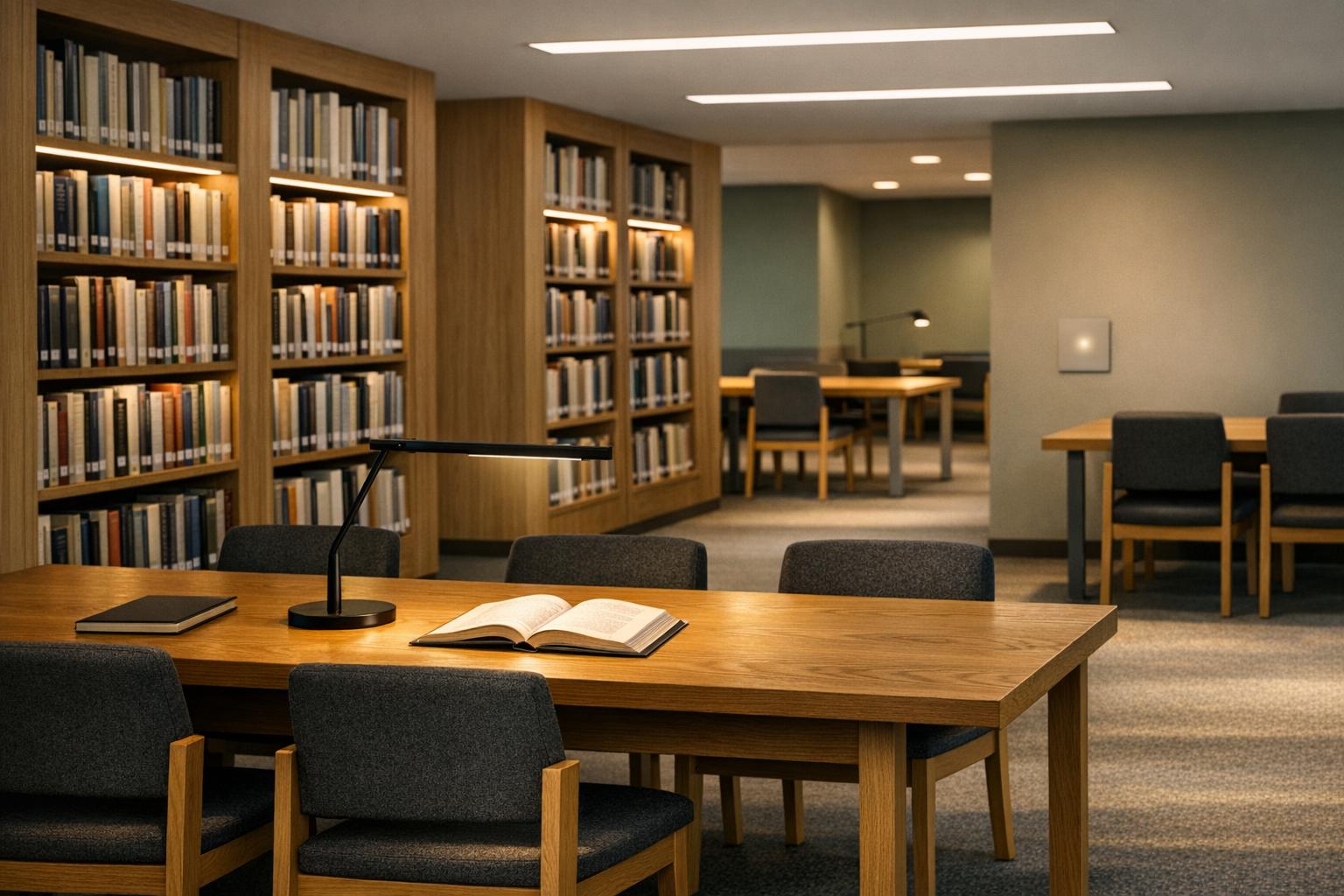
Good library lighting matters more than you think. Poor lighting - like glare, dark spots, or outdated systems - can make reading and studying uncomfortable, shorten visits, and even increase energy costs. Fixing these issues is not just about brighter bulbs but smart planning and better design.
Libraries that address these issues create more comfortable spaces for patrons and staff while cutting costs. Early planning and expert guidance are key to getting it right.

Library Lighting Problems vs. Solutions: A Quick Reference Guide
Libraries often deal with recurring lighting issues that can negatively impact the user experience. Pinpointing the root causes of these problems is essential for finding effective solutions. Here's a closer look at some of the most common challenges.
Glare is a major issue in libraries, manifesting primarily as reflections on computer screens and harsh contrasts between overly bright fixtures and darker surfaces.
"In libraries, utmost concentration is required. Any distraction can be a disturbance – even... lighting." - TRILUX
Poorly shielded fixtures and improper placement often result in bright reflections on screens, forcing library users to seek out dimmer, less ideal reading areas. This is especially problematic for computer workstations, where VDU (Visual Display Unit) reflections are a leading cause of eye strain in libraries today. These spaces need the same level of anti-glare measures you'd expect in a professional office environment.
Inconsistent light distribution is another common issue. This often stems from fixture placement that doesn’t align with how the space is actually used.
Rearranged shelving and fixed ceiling grids frequently create areas that are either too dim or overly bright. Vertical surfaces, like book spines on shelves, tend to suffer the most. These require more precise lighting than flat surfaces like desks.
"Particular attention must be paid to lighting vertical cabinet and shelf areas, since they usually feature more complex visual tasks than those defined for corresponding areas in offices." - TRILUX
Maintenance issues can make the situation worse. Fixtures installed at high or hard-to-reach locations are often neglected, leading to dust buildup or burnt-out bulbs that diminish light output over time.
Older lighting systems, such as fluorescent and HID setups, are another pain point. These systems lack modern features like occupancy sensors or dimming capabilities, which can result in unnecessarily high energy bills.
On top of wasting energy, older systems are a maintenance hassle. Replacement parts for outdated lamps can be difficult to find as manufacturers discontinue older models. Some aging plastic luminaires even develop a distracting "diffuser clicking" noise due to thermal expansion - a surprisingly disruptive issue in the quiet environment of a library. Fixtures mounted at difficult heights further complicate routine maintenance, making cleaning and bulb replacement both costly and time-consuming. These inefficiencies underscore the importance of transitioning to energy-efficient LED lighting.
Understanding the problems is just the beginning - practical solutions can completely transform the library experience. Here’s how to address glare, uneven lighting, and inefficiencies effectively.
Reducing glare starts with tailoring lighting to meet the specific needs of different library areas. Using task lighting and shielded fixtures can significantly lower glare and reflections, which helps reduce eye strain at desks and computer workstations. For areas with computers, indirect or shielded lighting is key to eliminating VDU (Visual Display Unit) reflections, a common source of discomfort in libraries.
"Lighting isn't just about brightness - it's about layering stories through design." - Anuja Kimatrai
Ceiling and wall finishes also play a big role. Surfaces with light-reflecting properties help spread illumination evenly, so you don’t need overly bright fixtures. Switching to LED luminaires with electronic control gear can also make a difference by eliminating flicker and hum - two common distractions in quiet spaces. To give patrons more control, consider adding dimmable desk lamps or adjustable task lights, allowing individuals to fine-tune their lighting without disrupting the overall environment.
Addressing uneven lighting is the next step, and it starts with strategic fixture placement and dedicated shelf lighting.
Uneven lighting often happens when fixture placement doesn’t align with how the space is used. Different zones need different light levels, so it’s important to plan accordingly. Here’s a quick reference guide:
| Area Type | Recommended Illuminance | Measurement Point |
|---|---|---|
| Closed Stacks | 100 lux | Floor level |
| Workrooms & Staff Areas | 300 lux | Desk height |
| Public Lending & Reference | 400 lux | Desk height |
Vertical surfaces, like book spines, often require more focused lighting than flat workspaces. A practical solution is shelf-mounted linear LED fixtures, which attach directly to shelving uprights. These lights ensure even illumination of book spines without creating shadows. For more flexibility, ceiling track systems allow fixtures to be moved as furniture layouts change, keeping the lighting effective even as the space evolves.
"The general rule of thumb for library lighting design is to provide light of even intensity and distribution for lighting shelves and task surfaces." - NSW Public Library Services
As library consultant Tish Murphy notes, "Proper and well thought out lighting continues to be a challenge in libraries... plans for all of these solutions need to be considered early in the project so that lighting is not an afterthought."
Upgrading to LED systems can bring major energy and cost savings. Libraries still relying on fluorescent or HID systems can benefit greatly from an LED retrofit, which offers a longer lifespan and reduces the maintenance demands of older lighting systems.
Pairing LEDs with occupancy sensors and zoned controls maximizes energy efficiency. These systems ensure lighting is only used where and when it’s needed - perfect for areas that see less traffic or require lower light levels. Zoning also allows different areas to operate at varying brightness levels based on their purpose, all without requiring constant manual adjustments. This is especially relevant since nearly 70% of U.S. public libraries (about 11,200) face deferred maintenance backlogs, with 39% of those libraries reporting backlogs exceeding $100,000.
For libraries considering a retrofit, working with a professional lighting provider like Luminate Lighting Group can help ensure every aspect - energy audits, custom designs, and LED installations - is tailored to the library’s specific needs. These upgrades not only improve energy efficiency but also create a more welcoming and functional environment for patrons and staff alike.
Even the best lighting can fall short without careful planning. As library planner Robert Rohlf once said, "The area in which most mistakes are made in library planning is lighting."
Lighting designers rely on photometric layouts to map light levels across different zones within a library. These detailed maps help eliminate dark corners and ensure consistent lighting in areas like reading spaces, stacks, and workstations. Vertical surfaces, such as bookshelves, often require special attention since standard overhead lighting can leave them poorly illuminated.
"Lighting should complement the architecture and interior design so that themes and elements are accentuated, and the control should be intuitive to use." - State Library of New South Wales
Designers also consider factors like ceiling and wall finishes, ease of future maintenance, and acoustic performance. This means selecting fixtures that operate quietly, avoiding any distracting hums or clicks - essential for maintaining the serene atmosphere of a library. These thoughtful design strategies naturally lead into energy audits, which uncover opportunities for cost savings.
Energy audits are a critical step in identifying where savings can be made and prioritizing upgrades with the quickest payback. This is especially important for libraries, as 90% depend on local funding for repairs and often face limitations on using federal funds for construction.
The results speak for themselves. For example, the Pleasanton Public Library upgraded 661 fixtures and implemented a wireless control system, cutting energy use by 46%. This saved $21,100 annually, with rebates covering 18% of the $166,000 project cost. Library Director Julie Farnsworth highlighted the benefits, noting, "The space stays bright and comfortable throughout the day and evening with no effort and is reducing library operating costs."
In addition to utility rebates, libraries may qualify for the Section 179D tax deduction, which incentivizes energy-efficient upgrades to commercial buildings. Professional energy audits can help libraries tap into these benefits, paving the way for smoother installations.
Upgrading a library’s lighting system involves more than just swapping out fixtures. Providers like Luminate Lighting Group handle everything - from selecting fixtures and integrating smart controls to scheduling work during library hours and ensuring compliance with building codes. This comprehensive lighting process spares library administrators from juggling multiple vendors or dealing with post-installation challenges.
Integrated smart controls, such as occupancy sensors, daylight harvesting, and zone-based dimming, are often part of these upgrades. This seamless process underscores the importance of customized lighting solutions, ensuring libraries achieve both functional and energy-efficient spaces.
Fixing issues like glare, uneven light distribution, and outdated systems can do wonders for libraries by improving both patron comfort and operational efficiency. Poor lighting isn’t just a minor annoyance - it can disrupt reading, reduce staff productivity, and lead to higher energy and maintenance costs. As library furniture consultant Tish Murphy aptly said: "There are no 'bargains' when it comes to lighting." Cutting corners on fixture quality or design often leads to bigger problems and expenses down the road.
The good news? Common lighting challenges - like glare, patchy coverage, and high energy consumption - have well-established solutions. Switching to LED lighting, creating photometric layouts to map light levels, and using smart controls such as occupancy sensors and daylight harvesting can make a huge difference. The secret lies in treating lighting as an essential part of the library’s infrastructure rather than an afterthought. A smart lighting plan combines thoughtful design with operational efficiency.
Timing is also crucial. Lighting decisions should be made early in the process of renovations or new construction. Coordinating fixture placement and electrical wiring before walls go up ensures a smoother implementation and avoids costly rework later.
For libraries working with tight budgets or dealing with deferred maintenance, partnering with experts like Luminate Lighting Group can be a game-changer. They offer end-to-end solutions, covering everything from energy audits and photometric designs to fixture selection, smart control integration, and ensuring compliance with codes. With the right guidance, libraries can achieve lighting upgrades that truly deliver on comfort, efficiency, and long-term savings.
To assess the lighting in your library, consider whether it offers consistent brightness, minimizes glare, and allows for comfortable task completion. The lighting should suit the specific needs of each space and activity, contributing to an inviting atmosphere. If certain areas feel too dim, overly bright, or uncomfortable, adjustments might be necessary.
To cut down on glare at computer stations, place the primary light source to the side of your monitor rather than directly in front or behind it. Incorporate layered lighting by adding a focused, glare-free task light to complement the ambient light. This approach helps balance brightness, minimizes screen reflections, and can significantly reduce eye strain.
Upgrading to LED lighting and incorporating smart controls can significantly cut a library's energy costs. LEDs consume less power compared to traditional lighting systems, making them an energy-efficient choice. Meanwhile, smart controls enable precise management of lighting, ensuring lights are only on when and where they're needed. Together, these upgrades reduce wasted energy and help maximize cost savings.


