.svg)
LED retrofits are the most cost-effective hotel upgrade, slashing energy, maintenance, and HVAC costs while improving guest comfort.

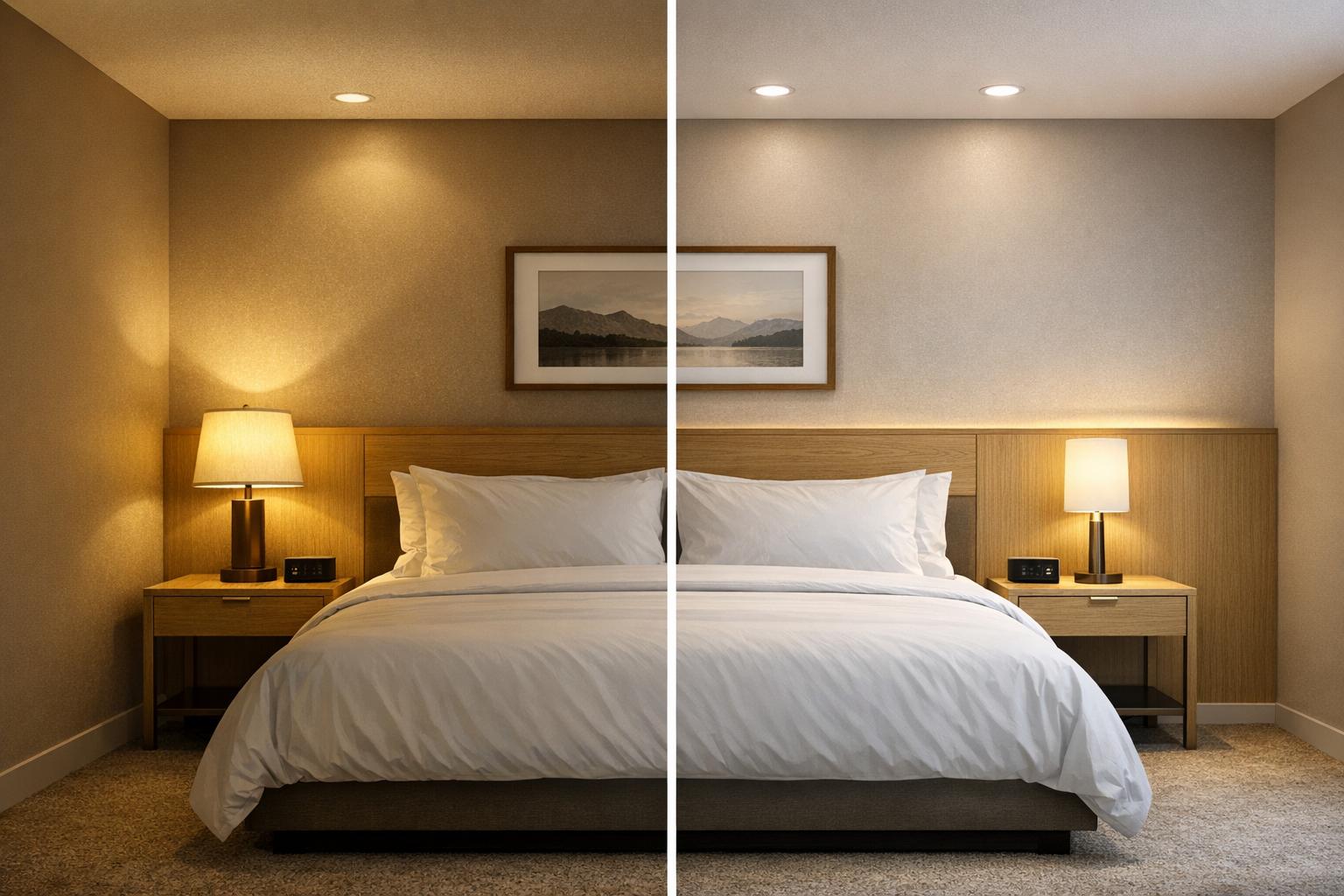
Switching to LED lighting in hotels is a smart way to save money and improve efficiency. Here's why:
Quick Comparison:
| Aspect | LED Lighting | Incandescent/Fluorescent Lighting |
|---|---|---|
| Energy Use | 75–80% less energy | High energy consumption |
| Lifespan | 25,000–50,000 hours | 1,000–25,000 hours |
| Heat Output | Minimal | Significant heat generation |
| Maintenance | Low | Frequent bulb replacements |
| Upfront Cost | $5–$25 per bulb | $1–$8 per bulb |
| Light Quality (CRI) | CRI 90+ | Varies, often lower |
LED retrofits offer long-term financial and operational benefits, making them a top choice for hotels looking to reduce costs and improve guest experiences.

LED vs Traditional Lighting Comparison for Hotels
LED lighting is a game-changer when it comes to energy savings. For instance, replacing a 60-watt incandescent bulb with a 9–10-watt LED provides the same brightness while using 75–80% less electricity. Fluorescent bulbs, though more efficient than incandescent, still use 13–15 watts for similar output.
The difference lies in how these technologies produce light. Fluorescent lamps operate at around 20% efficiency, meaning they waste about 80% of their energy. LEDs, however, convert a much larger share of electricity into visible light, with minimal energy lost as heat.
For businesses like hotels, the impact of switching to LEDs is substantial. By replacing existing lights with 9-watt LED equivalents, a typical hotel could save approximately $788,400 in electricity costs over five years.
George Crawford, Head of Green Partners LLC, highlights that upgrading just two fixture types - room lamps and ceiling fixtures - can result in "almost $200,000 a year" in utility savings.
Adding smart controls to LED systems further enhances these savings.
Mark Strong from OxMaint explains, "LED alone cuts energy use by up to 75% versus incandescent. Add smart controls - occupancy sensors, daylight harvesting, and centralized scheduling - and you add another 15–25% in savings on top of the LED baseline".
Hotels implementing occupancy sensors in corridors can cut hallway energy use by 50–70%. These energy reductions not only lower costs but also improve overall system efficiency, as seen in the HVAC-related benefits discussed below.
LEDs offer another advantage beyond electricity savings: they generate far less heat. Incandescent bulbs, for example, convert about 90% of their energy into heat, which increases the cooling demand on air conditioning systems. In a hotel with hundreds of incandescent fixtures, this is like running hundreds of small space heaters.
LEDs, by contrast, use electroluminescence to produce light, which results in minimal heat output. This means HVAC systems don’t have to work as hard to maintain comfortable temperatures, especially during warmer months.
As Mark Strong notes, "Removing high-heat fixtures from guest rooms and corridors reduces HVAC cooling load - adding savings in addition to lighting savings".
The benefits are clear. At the Grand Hyatt Atlanta in Buckhead, an LED retrofit not only solved maintenance headaches but also delivered about $5,000 in monthly energy savings. These savings stem from reduced lighting and cooling demands, making LEDs particularly valuable for hotels in hot climates.
| Lighting Type | Energy to Light | Energy to Heat | HVAC Impact |
|---|---|---|---|
| Incandescent | 10% | 90% | Significant AC load increase |
| Fluorescent (CFL) | 20–25% | 80% | Moderate heat contribution |
| LED | 80%+ | Minimal | Reduces cooling requirements |
LED lighting does come with a higher upfront price tag compared to traditional options. Standard incandescent bulbs are priced around $1–$2, while fluorescent bulbs range between $3–$8. Basic LEDs fall into the same $3–$8 range, but high-quality, hospitality-grade LEDs can cost as much as $25 each. Fortunately, utility rebates can help offset these costs, sometimes covering up to 30% of installation expenses for commercial properties. For example, in a 200-room hotel, these incentives could amount to about $26,000.
Hotels often prioritize retrofitting high-traffic areas first. Why? These zones tend to deliver faster ROI, with the savings generated there often funding upgrades in lower-priority spaces like guest rooms.
"For almost all hoteliers, the benefit of switching to LEDs outweighs the cost."
– Dean Ernst, Director of Marketing, LED Source
When smart controls are integrated, the typical payback period for an LED retrofit falls between 12 and 18 months. In high-traffic areas, hotels can see a full ROI in less than a year. While the initial costs might seem steep, the long-term savings from reduced maintenance and replacement costs make the investment worthwhile.
The financial advantages of LEDs extend well beyond their installation. Thanks to their longevity, LEDs last 25–50 times longer than incandescent bulbs, slashing annual replacement rates by up to 75%. For a 200-room hotel relying on traditional bulbs, staff might replace about 1,500 lamps annually. In contrast, LED fixtures often go five years or more without needing replacement.
Wes Shirley, Director of Engineering at the Grand Hyatt Atlanta in Buckhead, shared the challenges his team faced before switching to LEDs:
"One of the issues in our pre-function space and our bar room space was we were spending so much time replacing light bulbs... With the ceilings being so tall, you'd have to get a lift in. It was just a nightmare."
– Wes Shirley, Director of Engineering, Grand Hyatt Atlanta
After upgrading hundreds of sockets to LEDs across 40,000 square feet, the hotel saw a first-year ROI of nearly 60% and drastically reduced maintenance demands. Over the lifespan of a single LED bulb, the total cost - including energy and replacement - averages about $8. Compare that to $21 for incandescent bulbs, and the savings become crystal clear.
LEDs far outlast their incandescent and fluorescent counterparts. While incandescent bulbs typically last only 1,000–2,000 hours and fluorescent bulbs manage 8,000–25,000 hours, LEDs shine brightly for an impressive 25,000–50,000 hours.
For example, in a hotel corridor running 24/7 (8,760 hours annually), incandescent bulbs would need replacement every 3–6 months. LEDs, on the other hand, can operate for over five years without needing attention. This dramatic difference slashes maintenance needs and associated costs.
Another key advantage: LEDs don’t burn out abruptly like incandescent bulbs. Instead, they gradually dim over time - a process known as lumen depreciation - providing a clear signal when maintenance is due. George Crawford, Lead at Green Partners LLC, highlights this benefit:
"Imagine a 200-room hotel that had zero lamp changes for a period of five years. The implications for the maintenance and purchasing departments would be huge - even before factoring in the lower energy costs."
This extended lifespan not only reduces maintenance expenses but also ensures consistent lighting quality, which plays a critical role in guest satisfaction.
LEDs aren’t just durable - they also deliver exceptional light quality. With a CRI (Color Rendering Index) of 90 or higher, LEDs provide vibrant and accurate color representation, maintaining stable color temperatures throughout their lifespan.
Modern LED systems allow for adjustable color temperatures, ranging from 2,200K to 6,500K. This flexibility means hotels can create warm, inviting atmospheres in guest rooms and dining areas (2,700K–3,000K), while cooler tones (4,000K+) are ideal for functional spaces like kitchens and back-of-house areas. Unlike fluorescents that flicker or need a warm-up period, LEDs deliver instant, flicker-free illumination.
LEDs also excel in durability. As solid-state lighting, they lack fragile filaments or glass components, making them resistant to vibrations, temperature changes, and breakage. In contrast, incandescent bulbs waste about 90% of their energy as heat, which not only drains electricity but also increases HVAC loads. LEDs generate minimal heat, reducing strain on fixtures and cutting cooling costs.
LED lighting is transforming how hotels create ambiance. Unlike traditional incandescent bulbs, which are locked into a warm tone (about 2,700K), LEDs offer unmatched versatility. They can be programmed to produce a range of color temperatures, from the cozy glow of candlelight (2,200K) to the crisp brightness of daylight (6,500K). This means a single LED system can effortlessly transition a lobby from an energizing daytime vibe to a more intimate and relaxing evening setting - all without swapping out a single bulb.
The compact nature of LED fixtures also unlocks endless design possibilities. Hotels can embed LED strips into headboards, mirrors, staircases, or even furniture, allowing for creative, modern aesthetics. On top of that, RGB color-changing LEDs make it possible to display branded colors during events or holidays, creating unforgettable visual moments that old-school lighting simply can’t match.
"LED lighting has the ability to offer a wide range of colors, brightness levels, and temperatures. They can be easily adjusted to create the right mood and ambiance for any occasion." – PacLights
This level of customization doesn’t just enhance the atmosphere; it also plays a key role in crafting a memorable and comfortable guest experience.
LED lighting isn’t just about aesthetics - it’s also designed with guest comfort in mind. Unlike traditional fluorescents, which often produce harsh, bluish tones and flicker, LEDs provide flicker-free illumination that’s easier on the eyes. High-quality LED systems with a Color Rendering Index (CRI) of 90 or above ensure that colors appear vibrant and true to life. This is especially important in spaces like guest rooms and dining areas, where natural-looking skin tones and appetizing food presentation can make all the difference.
Comfort extends beyond visual appeal. LEDs generate far less heat compared to incandescent bulbs, keeping guest spaces cooler and more pleasant. Additionally, smart LED systems can align with guests’ natural circadian rhythms. For example, lights can gradually brighten in the morning to simulate a sunrise or dim at night to encourage relaxation and better sleep. This kind of tailored lighting experience wasn’t achievable with older technologies, making LEDs a game-changer for guest-centered design. Plus, all of this is achieved while delivering the energy efficiency benefits discussed earlier.
Switching to LED lighting offers a measurable way to shrink a hotel's carbon footprint. Unlike incandescent bulbs, which waste 90% of their energy as heat, LEDs convert up to 80% of their energy into light. This efficiency leads to a significant drop in electricity consumption. Lower energy use translates directly into fewer greenhouse gas emissions, making LEDs a win for both the environment and operational costs.
Another often-overlooked benefit is the heat output. Traditional lighting generates a lot of heat, which increases the demand on air conditioning systems. LEDs, on the other hand, produce very little heat, easing the load on HVAC systems and further reducing energy consumption. These combined savings play a key role in reducing the overall carbon footprint of hotel operations.
Hotels can take things a step further by integrating LEDs with smart controls like occupancy sensors or daylight harvesting systems. These technologies can cut lighting energy use by an additional 15–25% on top of what LEDs already save. For hotels aiming to meet green certifications such as LEED v4.1 or comply with regulations like the EU's ERP Directive, LEDs are an essential part of the strategy.
LED technology doesn't just help with energy efficiency - it also significantly reduces waste. With a much longer lifespan, LEDs require fewer replacements. This can cut replacement work orders by 60–75%, which means less glass and electronic waste ending up in landfills.
Another key advantage is that LEDs are mercury-free, unlike some other lighting options. This simplifies disposal processes, eliminates hazardous waste concerns, and reduces regulatory headaches for maintenance teams. Joe Humphries, a Contributing Writer at American General Construction, highlights this perfectly:
"The benefits of LED over incandescent or fluorescent lighting are the most significant in industries like hospitality where properties are looking to conserve energy and eliminate waste".
The table below highlights the main performance differences between LED and traditional lighting systems in hotels.
| Aspect | LED Lighting | Traditional Lighting | Hotel Benefit |
|---|---|---|---|
| Energy Consumption | Uses 75–80% less energy. | High consumption; nearly 90% of energy is wasted as heat. | Cuts down the lighting portion of the energy bill. |
| Lifespan | Lasts 25,000–50,000 hours. | Incandescent: 1,000–2,000 hours; Fluorescent: 8,000–25,000 hours. | Fewer replacements needed - traditional lighting in a 320-room hotel may require about 1,400 bulb changes per year. |
| Heat Output | Produces minimal heat. | Incandescent bulbs lose approximately 90% of energy as heat. | Lowers HVAC demand, reducing cooling costs. |
| Maintenance | Requires very little upkeep; reduces work orders by 60–75%. | Frequent bulb replacements are necessary. | Saves staff time and minimizes guest interruptions. |
| Upfront Cost | Costs $5 to $25 per bulb. | Incandescent: $1–$2; Fluorescent: $3–$8 per bulb. | Despite higher initial costs, the payback period is typically under 12–18 months. |
| Light Quality (CRI) | High-quality LEDs offer a CRI of 90+. | Incandescent bulbs provide high CRI, but fluorescent options can be harsh. | Better color rendering enhances food, decor, and skin tone appearances. |
| Customization | Features smart controls, dimming, and color-changing options. | Limited to basic on/off or dimming functions. | Allows flexible ambiance control with color temperatures from warm 2,200K to bright 6,500K. |
| Disposal | Free of hazardous materials. | Fluorescent bulbs contain mercury. | Simplifies waste handling with no special disposal requirements. |
A 200-room hotel transitioning to LED lighting can save between $50,000 and $100,000 annually on energy costs alone. Add in reduced maintenance and HVAC savings, and the overall operational advantages become even more compelling. This comparison clearly shows how LED retrofits can transform hotel efficiency and long-term cost savings.

Luminate Lighting Group takes a flexible, equipment-neutral approach when retrofitting hotels. Instead of pushing specific products, they focus on selecting fixtures and controls that align with the hotel's performance needs and aesthetic goals. This means each project is designed to complement the hotel's architecture and enhance the guest experience.
The process starts with on-site lighting audits, which document the current setup and pinpoint areas for improvement to boost energy efficiency. From there, the team creates photometric designs tailored to the hotel's specific requirements. For example, they can craft a warm, inviting ambiance with 2,700K–3,000K lighting in guest rooms or install durable, IP65-rated fixtures in kitchens and laundries where moisture is a concern.
Luminate handles every step of the retrofit in-house, from initial design and licensed electrical installation to securing permits and processing rebate applications. This streamlined, all-inclusive approach simplifies the process for hotel operators. E. Lambeth, an Interior Designer, shared their experience:
"The lighting updates made a huge difference in the overall look of the space. I will absolutely keep you posted on upcoming projects."
These custom solutions not only enhance the guest experience but also pave the way for substantial cost savings through rebates and tax incentives.
On top of tailored lighting solutions, hotels working with Luminate Lighting Group can take advantage of financial perks that improve their return on investment. For instance, utility rebates can cover 20–30% of installation costs. Many programs, like those offered by Oncor in Texas, require working with a certified "Market Partner", which is a designation Luminate holds.
Additionally, hotels can benefit from 179D tax deductions for energy-efficient building upgrades. Luminate assists with all the necessary pre-qualification paperwork and submissions, ensuring hotels maximize these savings. With these incentives, the payback period for retrofits can shrink significantly - often to less than six months in high-energy-use areas such as lobbies and parking garages.
LED lighting can slash energy consumption by up to 90%, last 25–50 times longer than traditional options, and save a 200-room hotel between $50,000 and $100,000 annually. Beyond the financial benefits, high-quality LEDs elevate guest experiences with excellent color rendering (CRI ≥90) and adjustable color temperatures that create the perfect ambiance in spaces like restaurants and guest rooms.
"Lighting is one of the most immediate, highest-ROI energy problems a hotel can solve - and most properties are still leaving serious money on the table." – Mark Strong, OxMaint
LEDs also reduce maintenance needs by 60–75% and emit minimal heat, which translates to lower HVAC expenses. With utility rebates covering up to 30% of installation costs and 179D tax deductions, the average payback period for LED retrofits is just 12–18 months. These financial incentives make upgrading both practical and cost-effective.
For hotels ready to make the switch, Luminate Lighting Group simplifies the process with equipment-neutral LED retrofits. From initial audits to installation and rebate management, they ensure every project maximizes savings while enhancing guest comfort. Whether focusing on high-traffic areas for quick results or planning a full-property transformation, expert support guarantees a smooth transition.
Investing in LED lighting is a smart move for improving energy efficiency, enhancing guest satisfaction, and boosting long-term profitability.
Hotels should focus on upgrading lighting in the busiest and most energy-demanding areas, like hallways, parking garages, banquet halls, and lobbies. These spaces often remain in use for extended periods or even around the clock, making them perfect candidates for energy-efficient LED retrofits. Switching to LEDs in these areas can lead to a noticeable drop in energy consumption and costs, especially since lighting typically makes up 15-25% of a hotel's overall energy expenses.
To figure out the payback period for an LED retrofit, you'll need to weigh the initial investment against the yearly energy savings. Here's how it works:
This straightforward calculation shows how long it will take for your savings to cover the upfront expenses.
The best LED color temperature varies based on how a space is used. For guest rooms, a range of 2700K to 3000K works well, offering a warm and inviting atmosphere. In lobbies or public areas, aim for 3500K to 4000K to create a brighter, more welcoming environment. For spaces focused on tasks, such as work areas, choose 4000K to 6000K for sharp, clear lighting. Tailor the color temperature to the specific purpose and mood of the space for optimal results.


