.svg)
Compare LEDs and traditional lighting: energy use, CO₂ reductions, lifespan, HVAC savings, and retrofit ROI.

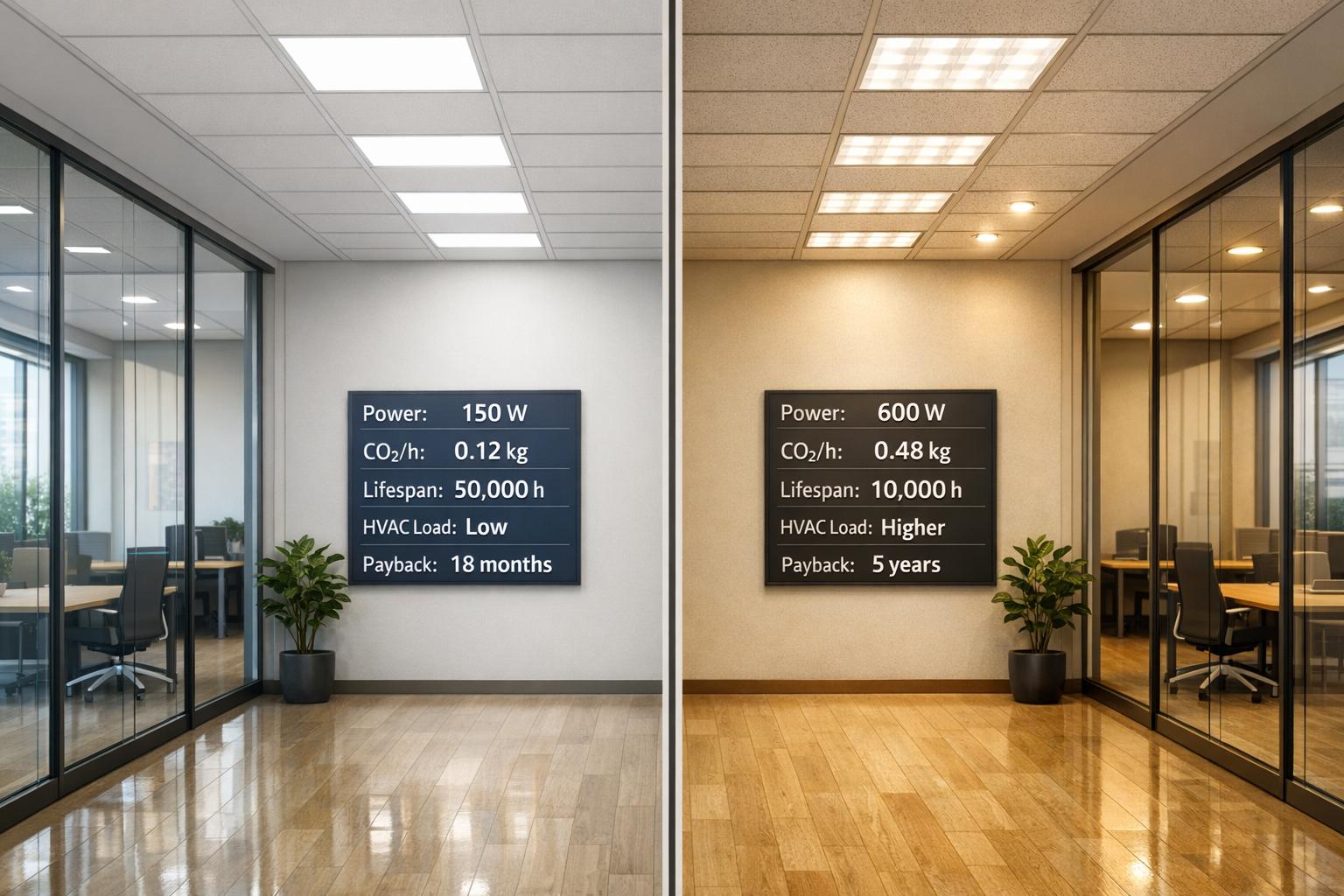
Switching to LED lighting is one of the easiest ways to reduce energy use, lower carbon emissions, and cut costs. LEDs consume significantly less energy, last much longer, and generate less waste compared to older lighting systems like fluorescent or incandescent bulbs. Here's why they outshine older technologies:
| Feature | LEDs | Older Lighting (Fluorescent, Incandescent, HID) |
|---|---|---|
| Energy Use | 25–80% less energy | High energy consumption |
| Lifespan | 50,000–100,000 hours | 7,000–15,000 hours |
| Heat Output | Minimal | Significant heat generation |
| Carbon Emissions | 40–60 kg CO₂ saved/fixture/year | Higher emissions due to inefficiency |
| Disposal | Mercury-free, less waste | Contains mercury, hazardous waste |
LED retrofits are a practical choice for reducing energy costs, improving efficiency, and minimizing environmental impact. Whether you're managing a warehouse, office, or industrial facility, upgrading to LEDs pays off in both savings and sustainability.

LED vs Traditional Lighting: Energy Savings and Carbon Impact Comparison
LEDs consume 25–80% less energy than traditional lighting systems, depending on the fixture being replaced. In commercial buildings, where lighting can account for about 35% of total energy use, this difference has a big impact.
Let’s break it down with an example: a 4-lamp T12 fluorescent fixture uses 172W, but an LED retrofit brings that down to just 76W - a 56% reduction in energy use. The savings are even more dramatic in high-bay applications. A 400W metal halide fixture, which actually draws 458W with its ballast, can be replaced with a 150–180W LED high-bay, cutting energy use by 60–67%.
Here’s a real-world example: In March 2024, a 250,000 sq ft refrigerated warehouse in Ontario, California, replaced 312 400W metal halide fixtures with 180W LED high-bays. This upgrade reduced annual energy use by 552,960 kWh - a 62% savings - and lowered peak demand by 18 kW. The $68,640 project paid for itself in just 7.8 months.
Adding smart controls like occupancy sensors and daylight harvesting pushes these savings even further. For instance, in September 2024, an e-commerce distribution center in Columbus, Ohio, retrofitted 198 6-lamp T5HO fluorescent fixtures with 135W LED linear high-bays and wireless controls. This upgrade resulted in a 51% reduction in fixtures and an additional 27% energy savings through occupancy dimming, totaling 78% energy savings and cutting 399,060 kWh annually.
Not only does lower power usage reduce operating costs, but it also decreases carbon emissions. Plus, LEDs generate less heat, which further improves efficiency.
Traditional lighting systems waste a lot of energy as heat. For example, incandescent bulbs lose about 90% of their energy as heat. Metal halide and high-pressure sodium lamps also generate heat first, with light being a secondary byproduct. A single HID bulb can reach internal temperatures of 1,000°F, essentially turning it into a ceiling heater that forces HVAC systems to work harder.
LEDs work differently. They use semiconductor technology to convert electricity directly into light, with minimal energy lost as heat. This not only reduces lighting costs but also lowers cooling expenses. In fact, for every 3 watts of lighting energy saved with LEDs, an additional 1 watt of cooling energy is conserved due to a reduced heat load. In warmer climates, this can lead to 8–15% additional energy savings from reduced HVAC use.
Another issue with older lighting systems is their loss of brightness over time. Traditional HID and fluorescent fixtures lose 40–50% of their brightness while still consuming full power. For example, metal halide lights can lose half their brightness after just 10,000 hours. In contrast, LEDs maintain 90% brightness for up to 50,000 hours. With older technology, you’re essentially paying for full power but only getting half the light.
Switching to LED lighting leads to noticeable reductions in carbon emissions. Every kilowatt-hour of electricity saved translates into less CO₂ released by power plants. For example, one manufacturing facility reported cutting 170 metric tons of CO₂ emissions annually after upgrading to LEDs. The scale of these benefits depends on the size of the facility and its operating hours. Following a proven lighting solutions process ensures these savings are maximized through tailored design. Warehouses, distribution centers, and manufacturing plants that run 24/7 achieve the most significant reductions. Meanwhile, office buildings operating 10–12 hours a day still see meaningful savings, as the per-fixture reductions add up across hundreds or even thousands of lights.
Beyond these yearly savings, LEDs also contribute to lower emissions over their entire lifespan.
To fully assess carbon impact, it’s important to consider the entire lifecycle of a lighting system - manufacturing, transportation, usage, and disposal. While LEDs might have a slightly higher carbon footprint during manufacturing due to their complex semiconductor components, this is quickly offset by their energy efficiency and longevity.
During use, the energy savings are dramatic. A 60-watt incandescent bulb consumes 60 kWh over 1,000 hours, whereas an equivalent LED uses only 10 kWh in the same period. This substantial difference in energy consumption translates to significantly lower emissions from power generation over the LED’s lifetime.
Additionally, LEDs last between 50,000 and 100,000 hours, far outpacing the 7,000–15,000 hours typical of fluorescent bulbs. This means fewer replacements are needed, reducing the emissions tied to manufacturing and transporting new fixtures.
LEDs not only cut operating emissions but also reduce waste and environmental risks associated with replacements.
The extended lifespan of LEDs means fewer replacements, which in turn leads to less waste. In commercial settings, fluorescent tubes often require replacement every 1–3 years, while LEDs can last 10–20 years. This dramatically decreases the amount of material sent to landfills and reduces the resources needed for manufacturing replacements.
Fluorescent and HID lamps also contain mercury, requiring special disposal to avoid environmental contamination. LEDs, on the other hand, are free of mercury and other hazardous materials, making them safer for indoor use and easier to dispose of at the end of their lifespan. Fewer replacements also mean fewer maintenance trips, less packaging waste, and reduced transportation emissions, making LEDs an environmentally friendlier option across the board.
Switching to LED lighting has proven to significantly reduce energy use and carbon emissions. For instance, upgrading from standard 4-lamp fluorescent fixtures to high-efficiency LED troffers and panels typically cuts lighting energy consumption by 72% per fixture. To put that into perspective, a fluorescent fixture using 128 W can be replaced with an LED system that only draws 36 W.
These upgrades aren't just about energy savings - they also lead to noticeable financial and operational benefits. LEDs generate less heat, which can lower HVAC costs by 15–20%. Plus, with a lifespan of up to 100,000 hours compared to just 24,000 hours for fluorescent lamps, LEDs can reduce maintenance expenses by as much as 80%. When utility rebates - often covering 20–50% of project costs - are factored in, businesses typically see payback periods of 1.5 to 2.5 years for office LED retrofits.

At Luminate Lighting Group, our work highlights the practical and sustainable advantages of LED retrofits. By conducting detailed energy audits and designing custom lighting solutions, we help businesses achieve both environmental and financial goals.
Our retrofits often contribute to certifications like LEED and ENERGY STAR, aligning with corporate sustainability objectives. We focus on installing controls-ready LED fixtures that support features like dimming and occupancy sensing, enabling clients to further optimize energy use beyond the initial upgrade. These projects not only cut carbon emissions but also deliver long-term operational savings that make a meaningful difference.
LED retrofits offer a powerful way to cut both energy use and carbon emissions while saving money. By reducing energy consumption by 50–70%, they not only lower greenhouse gas emissions but also slash operating costs. For perspective, just one retrofitted fixture can prevent 40–60 kg of CO₂ emissions each year. Multiply that by 500 fixtures, and you're looking at 20–30 metric tons of avoided emissions annually.
On top of energy savings, LEDs last up to 100,000 hours, meaning fewer replacements over time. This durability reduces manufacturing demand, transportation emissions, and waste sent to landfills. Plus, LEDs eliminate the risks associated with mercury found in traditional lighting.
The financial case is equally strong. Most commercial LED retrofits pay for themselves within 1.5–3 years, often delivering 10-year returns exceeding 300%. Add in utility rebates and reduced HVAC costs from lower heat output, and the investment becomes even more attractive.
These combined benefits make LED retrofits a smart choice for organizations aiming to boost sustainability and cut costs.
Switching to LED lighting isn't just about saving money - it's about creating a more sustainable future. At Luminate Lighting Group (https://luminatelightinggroup.com), we specialize in energy-efficient LED retrofits tailored to your facility’s specific needs. Our process starts with an energy audit to identify areas with the most potential for savings, followed by custom LED solutions designed to enhance both efficiency and lighting quality.
We also help you take advantage of utility rebates and federal tax incentives like Section 179D, reducing your upfront costs and speeding up your return on investment. Whether you manage a warehouse, office, or industrial space, our team ensures your retrofit aligns with your sustainability objectives and delivers lasting savings. Lower your carbon footprint and operating expenses today - reach out to Luminate Lighting Group to get started on your LED retrofit.
To calculate CO2 savings after switching to LEDs, you can use online tools designed to estimate energy and emissions reductions. By entering details such as the current wattage of your lighting, hours of operation, and electricity rates, these tools provide estimates for energy cost savings, kWh reductions, and CO2 emissions avoided. This makes it simpler to measure the environmental impact of adopting LEDs and aligns with efforts to reduce carbon footprints.
LED retrofits can significantly cut HVAC costs, especially in warm climates and high-bay spaces. Unlike traditional lighting, LEDs emit much less heat, which reduces the strain on cooling systems. This translates to lower energy use and decreased overall HVAC expenses, making them an efficient option for such settings.
Tax incentives, such as Section 179D, allow building owners to claim up to $5.00 per square foot for making energy-efficient upgrades, including installing LED lighting. Thanks to the Inflation Reduction Act of 2022, this deduction now applies to projects initiated before June 30, 2026. On top of that, utility rebates can help cut costs even further, making LED retrofits an affordable and smart choice for improving energy efficiency.


