.svg)
LED retrofits lower energy use and CO2, cut maintenance and waste, reduce cooling loads, and boost savings with smart controls.


Switching to LED lighting is a straightforward way to reduce energy use, cut costs, and lower carbon emissions. LEDs consume less power, last longer, and eliminate harmful materials like mercury found in older bulbs. Here's a quick breakdown of the benefits:
LED retrofits are cost-effective, often paying for themselves in 2–4 years thanks to utility rebates and reduced energy bills. Upgrading your lighting system isn't just a smart financial choice - it's a practical step toward reducing your carbon footprint.
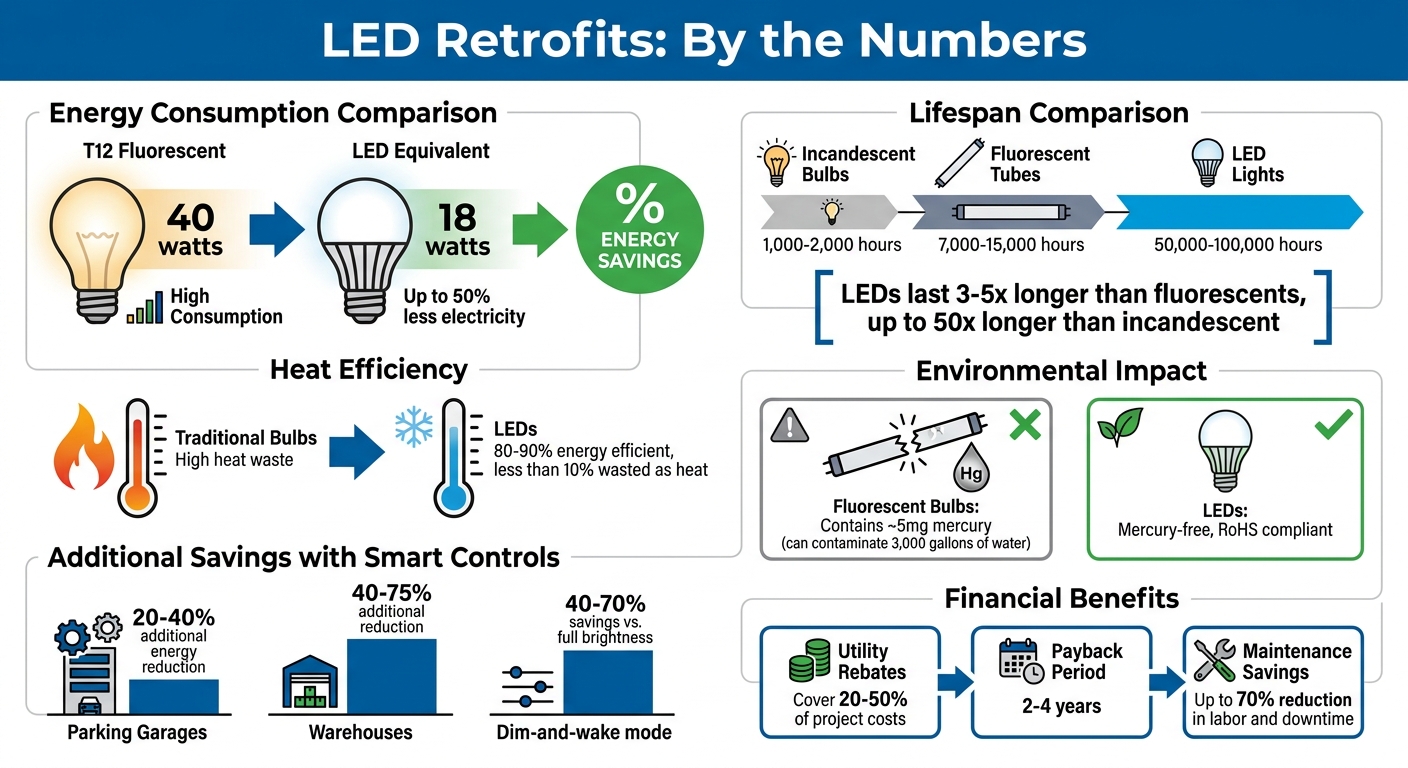
LED vs Traditional Lighting: Energy Savings and Lifespan Comparison
Switching to LED lighting dramatically reduces carbon emissions by cutting down on electricity consumption. Using less power means fewer kilowatt-hours are drawn from the grid, which translates to less fuel burned at power plants - especially in areas where fossil fuels dominate energy production.
For example, a typical T12 fluorescent bulb uses about 40 watts, while an LED equivalent requires only 18 watts to produce the same brightness. This means a standard 4-lamp fluorescent fixture can slash its energy use nearly in half when upgraded to LEDs, resulting in major savings for large-scale operations.
"Every kilowatt-hour saved by switching to LED lighting is a direct reduction in greenhouse gas emissions - especially in regions where electricity comes from fossil fuels." - Viktorija Zenkova, Author
LEDs also generate less heat, with less than 10% of their energy wasted this way. This reduces strain on HVAC systems, lowering overall energy consumption even further. These benefits are especially noticeable in facilities requiring continuous lighting, such as warehouses or parking garages operating 24/7.
For businesses running hundreds of fixtures for 12–16 hours a day, the savings can add up quickly. Conducting a lighting audit to assess wattage and operating hours can pinpoint where LED retrofits will deliver the quickest return on investment and the greatest environmental benefits. Plus, many utility companies offer rebates covering 20–50% of project costs, making the financial case for LEDs even stronger.
LED lights are built to last - typically between 50,000 and 100,000 hours. That’s 3 to 5 times longer than fluorescent tubes and up to 50 times longer than traditional incandescent bulbs. This extended lifespan means fewer bulbs end up in landfills, reducing the strain on the environment.
In industrial applications, the difference is even more striking. LED systems can last up to 15 times longer than HID or fluorescent lamps. This creates a "set it and forget it" scenario, where facilities can install their lighting and enjoy years of uninterrupted performance. By reducing the need for frequent replacements, LEDs help cut the carbon emissions linked to manufacturing, transportation, and disposal of outdated bulbs.
The benefits don’t stop there. With their longevity, LEDs significantly lower maintenance demands. For facilities managing hundreds of fixtures, this can translate to 70% savings on maintenance labor and downtime. That’s a huge win for large-scale operations. When choosing LED products, look for IES LM-80 and TM-21 certifications to confirm the lifespan claims and make the most of these waste-reduction advantages.
Additionally, retrofitting existing fixtures by upgrading internal components while keeping the original housings supports a more circular approach to waste management. This not only extends the life of your lighting systems but also minimizes environmental impact.
For expert guidance, consider working with professionals like Luminate Lighting Group. They can help optimize fixture longevity, further reducing both waste and carbon emissions.
One of the standout advantages of LED retrofits is their lack of toxic materials. Unlike fluorescent tubes, CFLs, and HID lamps, LEDs are completely free of mercury. To put this into perspective, a single fluorescent bulb holds about 5 mg of mercury - enough to contaminate up to 3,000 gallons of drinking water. Now, consider the thousands of bulbs replaced annually in commercial and industrial lighting solutions, and the environmental impact becomes impossible to ignore.
LEDs not only remove the risks tied to toxic exposure but also simplify safety protocols. Since they contain no mercury or other harmful substances, accidental breakage doesn’t pose a health hazard. This eliminates the need for complicated hazardous waste procedures, making LEDs safer for both people and the environment.
The benefits extend to the disposal process as well. While fluorescent lamps require specialized handling as hazardous waste, LEDs can often be recycled through standard electronics recycling channels. Components like aluminum heat sinks and circuit boards are fully recyclable. Plus, high-quality LED products comply with RoHS (Restriction of Hazardous Substances) standards, meaning they are produced without lead, cadmium, or other harmful materials. This makes LEDs a safer and more environmentally friendly choice from start to finish.
Traditional lighting options like halogen, HID, and incandescent bulbs waste a lot of energy by generating heat, which forces HVAC systems to work overtime. In climate-controlled spaces, this extra heat not only drives up energy bills but also increases carbon emissions.
LED lighting, on the other hand, produces far less heat. In fact, LEDs are 80–90% energy efficient, meaning only about 20% of the energy they use is lost as heat. This reduced heat output translates directly into lower cooling demands - when lighting generates less warmth, air conditioning systems don’t have to work as hard to keep spaces comfortable.
This benefit is particularly impactful in larger facilities. Think about warehouses or manufacturing plants where high-wattage HID lamps often create excessive heat. Switching to LED high bay fixtures in such spaces can significantly lower ambient temperatures, reduce strain on HVAC systems, and even help protect temperature-sensitive inventory. When evaluating the return on investment (ROI) for an LED upgrade, factoring in these HVAC-related savings paints a clearer picture of both the financial and environmental advantages.
At Luminate Lighting Group, we focus on LED retrofit solutions that not only improve lighting quality but also minimize heat output and cooling costs. This approach helps our clients reduce their carbon footprint while achieving greater energy efficiency. Up next, discover how integrated controls can take LED efficiency to the next level.
LED retrofits aren't just about swapping out old bulbs - they truly shine when paired with smart controls like motion sensors, dimmers, and timers. Thanks to their instant-on capability, LEDs are perfect for these sensor-based systems, making them a game-changer for energy efficiency and carbon reduction.
The numbers speak for themselves. Adding occupancy and daylight sensors can cut energy use by an extra 20–40% in parking garages and by 40–75% in warehouses. These savings translate directly into lower utility bills and reduced carbon emissions.
Take the "dim-and-wake" vacancy mode as an example. When spaces are empty, lights dim to just 10–30% brightness, ensuring safety while slashing energy use. For podium garages, this approach can save between 40–70% compared to keeping LEDs fully lit all the time. To maximize savings, set occupancy timeouts to 5–10 minutes in general parking areas and 10–15 minutes for egress paths. Extending timeouts beyond 15 minutes usually results in diminishing returns.
For daylight harvesting, positioning matters. Install photocells where they have a clear view of the sky, and use slow fade times of 2–5 seconds. This ensures a smooth transition between light levels, balancing comfort and energy savings.
At Luminate Lighting Group, we specialize in designing LED retrofit systems that integrate seamlessly with smart controls. This approach not only helps clients meet modern standards like ASHRAE 90.1-2022 but also maximizes energy savings and reduces carbon footprints. It's a smart, forward-thinking solution for both your budget and the planet.
LED retrofits bring both measurable energy savings and financial rewards by cutting energy consumption, reducing waste, and eliminating harmful materials. They also lower cooling demands and improve efficiency through advanced controls.
The numbers speak for themselves: replacing even one fixture with an LED can significantly reduce CO₂ emissions and waste. LEDs have a lifespan of 50,000 to 100,000 hours, far outlasting fluorescents, which only last 7,000–15,000 hours. Plus, utility rebates can slash initial costs by 20–50%, with many retrofitting projects paying for themselves within just 2–4 years. Case studies highlight impressive yearly savings and less frequent maintenance needs, making the financial and environmental benefits undeniable.
At Luminate Lighting Group, we specialize in creating tailored LED retrofit solutions. Our process begins with lighting audits to pinpoint areas of greatest impact and ends with strategies designed to maximize energy savings and reduce maintenance. We also help clients tap into utility rebates and federal tax incentives, such as Section 179D, ensuring no opportunity is missed. By integrating smart controls - like motion sensors and automated scheduling - we further enhance efficiency, helping businesses meet modern energy codes while advancing ESG goals and earning certifications like LEED.
To figure out CO2 savings, start by calculating how much energy you save when switching to LEDs. Smart controls can make a big difference here, reducing lighting energy use by as much as 70%. Once you know the energy savings, you’ll need to convert that into CO2 reductions. This step depends on your local electricity grid's emission factor, which varies by region.
On a global scale, moving to LEDs could help avoid a massive amount of emissions, showing just how impactful this switch can be. To determine your own CO2 reduction, measure your current energy usage and compare it to the savings you expect with LEDs.
Retrofitting existing fixtures with LED upgrades often proves to be a smarter option. It cuts energy consumption, trims down maintenance expenses, and helps lower carbon emissions. Unlike full replacements, retrofitting avoids creating unnecessary waste. Plus, it aligns with sustainability goals and offers long-term savings, making it a practical and environmentally friendly choice.
Utility providers such as SWEPCO, Entergy Arkansas, Oncor, and Austin Energy often offer rebates to help offset the costs of upgrading to LED lighting. These rebates can cover part of the installation expenses, making the switch more budget-friendly. Additionally, federal tax incentives like Section 179, Section 179D, and bonus depreciation provide opportunities for substantial deductions and credits. These programs not only reduce the overall cost of LED retrofits but also align with broader energy efficiency efforts.


