.svg)
How LED retrofits cut lighting energy, lower emissions, meet ASHRAE/IECC codes, and reduce maintenance and fines.

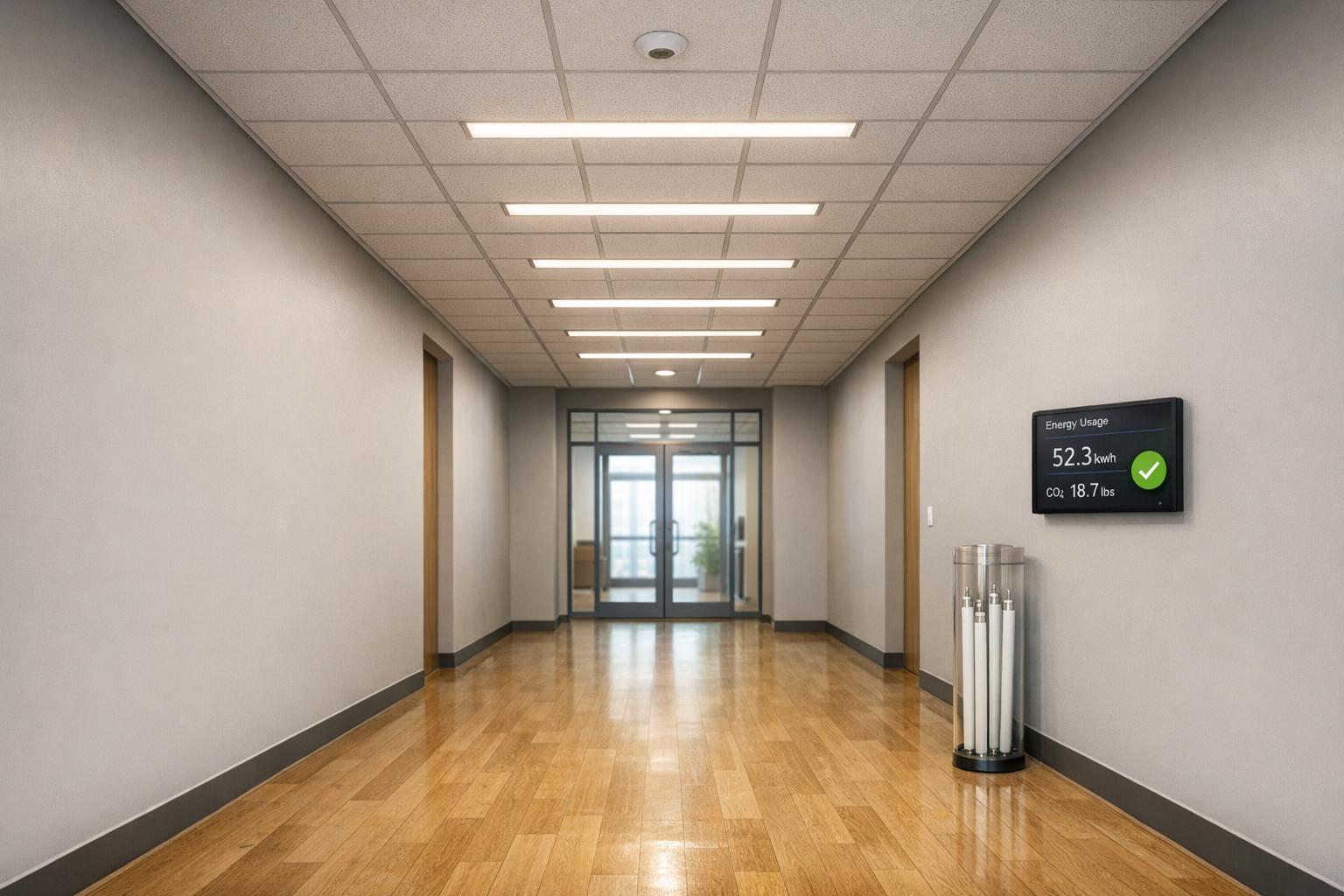
LED retrofits are a straightforward way to meet strict energy codes like ASHRAE 90.1 and IECC while cutting energy costs and reducing emissions. Facilities using outdated lighting systems, such as HID or fluorescent lamps, face higher energy bills, compliance risks, and potential fines ranging from $5,000 to $50,000. Upgrading to LEDs can reduce lighting energy use by 50-70%, with smart controls providing an additional 10-30% savings. LEDs also last longer (50,000+ hours), lowering maintenance costs and simplifying compliance with safety and energy standards.
Switching to LEDs is a cost-effective solution to meet regulations, save money, and improve workplace safety.
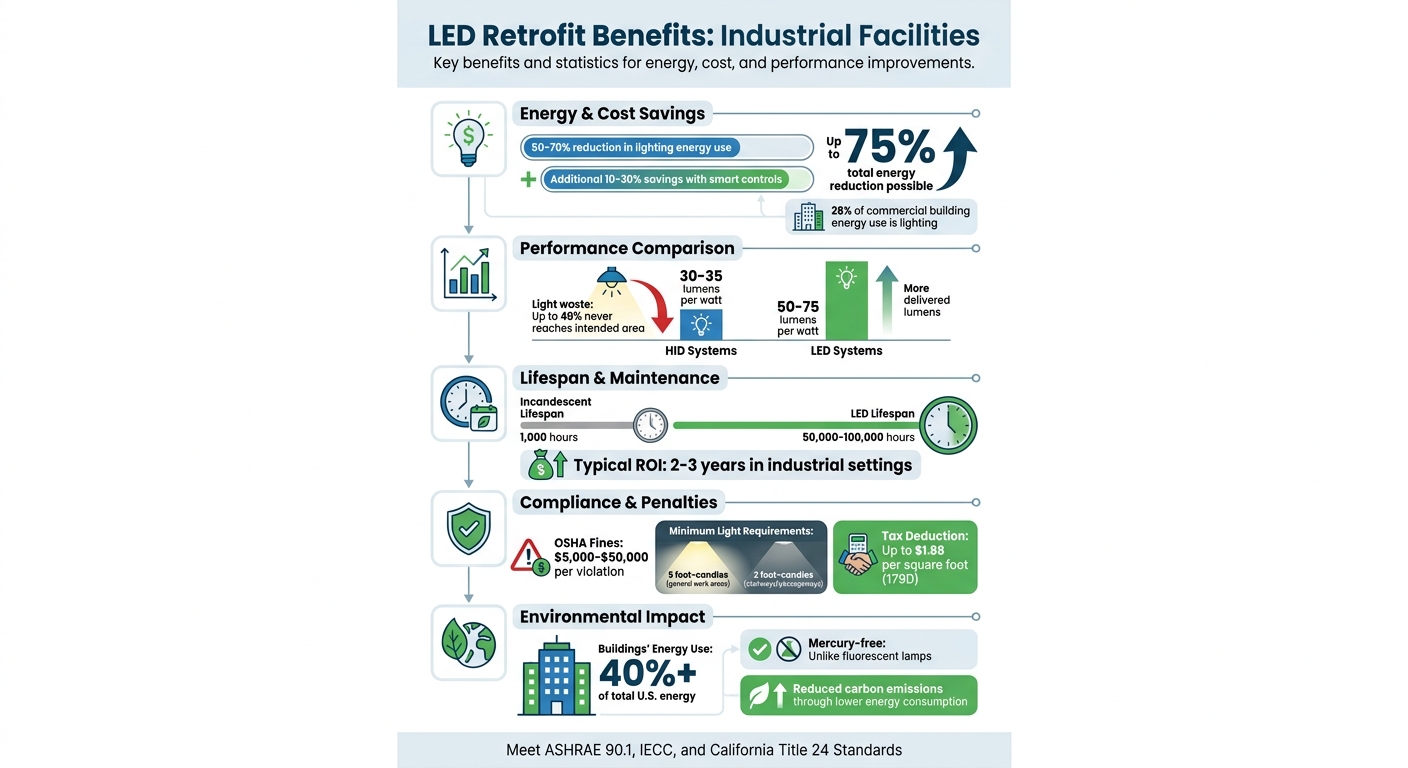
LED Retrofit Benefits: Energy Savings, Compliance & Cost Reduction Statistics
Old lighting systems are a double-edged sword - they waste energy and make it harder to meet code requirements. Take High-Intensity Discharge (HID) and fluorescent lamps, for instance. These lights emit in all directions, relying on reflectors that often fail to redirect light efficiently. The result? Up to 40% of the light from HID lamps never reaches the intended area, leaving facilities paying for electricity without getting adequate illumination where it’s needed most.
HID lamps come with another headache: their long restrike times (2–20 minutes) make them incompatible with modern occupancy sensors and automated controls. Fluorescent lamps, while slightly better, pose environmental risks due to their mercury content, making disposal costly and complicated. These drawbacks make both systems a poor fit for meeting the requirements of ASHRAE Standard 90.1-2010, which emphasizes energy efficiency and advanced controls.
The performance gap between older systems and modern LEDs is stark. While HID luminaires produce only 30 to 35 lumens per watt, LED systems deliver a far superior 50 to 75 lumens per watt. With lighting accounting for about 26% of energy use in commercial buildings, sticking with inefficient systems not only drives up costs but also creates compliance challenges. The push to upgrade to LEDs is more than just a trend - it’s a necessity.
Failing to meet compliance standards can be costly - both financially and operationally. OSHA fines for lighting violations range from $5,000 to over $50,000 per violation. As FSG, a compliance expert, puts it:
"Staying compliant isn't optional; it's a legal obligation. Non‐compliance can result in fines, citations, or shutdowns." - FSG
The consequences don’t stop at fines. If lighting levels fall below OSHA’s minimum requirements - 5 foot-candles for general work areas and 2 foot-candles for stairways and passageways - facilities might face mandatory shutdowns. Aging HID lamps are particularly risky here, as their lumen output declines over time, potentially dropping below legal thresholds even if the fixtures are still functioning. This not only increases liability for workplace injuries but also adds urgency to switch to energy-efficient LED systems.
On top of compliance risks, outdated lighting systems drain operational budgets. Facilities sticking with older technologies miss out on utility rebates and tax incentives that come with LED upgrades. LEDs can cut energy use by 50–70%, offering significant savings while ensuring compliance. Upgrading isn’t just about avoiding penalties - it’s an investment in long-term efficiency and safety.
LED retrofits are a practical solution for meeting energy efficiency standards like ASHRAE 90.1 and the International Energy Conservation Code (IECC), which govern commercial and industrial buildings. Considering that buildings account for over 40% of energy use in the U.S., switching to LEDs is a smart way to align with these regulations.
Recent updates to these codes have introduced stricter limits on power density and new daylight harvesting requirements. California Title 24, known for setting the bar with its stringent energy codes, has led the way by mandating occupancy sensors, dimming capabilities, and plug load controls. LEDs naturally fit into these frameworks since they work seamlessly with smart controls and provide directional lighting that enhances efficiency.
By reducing energy consumption, LED retrofits not only lower carbon emissions but also decrease utility costs and minimize the environmental impact of a facility. These benefits come alongside increased durability and reduced maintenance expenses.
LEDs are built to last - typically offering lifespans of 50,000 to 100,000 hours, far exceeding the 1,000-hour lifespan of incandescent bulbs or the shorter cycles of HID and fluorescent systems. This longevity means fewer replacements, less downtime, and lower labor costs for maintenance teams. In industrial settings with high ceilings, these savings can be especially impactful.
Beyond cost savings, the extended lifespan of LEDs contributes to sustainability by reducing waste. Unlike fluorescent lamps, which contain mercury and require special disposal, LEDs are free of hazardous materials and can be recycled more easily. This not only aligns with environmental regulations but also simplifies compliance for facility managers. Additionally, retrofitted fixtures that are UL classified under "Luminaire Conversions, Retrofit (IEUQ)" meet safety standards, making it easier for inspectors and authorities to confirm compliance.
LED retrofits come with financial perks, including utility rebates and the 179D tax deduction, which allows building owners to claim up to $1.88 per square foot for qualifying projects.
To maximize these incentives, facilities should consider designing LED systems that exceed basic compliance. Features like occupancy sensors, daylight harvesting, and advanced light distribution designs not only improve energy efficiency but also make projects more eligible for rebates and tax benefits. These financial incentives ease the cost of upgrades while encouraging environmentally responsible solutions. Partnering with professionals who are knowledgeable about both energy codes and incentive programs ensures that every possible advantage is utilized.
Before diving into replacements, start by evaluating your current lighting system against relevant codes. An energy audit helps establish a baseline by measuring light levels (in foot-candles) and gathering operational data, such as annual usage hours and local electricity rates per kWh. This data is essential for calculating the return on investment (ROI) and payback periods. In industrial environments, LED retrofits often recoup their costs within 2 to 3 years.
Identify any obstructions - like mezzanines, tall racks, or skylights - that could influence photometric designs. The U.S. Department of Energy highlights that "LED lighting can have the greatest potential impact on energy savings in the United States". However, this is only achievable when retrofits are based on precise facility data. This information becomes the backbone of our proven process for a compliant retrofit plan.
Use the findings from your energy audit to guide product selection. Choose products that meet UL listing and IES LM-79/LM-80 standards. Ensure that LED retrofit kits are UL listed and comply with IES LM-79 for photometric accuracy and LM-80 for lumen maintenance. These certifications not only ensure safety but also provide reliable performance metrics.
Evaluate whether your existing housings can accommodate LED kits or if full fixture replacements are necessary to handle heat dissipation. In areas with high ceilings that require scaffolding or lifts, opt for LEDs with lifespans of 50,000+ hours to significantly reduce maintenance costs over time. Additionally, consult local utility providers early in the process. Some rebate programs may require pre-approval or have specific product limitations that need to be considered during the design phase. Choosing certified, compatible products ensures a seamless transition to a compliant system.
Incorporate smart controls based on the audit results and selected retrofit products. Modern standards, such as ASHRAE 90.1 and California Title 24, mandate the use of occupancy sensors, photo sensors, and variable dimming. LEDs are perfectly suited for these requirements, as they support continuous dimming from 20% to 100%.
A simple one-to-one replacement often falls short of meeting code, particularly in exterior or high-ceiling areas. Photometric calculations are essential to account for light loss factors and ensure proper max/min ratios for safety and compliance. These calculations help identify potential dark spots before installation, saving time and avoiding rework. By combining the right LED products with smart controls and precise photometric designs, facilities can go beyond basic compliance and unlock opportunities for rebates and tax incentives.
Real-world examples show how LED retrofits go beyond meeting compliance standards - they deliver energy savings, financial returns, and improved safety.
A Southeast Regional Distribution Company transformed its 750,000-square-foot facility in just six weeks by replacing 2,800 outdated fixtures with 150W LED high bays equipped with occupancy sensors. These sensors dimmed the lights to 30% when areas were unoccupied. The results? Annual savings of $387,000, a quick 1.8-year payback period, $142,000 in incentives, and LED fixtures designed to last 15 years.
Meanwhile, at the Luminant Independence Power Plant in Oswego, NY, a different issue was tackled. Their 83,700-square-foot facility had been relying on 30-year-old 400W metal halide fixtures, which not only consumed excessive energy but also posed safety risks. Maintenance Technician Rob Godden shared:
"Safety actually involved two considerations. First, some of the fixtures were hard to reach, which put people re-lamping in an unsafe situation. Second, we realized that just having better overall light in the area would make our facility safer for working."
The plant upgraded to EarthTronics LED UFO high-bay fixtures with network control sensors that dim output to 35% after 30 minutes of inactivity. The results were striking - illuminance in a key work area jumped from 2 to 86 foot-candles, significantly improving visibility and safety for workers.
At the Rex Lumber Manufacturing Plant in Brookhaven, MS, a well-planned LED retrofit brought impressive financial benefits. A detailed energy assessment identified every fixture in the plant and recommended replacements. This strategic approach secured rebates covering 43% of the project costs.
Plant Manager Doug Boykin noted:
"SEMCO's detailed energy assessment listed every lighting fixture in our plant along with a recommended replacement... Now we are saving money every month and have a brighter, safer work environment."
The project incorporated Flex Essentials Series 4.0 LED High Bays with tailored optics to ensure optimal lighting while cutting energy usage and reducing the number of fixtures needed. This example highlights how combining rebates with thoughtful product choices can make LED retrofits a smart financial decision.
These examples demonstrate how careful planning and modern LED solutions can address industrial lighting challenges effectively, offering lasting benefits.
Switching to LED retrofits delivers lasting savings and operational improvements. These systems can cut energy use by 40% or more compared to older lighting technologies, with some upgrades reaching energy savings as high as 78%. On top of that, their extended lifespan helps reduce maintenance expenses, which is especially valuable in industrial settings with hard-to-reach fixtures or high ceilings.
Operationally, LEDs offer additional advantages. Unlike fluorescent lamps, they are free of hazardous materials like mercury, making disposal safer and reducing environmental risks. Their ability to turn on instantly and handle frequent switching makes them perfect for spaces using occupancy sensors to optimize energy use. These features not only lower costs but also support ongoing compliance with environmental standards.
To fully leverage these benefits, working with skilled professionals is crucial. LED retrofits often involve technical complexities, and Luminate Lighting Group specializes in managing these challenges. All retrofit kits we provide are UL classified under "Luminaire Conversions, Retrofit (IEUQ)" and are properly documented to meet safety regulations. We also collaborate with local authorities to confirm inspection requirements and ensure that modified luminaires are clearly labeled, maintaining compliance with regulatory standards.
Our services include energy audits, photometric analysis, and custom lighting designs tailored to your facility. We ensure that all products come with essential IES LM-79, LM-80, and TM-21 documentation to back up performance claims. From selecting the best fixtures to integrating smart controls and securing utility rebates or 179D tax deductions, we handle every part of your retrofit project. This ensures your facility not only meets environmental codes but also achieves maximum energy efficiency and operational savings.
You don’t always have to replace an entire fixture to switch to LED lighting. LED retrofit kits are a practical solution that lets you upgrade your current fixtures. These kits not only help reduce energy consumption but also ensure compliance with modern energy standards. Plus, they’re usually easier on the budget and less invasive than a full fixture replacement, making them a smart choice for many lighting upgrades.
To comply with ASHRAE 90.1, IECC, or Title 24, several lighting control strategies are commonly used. These include multi-level dimming, occupancy sensors, daylight controls, and automatic shutoff systems. The focus of these standards is on improving energy efficiency, often by incorporating features like daylight integration and multi-level control systems to reduce unnecessary energy use.
To ensure your LED retrofit passes inspection, make sure you have the following documents ready:
Having these documents organized will help streamline the inspection and approval process.


