.svg)
Convert lumens to watts for LED lights with our simple tool! Get quick, approximate wattage values to help with your lighting projects.

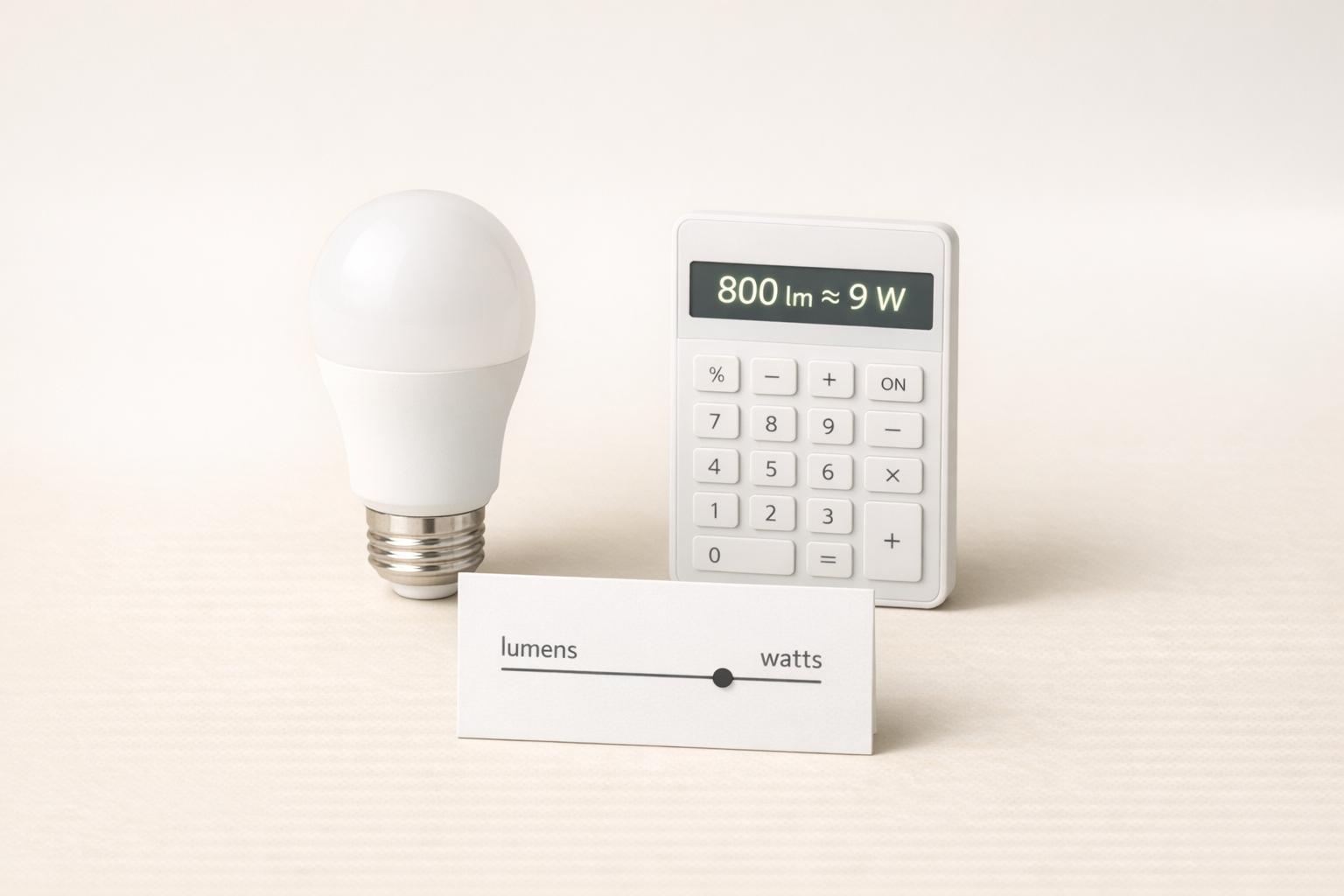
When upgrading to energy-efficient lighting, knowing how to translate brightness into power usage is key. Many of us are used to picking bulbs based on wattage, but with LEDs, the focus shifts to lumens—a measure of light output. This can feel confusing at first, especially when you’re trying to match the glow of an old incandescent bulb with a modern alternative.
LEDs are incredibly efficient, often delivering the same brightness as traditional bulbs while using a fraction of the energy. That’s why a simple tool to convert lumens to approximate wattage can be a lifesaver. Whether you’re redesigning your home lighting or outfitting an office, having a quick way to estimate power needs helps you make informed choices without the guesswork.
Keep in mind that not all bulbs are created equal. Factors like color temperature and beam angle also play a role in how a space feels. While our calculator offers a handy starting point for understanding energy use, always double-check product details for the best fit. With the right info, switching to LED can brighten your space and cut down on energy bills!
This tool provides an approximate value using a general conversion factor of 90 lumens per watt, which is a common average for LED lights. However, the actual efficiency can vary depending on the brand, model, or specific technology of the bulb. If you’re looking for precise data, check the packaging or manufacturer specs for the exact wattage.
Lumens measure the brightness of a light source, while watts measure the energy it consumes. Since LEDs are much more energy-efficient than traditional bulbs, focusing on lumens gives you a better idea of the light output you’ll get. Watts are still useful to understand power usage, which is why tools like this converter can help bridge the gap!
This converter is specifically designed for LED lights, as the lumens-to-watts ratio differs for other types like incandescent or fluorescent bulbs. For instance, an incandescent bulb might only produce 10-15 lumens per watt compared to an LED’s 90. If you’re working with other lighting types, you’d need a different conversion factor tailored to that technology.


