.svg)
Compare IP65, IP66, and IP67 to choose outdoor fixtures by dust and water protection, testing, applications, and installation tips.

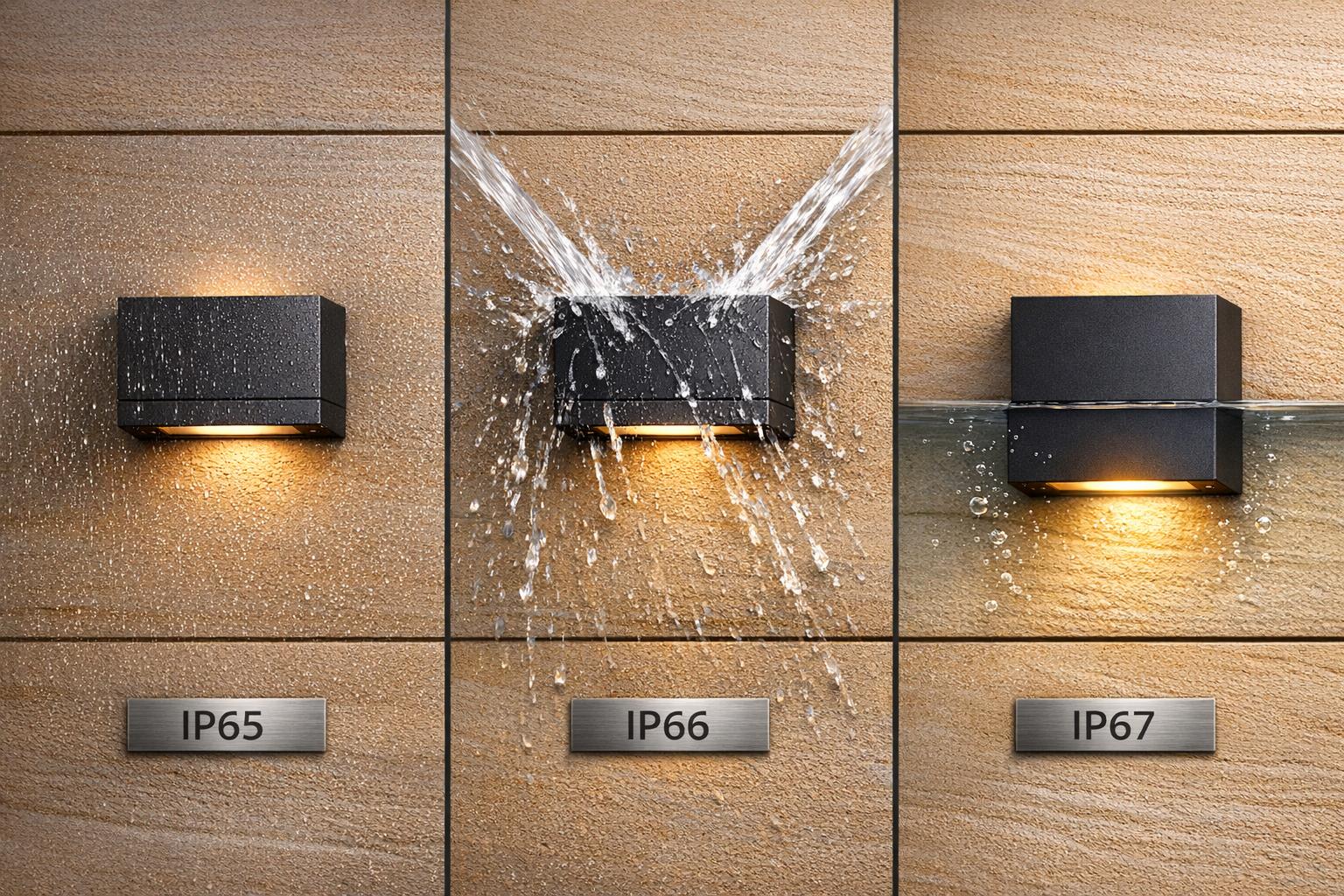
When choosing outdoor lighting, understanding IP ratings is key to ensuring durability and performance. IP ratings, defined by the IEC 60529 standard, measure protection against dust and water. The first digit (0-6) indicates dust resistance, while the second digit (0-9K) shows water resistance. Outdoor fixtures commonly carry IP65, IP66, or IP67 ratings, each suited for different conditions:
Each rating serves specific needs, so selecting the right one depends on the environment and exposure to water or debris. Proper installation and maintenance are also crucial for long-term reliability.
If you're choosing outdoor fixtures, understanding IP ratings is a must. These ratings measure how well a fixture can resist dust and water, based on strict international standards outlined in IEC 60529. Each compliant fixture is assigned a two-digit code that reflects its level of protection. Let’s break down what these digits mean and how they’re tested.
"An IP rating is not a claim. It is the result of controlled laboratory testing against defined pass/fail criteria." - Faraday Lighting
The first digit (0 to 6) indicates protection against solid objects, ranging from large items like hands to fine dust particles. For outdoor lighting, a first digit of 6 (dust-tight) is crucial. Even a thin layer of dust on an LED chip can raise temperatures by 5–10°F, speeding up phosphor degradation and causing color shifts over time.
The second digit (0 to 9K) measures water resistance. Here's how the levels stack up:
| Second Digit | Protection Level | What It Handles |
|---|---|---|
| 4 | Splashing water | Water splashing from any direction |
| 5 | Low-pressure jets | Water from a 6.3mm nozzle at 12.5 L/min |
| 6 | Powerful jets | Water from a 12.5mm nozzle at 100 L/min |
| 7 | Temporary immersion | Up to 1 meter deep for 30 minutes |
| 8 | Continuous immersion | Depth and duration specified by the manufacturer |
If you see an "X" in place of a digit (e.g., IPX5), it doesn’t mean the fixture has no protection. It simply means that specific category wasn’t tested or certified by the manufacturer.
IP ratings aren’t just numbers - they’re backed by rigorous, standardized tests. For dust protection, a fixture with an IP6X rating is placed in a sealed chamber filled with circulating talcum powder (with a particle size of 75 microns) for 2 to 8 hours. A vacuum is used to simulate negative pressure, and the fixture must show zero dust ingress to pass.
For water protection, testing involves precise control of nozzle size, water flow rate, distance, and duration. For instance, an IPX7 test submerges the fixture in 1 meter of water for exactly 30 minutes. Outdoor luminaires also undergo testing under IEC 60598-1, which requires the fixture to reach a stable operating temperature before water exposure. This simulates real-world conditions, like when a hot fixture is hit by cold rain, causing internal air to contract and potentially pull moisture through weak seals.
Although manufacturers can self-declare IP ratings, third-party verification from accredited labs like UL, Intertek, SGS, or TÜV adds credibility, especially for commercial projects.
"Buyers ask 'what's the IP level' not knowing that they should ask 'what is tested per IEC 60529 by which accredited third-party laboratory and what is the test report number'. This IP level without traceability is simply marketing." - Guangqi Engineering Team

IP65 vs IP66 vs IP67 Outdoor Lighting Ratings Compared
Knowing the differences between IP65, IP66, and IP67 ratings can help you pick the right lighting fixture for outdoor conditions. Each rating starts with a 6, meaning the fixtures are completely dust-tight. The key distinction lies in how they handle water exposure, which is crucial for matching fixtures to specific environments.
IP65 is the go-to rating for most outdoor commercial lighting. It’s tested using a 6.3 mm nozzle, delivering water at 12.5 liters per minute from all angles. This makes it effective against rain, snow, and light sprays. Fixtures with this rating work well for applications like wall packs, parking lots, building facades, and under-eave lighting. If your fixture won’t encounter standing water or high-pressure cleaning, IP65 is usually sufficient.
IP66 steps up the water resistance game. It’s tested with a 12.5 mm nozzle at 100 liters per minute, handling much more water than IP65. This extra protection makes it ideal for challenging environments, like coastal areas with wind-driven salt spray, industrial sites that require pressure washing, or exposed rooftops and piers. However, this added durability comes at a cost - IP66 fixtures are about 15–20% pricier than IP65 models due to stronger seals and reinforced housing.
"For a wall-mounted fixture in a facility that gets pressure-washed regularly, IP66 is actually the more appropriate specification [than IP67]." - Faraday Lighting
While IP66 is built for high-pressure cleaning and sprays, IP67 is designed to handle water immersion.
IP67-rated fixtures can survive being submerged in water up to 1 meter deep for 30 minutes. This makes them ideal for ground-level or recessed installations - like deck lights or in-ground well lights - where water pooling during heavy rain or flooding might occur. However, IP67 isn’t necessarily better than IP66. While IP67 handles static immersion, it’s not designed for high-pressure water jets.
"IP67 is not necessarily 'better' than IP66. IP67 tests for static immersion, while IP66 tests for high-pressure kinetic force." - Lotus Liu, USKYLED
Due to features like full resin potting or secondary encapsulation, IP67 fixtures are 30–40% more expensive than IP65 models.
When selecting an IP rating, it's crucial to think about the most extreme conditions your project might face. Whether it's a nor'easter, a high-pressure industrial wash, or a flash flood, designing for the worst-case scenario helps avoid premature equipment failure.
| Feature | IP65 | IP66 | IP67 |
|---|---|---|---|
| Dust Protection | Dust-tight | Dust-tight | Dust-tight |
| Water Resistance | Low-pressure jets (approx. 12.5 L/min) | Powerful jets (100 L/min) | Temporary immersion (up to 1 m for 30 min) |
| Pressure Tolerance | 30 kPa | 100 kPa | Static immersion pressure |
| Cleaning Method | Rain/washing | High-pressure hose-down | Not jet-rated (unless dual-rated) |
| Typical Applications | Wall packs, parking lots, covered walkways | Coastal zones, loading docks, industrial washdown areas | In-ground well lights, flood-prone zones, parking ramp bases |
| Cost vs. IP65 | Baseline | ~10–20% more | ~30–40% more |
This table offers a quick snapshot, but you'll also need to consider specific environmental factors to make the best choice.
Start by assessing rain and weather exposure. For most outdoor commercial fixtures - like wall packs, light poles, or building facades - IP65 is often sufficient. It handles typical rain or snow effectively while keeping costs lower for areas that don’t experience high-pressure water.
Cleaning methods can heavily influence your decision. If your facility uses industrial pressure washers or fire hoses for maintenance, as seen in loading docks, car washes, or food processing plants, you'll need at least IP66. This rating is built to handle much higher water pressure than IP65.
Flood-prone or ground-level placements demand even more protection. Fixtures like in-ground well lights, recessed deck lights, or those at the base of sloped surfaces are better suited for IP67. Without this level of protection, fixtures rated at IP65 may see their lifespan shrink from a decade to just 2–3 seasons due to mineral deposits and component wear.
"Pick the lowest rating that safely fits the worst day on that road. This keeps cost, weight, and heat in balance." - Wao Wu, Co-founder, ADNLITE
For coastal or corrosive environments, keep in mind that IP ratings only address dust and water ingress - they don't account for salt spray or UV degradation. Coastal installations benefit from pairing IP66 fixtures with corrosion-resistant finishes, such as bronze-coated aluminum or C5-grade powder coats, and UV-stabilized materials.
In the U.S., compliance often hinges on a UL 1598 "Suitable for Wet Locations" listing rather than just the IP rating. This certification is critical for meeting inspection standards.
When it comes to IP ratings, the technical specifications - not just the product label - are your go-to source for accuracy. Look under "Ingress Protection" or "IP Code" to find the official rating. Importantly, ensure that the rating applies to the entire assembled fixture, not just one component. For instance, a driver rated IP67 inside a housing rated IP54 means the overall protection level is capped at IP54.
In the U.S., it's critical to ensure fixtures comply with NEC requirements. Look for a UL or ETL listing marked "Suitable for Wet Locations", and verify the test report number or QR code for authenticity. This step ensures the fixture maintains the protection levels validated during testing.
"The IP code printed on every outdoor lighting fixture is the single most important specification for long-term reliability - and the most widely misunderstood." - Portfolio Lighting
Additionally, check that the fixture uses durable gasket materials like EPDM or silicone, as these provide better long-term sealing compared to open-cell foam.
Even the best-rated fixture can fail if improperly installed. Taking a few simple precautions can make a big difference in performance and lifespan.
For ongoing maintenance, inspect seals and hardware regularly. In harsh environments like coastal or dusty areas, check every 3–6 months. In milder conditions, inspections every 6–12 months are usually sufficient. IP65 fixtures can be cleaned with a standard garden hose, but reserve high-pressure washers for fixtures rated IP66 or higher.
Proper verification and careful installation ensure your fixtures perform as intended, even in challenging environments.
Selecting the right IP-rated fixture is about more than just picking a number - it’s about matching the fixture's full specifications, including its rating, certifications, gasket quality, and driver warranty, to meet the environmental demands of your project.
Luminate Lighting Group partners with commercial and municipal clients to deliver reliable IP-rated lighting solutions. Whether it’s an industrial washdown setting or a flood-prone municipal site, they ensure your project meets code requirements, performs efficiently, and qualifies for utility rebates and 179D tax deductions. Let Luminate Lighting Group simplify your IP-rated lighting needs with expert guidance and tailored solutions.
Here’s a breakdown of the most important points about IP65, IP66, and IP67 ratings, specifically for outdoor lighting applications.
IP65 is built to handle standard rain and snow, making it ideal for parking lots, wall packs, and building facades. IP66 is better suited for harsher conditions like coastal areas, heavy storms, or industrial environments where pressure washing is common. On the other hand, IP67 is designed for fixtures exposed to standing water or temporary flooding, such as in-ground landscape lights or flood-prone areas. But keep in mind: a higher rating isn’t always better. For example, while IP67 can handle immersion, it might fail under the intense force of a pressure washer, which IP66 is specifically designed to withstand.
Besides the IP rating, other factors like certifications and materials play a big role in durability. Look for features like a "UL Listed for Wet Locations" mark, EPDM or silicone gaskets, and housing materials suited for the environment - such as bronze-coated aluminum for coastal installations. Also, consider UV resistance and IK impact ratings, since IP codes don’t address protection against sun damage or physical impacts.
Making the right choice can save you money in the long run. For instance, selecting an IP66-rated LED retrofit for a demanding environment, like a 24/7 food processing facility, can lead to significant energy savings, lower carbon emissions, and quick payback through utility rebates.
| Rating | Water Protection | Best For | Cost vs. IP65 |
|---|---|---|---|
| IP65 | Low-pressure jets | Standard outdoor areas, parking lots | Baseline |
| IP66 | Powerful water jets | Coastal zones, washdown facilities | ~15–20% more |
| IP67 | Temporary immersion (up to 3.3 ft for 30 min) | In-ground lights, flood-prone areas | ~30–40% more |
To ensure your fixtures last their full 50,000+ hour lifespan, match the rating to the environment, check certifications, and pay attention to installation details. These steps are critical for avoiding premature failures and maximizing performance.
IP65 works well for most outdoor lighting needs, like wall-mounted fixtures or parking lot lights. It offers protection against rain, snow, and humidity, making it a reliable choice in standard weather conditions. Opt for IP66 only if the area is exposed to high-pressure water - such as during industrial washdowns - or extreme weather like coastal storms or heavy wind-driven rain. For most commercial and municipal projects, IP65 provides the durability and weather resistance required.
IP67-rated fixtures may resist temporary submersion in water, but they aren't built to handle the force of pressure washing. High-pressure water jets, often used in industrial cleaning, can compromise their integrity. If you need fixtures that can endure frequent pressure washing or heavy hose-downs, IP66-rated fixtures are a more suitable option. These are designed specifically to withstand powerful water jets and offer greater durability over time.
An IP rating isn’t just a fancy label like "waterproof" tossed around for marketing purposes. It’s grounded in rigorous testing under the IEC 60529 standard. To ensure the rating is genuine, look for technical documentation from the manufacturer that verifies compliance. This documentation confirms the product has undergone tests for dust and water resistance, considering practical factors like thermal expansion and pressure changes that might compromise the seals over time.


