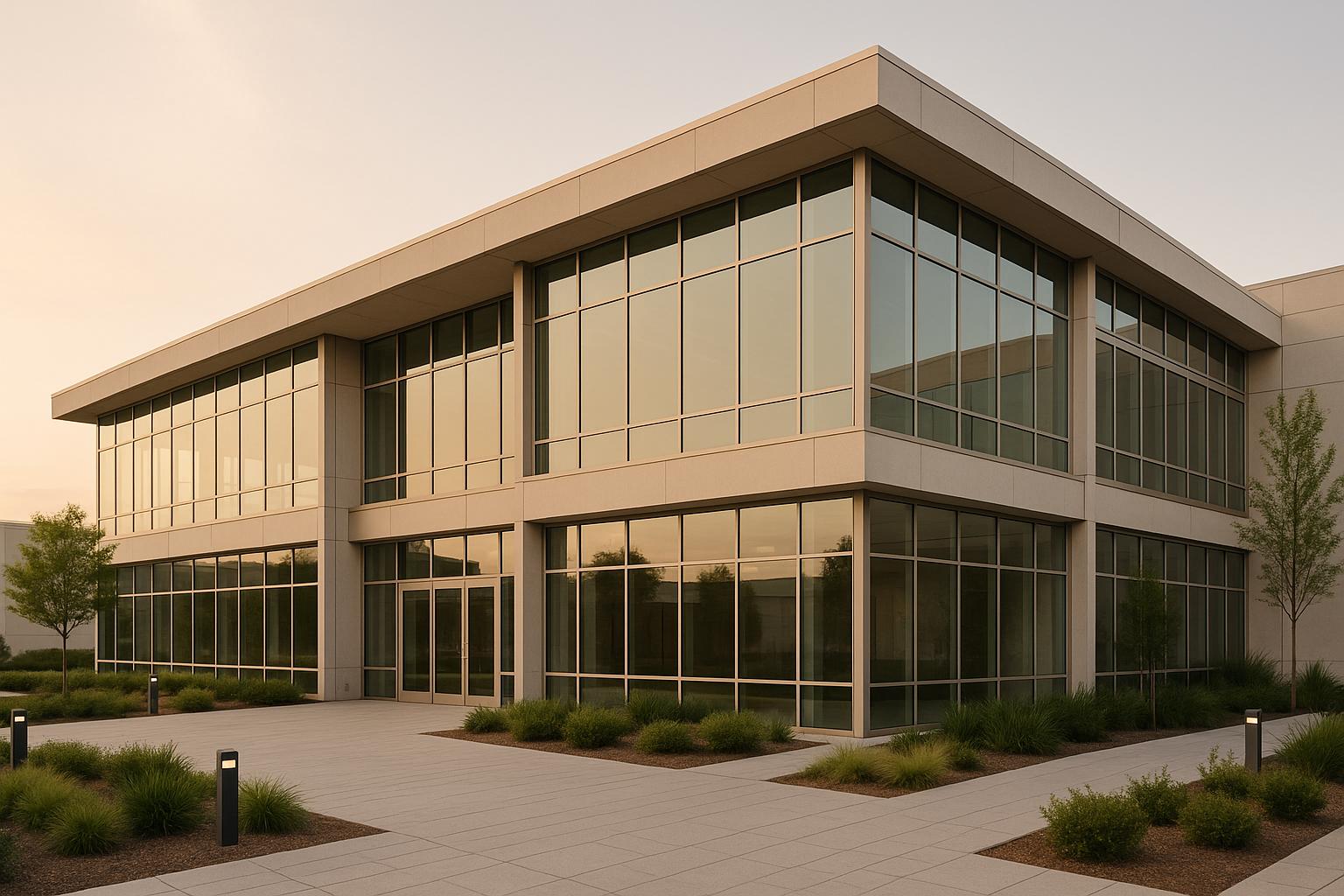
How to Improve Commercial Building Energy Efficiency
Discover how investment-grade energy audits boost efficiency, cut costs, and improve commercial building performance.
Luminate Lighting Group
Reducing energy costs in commercial buildings isn't just a "nice-to-have" anymore - it’s a financial imperative, a compliance requirement, and a competitive edge in today’s real estate market. Energy efficiency impacts tenant satisfaction, operating expenses, and asset value, which means embracing it can transform not only your building’s performance but also its marketability. However, achieving meaningful energy savings is far from straightforward.
This guide breaks down the complexities of commercial building energy audits and offers actionable insights to help you make smarter energy investments.
Why Energy Efficiency Matters for Commercial Properties
Commercial buildings significantly contribute to global energy consumption and carbon emissions. For property owners and managers, energy ranks as one of the largest operating costs - second only to labor. But unlike fixed expenses, energy costs are controllable. Efficient energy management strengthens financial performance while delivering multiple benefits, including:
Lower Operating Costs: Reduced energy bills translate directly into improved net operating income (NOI).
Enhanced Tenant Retention: Comfortable, well-maintained spaces lead to satisfied tenants who are more likely to renew their leases.
Increased Asset Value: Efficient buildings can command higher rents, lower vacancy rates, and improved financing terms, all of which increase property value.
Regulatory Compliance: Stricter energy codes, disclosure rules, and ESG (Environmental, Social, and Governance) expectations mean that inefficiency is no longer an option.
While the benefits are clear, identifying where and how to achieve energy savings requires expertise and rigor - enter the energy audit.
sbb-itb-86fe545
The Role of Energy Audits in Improving Building Performance
An energy audit acts as the foundation for identifying energy-saving opportunities across complex building systems. However, not all audits are created equal. The most effective audits follow investment-grade standards, providing actionable, credible recommendations that align with financial and operational goals.
Why Commercial Energy Audits Are Complex
Commercial buildings are deceptively intricate. Systems like HVAC, lighting, plug loads, and vertical transport interact in ways that can amplify or negate each other's energy impact. For example:
HVAC Systems: These are often the largest energy consumers but are highly dependent on occupancy, schedules, climate, and other variables. Even small adjustments to set points or schedules can have significant effects.
Lighting Upgrades: Retrofitting with LEDs reduces lighting energy use but can increase heating loads in winter due to reduced heat output from fixtures.
Plug Loads: Servers, IT equipment, and kitchen appliances represent growing energy demands in many properties and require targeted strategies.
Building Controls: Even the most advanced systems can underperform without proper calibration, scheduling, or maintenance.
A superficial approach to auditing these systems risks overestimating savings or failing to account for the interactive effects between them.
Common Pitfalls in Energy Audits (and How to Avoid Them)
Decision-makers must be cautious when commissioning energy audits to ensure they avoid common pitfalls:
Superficial Walkthroughs: Quick site visits often result in generic, cookie-cutter reports with little actionable insight.
Poor Cost Estimates: Inaccurate upgrade cost projections can derail projects when bids exceed initial budgets.
Neglecting Controls: Failing to assess building management systems (BMS) and controls can overlook opportunities for easy, cost-effective savings.
Ignoring Interactive Effects: Overlooking how one system change impacts others can lead to inflated or understated savings estimates.
Weak Financial Credibility: Reports lacking risk analysis, cash flow modeling, or board-ready presentation often fail to convince decision-makers.
Characteristics of an Investment-Grade Energy Audit
The gold standard for energy audits - known as an investment-grade energy audit (IGEA) - includes the following hallmarks:
Comprehensive Data Analysis: At least 12 months of utility and interval data, plus occupancy and scheduling information.
Detailed Measurement Tools: Use of advanced methods like ultrasonic flow meters, infrared thermography, and CO₂ monitoring.
System-wide Focus: Examination of HVAC, lighting, plug loads, and the building envelope, with attention to how they interact.
Financial Rigor: Savings projections expressed in net present value (NPV), internal rate of return (IRR), and payback periods, with risk ranges included.
Baseline for Verification: Establishing clear benchmarks to measure savings post-implementation.
These audits require skilled professionals who are certified in investment-grade methods. Hiring an Investment Grade Energy Auditor (IGAA) ensures you’re working with experts capable of delivering high-quality analysis and actionable recommendations.
Realistic Savings Opportunities in Commercial Buildings
Credible energy audits often reveal savings opportunities across multiple systems. Here’s a breakdown of typical areas for improvement and their potential impact:
1. HVAC Optimization
Adjust schedules, fix faulty sensors, and reset system temperatures.
Typical Savings: 5–15%
2. Lighting Upgrades
Retrofit to high-efficiency LEDs combined with daylight and occupancy sensors.
Typical Savings: 5–10% (higher for outdated lighting systems).
3. Plug Load Management
Optimize server rooms, install PC power management, and improve kitchen efficiency.
Typical Savings: 2–8%
4. Building Envelope Improvements
Install window films, shading devices, and upgrade insulation to reduce HVAC demand.
Typical Savings: 3–7%
5. Retrocommissioning
Recalibrate existing systems to ensure they align with their design intent.
Typical Savings: 5–15%
6. Vertical Transport Modernization
Upgrade elevator drives and controls for small but visible efficiency gains.
Typical Savings: 1–3%
Overall, site-level reductions of 10–20% are typically achievable through investment-grade audits, with deeper retrofits requiring additional capital planning.
Case Studies: Proven Results
Real-world examples illustrate the impact of well-executed audits:
Office Tower: Retrocommissioning corrected faulty sensors and schedules, saving 12% in electricity costs with minimal capital expenditure.
Shopping Center: A combination of lighting retrofits and HVAC control upgrades achieved 15% site-wide savings.
Hotel: Heat recovery from chillers for water heating reduced gas consumption by 8%.
These results highlight that investment-grade audits deliver measurable outcomes when conducted by skilled professionals.
Key Takeaways
Energy efficiency is a financial and operational priority. Beyond cost savings, it enhances tenant satisfaction, compliance, and asset value.
Hire certified professionals. IGAA-certified auditors bring the expertise needed for credible, actionable audits.
Avoid shortcuts. Superficial audits often lead to wasted time, money, and missed savings opportunities.
Focus on interactive systems. Consider how changes in one system impact others to avoid over- or underestimating savings.
Incorporate audits into capital planning. Bundle quick wins with long-term upgrades for optimized results.
Set realistic expectations. Site-level savings of 10–20% are possible with credible audits, while larger reductions may require more extensive retrofits.
Unlock Energy Savings and Future-Proof Your Portfolio
Energy efficiency in commercial buildings is both an opportunity and a challenge. The difference between a forgotten report and a transformative investment lies in the expertise of the energy auditor and the rigor of the process. By commissioning a high-quality audit and considering independent reviews, you can unlock substantial savings, improve building operations, and future-proof your property for years to come.
The next step is yours. What’s the biggest energy challenge in your building - HVAC, lighting, or controls? Start addressing it today with a smarter, more strategic approach to energy management. Let your building work harder and smarter for you.
.svg)