.svg)
How high-bay LED fixtures cut energy use up to 75%, lower maintenance and cooling costs, and speed payback with smart controls and rebates.

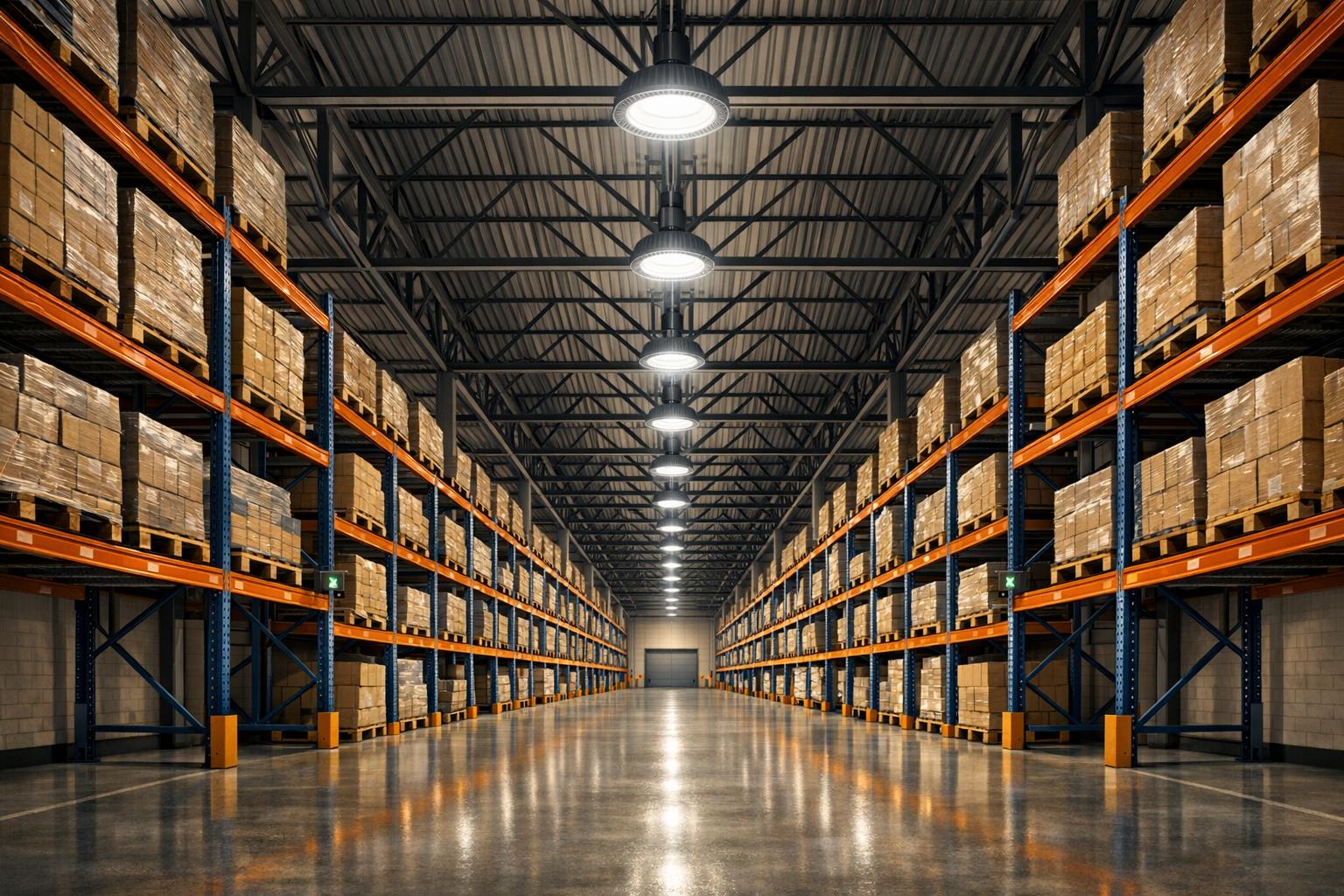
High-bay LEDs are transforming how large facilities like warehouses and factories manage lighting. These fixtures provide brighter, more focused light while cutting energy use by up to 75%. Here’s why they make sense:

LED vs Metal Halide High-Bay Lighting: Energy and Cost Comparison
Lumens per watt (LPW) measures how effectively a light fixture converts electricity into visible light. Modern LED high-bay fixtures operate at an impressive 130–180 LPW, while older metal halide systems typically manage only about 90 LPW. This means LEDs generate almost double the light using the same amount of energy, which translates to lower energy consumption.
Another major advantage of LEDs is their directional light output. Unlike traditional bulbs, which lose 20–40% of their light due to diffuse emission, LEDs focus light precisely where it’s needed. This efficiency allows LED high-bay systems to cut energy use by 50–70% compared to metal halide and high-pressure sodium fixtures, all while delivering better light quality.
Let’s dive into how this efficiency plays out in terms of wattage requirements.
The difference in wattage between LED and traditional lighting systems is dramatic. For instance, a 400W metal halide fixture actually consumes about 460W when you account for its ballast - the component that manages electrical flow. By contrast, an equivalent LED high-bay fixture uses only 150W, reducing energy use by 67%.
For larger fixtures, the savings are even more striking. A 1,000W metal halide fixture typically draws 1,150W, while an LED replacement requires just 300–400W. That’s a reduction of 700–850 watts per fixture. Here’s a real-world example: in February 2026, a facility in Williston, ND, swapped out 72 fluorescent fixtures (each drawing 373W with ballasts) for 200W LED UFO fixtures. This upgrade reduced energy use by 46%, saving $5,369 annually and achieving a payback period of less than 19 months.
| Fixture Type | Rated Wattage | Actual Draw (with Ballast) | Energy Reduction vs. LED |
|---|---|---|---|
| Metal Halide | 400W | 460W | 67% |
| LED High Bay | 150W | 150W | - |
| Metal Halide | 1,000W | 1,150W | 74% |
| LED High Bay | 300W | 300W | - |
These wattage differences highlight the dramatic energy savings LEDs offer.
Switching to LED fixtures directly lowers electricity bills. For example, replacing 50 metal halide fixtures (each drawing 460W) with 150W LEDs saves 310W per fixture. That’s a total reduction of 15,500 watts (or 15.5 kilowatts). Running these lights for 12 hours a day at an average commercial electricity rate of $0.13 per kWh results in annual savings of about $8,800.
In facilities with 24-hour lighting, those savings double. A single 150W LED replacing a 400W metal halide can save over 2,000 kWh each year. With commercial electricity rates climbing from $0.10 per kWh in 2010 to $0.13–$0.15 in 2026, these efficiency gains translate into significant cost reductions for businesses.
High-bay LED fixtures boast an impressive lifespan of 50,000–100,000 hours, with premium models reaching up to 200,000 hours. In comparison, metal halide lamps typically burn out after just 15,000 hours. To put this into perspective, if used for 12 hours daily, metal halide lights need replacing every 3–4 years, while LED high-bays can last anywhere from 11 to 15 years.
LEDs are built to last, thanks to their sturdy, resin-encased chips that resist both vibration and shock. Unlike metal halides that fail abruptly, LEDs gradually dim over time, allowing for planned maintenance rather than emergency replacements.
The extended lifespan of LED high-bay fixtures significantly lowers maintenance costs. With LEDs, the need for frequent replacements is nearly eliminated. A metal halide system, on the other hand, typically requires about four bulb replacements during the life of a single LED driver. Add to that the frequent ballast failures and the high costs of renting equipment to access fixtures, and the savings from switching to LEDs become clear - maintenance costs can drop by over 90%.
For fixtures mounted 15–45 feet high, replacing bulbs often requires expensive equipment rentals and labor. LEDs eliminate this recurring expense, saving over $200 per fixture across the lifespan of the LED driver.
Additionally, LEDs avoid the hassle and fees associated with mercury disposal, which is a concern with traditional lighting. As Dwayne Kula, President of LED Lighting Supply, explains:
Maintenance cost reduction stems from three primary factors: reduced replacement part costs, lower labor expenses, and elimination of equipment rental fees for high-bay installations.
When combined with energy savings, these maintenance reductions make LED high-bays a smart, cost-effective choice for long-term use.
Motion sensors are a game-changer for cutting energy waste by adjusting lighting based on activity. For large spaces like warehouses, microwave sensors excel because they detect movement over wide areas. Meanwhile, Passive Infrared (PIR) sensors are better suited for smaller spaces like offices or break rooms. When no motion is detected, lights can either dim to a standby level or turn off entirely, delivering an extra 40–60% energy savings on top of what LED fixtures already provide.
Pairing these sensors with 0–10V dimmable drivers ensures smooth brightness transitions. This avoids the jarring effect of abrupt on-off lighting changes. Plus, LEDs are built to handle frequent on-off cycling without damage, meaning lights respond instantly when someone enters and dim quickly when they leave.
Occupancy sensors alone can boost efficiency by an additional 30–50% compared to basic LED setups. In spaces with high ceilings (over 20 feet), microwave sensors are especially effective - they can detect movement across large areas where PIR sensors might fall short. To future-proof your setup, specify fixtures with 0–10V dimmable drivers during our installation process, even if you're not adding smart controls immediately. This avoids costly upgrades down the line.
Daylight sensors take energy efficiency even further by leveraging natural light. These systems, also known as daylight harvesting, use photosensors to monitor sunlight levels and automatically adjust LED brightness during daylight hours. Closed-loop systems are particularly effective in warehouses because they measure both natural and artificial light at the workplane, unlike open-loop systems that only monitor incoming sunlight. When properly configured, daylight harvesting can cut lighting energy use by 20–60% in areas with ample natural light.
The setup involves creating zones based on how much daylight each area receives. For example, fixtures near skylights should be grouped separately from those in darker parts of the building. To ensure smooth transitions, configure dimming ramps of 5–30 seconds and maintain a minimum light level of 10–20%. As Thach Nguyen Ngoc from Hyperlite puts it:
With proper setup, employees won't even notice the system is working - but the utility bill will.
Energy codes like ASHRAE 90.1 and California's Title 24 now require automatic daylight-responsive controls in spaces near windows or skylights. On top of that, many utility companies offer higher rebates for LED projects that incorporate advanced controls, which can significantly speed up the payback period. By combining these intelligent systems with LEDs, you can maximize savings and hit energy reduction targets more effectively.
High-bay LEDs go beyond just energy savings - they offer a range of advantages that can lower operational costs and improve overall facility performance.
Switching to high-bay LEDs can significantly cut your facility's carbon emissions. These lights use 40% to 75% less electricity than traditional systems, which means less fossil fuel consumption at power plants and lower overall emissions. The U.S. Department of Energy estimates that by 2030, increased LED adoption will bring about a 28% reduction in lighting-related energy use across the country.
Another benefit? LEDs don’t contain mercury or other harmful substances, unlike fluorescent or metal halide lamps. Their impressive lifespan - lasting up to 200,000 hours compared to just 15,000 hours for metal halide bulbs - means fewer replacements, less manufacturing, and reduced waste over time. This combination of energy efficiency and waste reduction helps shrink your environmental footprint while aligning with sustainability initiatives.
And it’s not just about the environment - LEDs also improve the workplace experience with better lighting quality.
High-bay LEDs offer exceptional light quality, boasting a color rendering index (CRI) of 80+. This ensures colors appear more accurate, which is essential for tasks like quality control and part identification. Unlike older lighting systems that create bright spots directly below and dim areas elsewhere, LEDs spread light evenly across surfaces, reducing shadows and eye strain. They also operate flicker-free and provide instant-on illumination, eliminating delays and unstable light that can strain workers' eyes.
Take JFC International, for example. In October 2023, they replaced fluorescent high-bay fixtures at their Hayward, California, food distribution warehouse with high-efficiency LEDs and motion-sensing controls. The result? Light levels nearly doubled, improving visibility and reducing eye strain for workers. On top of that, they cut lighting energy costs by 69%, saving over $29,000 annually.
LEDs also generate less heat, which leads to additional cost savings in cooling.
LEDs are much more efficient at converting electricity into light, which means they produce less heat compared to traditional lighting. For instance, a 58W fluorescent fixture generates about 198 BTU/hr, while a comparable 36W LED fixture produces only 123 BTU/hr. In climate-controlled environments, this reduced heat output translates to lower cooling demands, as air conditioning systems don’t have to work as hard to offset the heat from lighting.
A Tier III data center in Penang experienced this firsthand in 2024. After upgrading 312 fluorescent battens to LED luminaires, the facility saw a 41% reduction in lighting power use and an 11% decrease in cooling system runtime. This improvement reduced the facility’s Power Usage Effectiveness (PUE) from 1.69 to 1.56, saving about $12,800 annually in cooling costs. These HVAC savings often represent a significant chunk of the overall cost reductions from lighting upgrades. When evaluating a lighting project’s ROI, don’t overlook these indirect savings - they can make a big difference.
Switching to high-bay LEDs isn't just a smart move - it's a financially sound one. Facilities that upgrade often experience energy reductions of 60% to 75%, and in some cases, even more when paired with smart controls. For instance, a warehouse with 50 fixtures could save $44,128.50 over five years compared to sticking with metal halide systems. These energy savings only scratch the surface, as they’re complemented by long-term maintenance and operational cost benefits.
The financial perks go beyond just lower energy bills. Reduced maintenance and cooling costs add up quickly. Consider this: each fixture eliminates the need for four bulb replacements and multiple ballast failures, translating to over $200 in maintenance savings per light over its lifespan. Add in fewer scissor lift rentals, minimized risks of worker injuries during high-altitude maintenance, and lower HVAC expenses thanks to reduced heat output, and the savings multiply significantly.
"In 2010, recommending LED was visionary; today, the savings speak for themselves." - Dwayne Kula, President, LED Lighting Supply
The financial gap between traditional lighting and LEDs continues to grow as electricity rates rise - from $0.10 per kWh in 2010 to an expected $0.13–$0.15 by 2026. LEDs not only shield facilities from these rate hikes but also free up electrical capacity by drawing less current, potentially delaying expensive infrastructure upgrades.
The question for facility managers isn’t if they should switch to LEDs, but how soon they can make it happen. With payback periods under 19 months and utility rebates sweetening the deal, the return on investment becomes even more attractive. Partnering with experts like Luminate Lighting Group can further optimize savings. Through detailed energy audits and photometric designs, they ensure maximum performance and rebate eligibility, helping you make the most of your LED transition.
When choosing lighting, prioritize lumen output over wattage. LEDs are highly efficient, meaning they can deliver more brightness with less energy. For spaces with ceilings ranging from 15 to 40 feet, use a lumen-to-height guide to determine how much light you’ll need. For instance, taller ceilings (30-40 feet) require stronger lumen outputs to ensure adequate brightness. Always review the specifications to guarantee the lighting meets your needs for proper illumination, safety, and energy savings.
The average payback period for upgrading to high-bay LED lighting in a warehouse is approximately 2.2 years. This calculation comes from combining $14,506 in annual energy savings with $1,225 in maintenance savings, resulting in total yearly savings of $15,731. With a project cost of $35,000, the savings quickly offset the initial investment.
Occupancy sensors often deliver greater energy and cost savings than daylight sensors. These sensors minimize wasted energy by keeping lights on only when a space is in use, cutting energy use by as much as 50–75% in areas with high ceilings, such as warehouses. While daylight sensors work well in spaces with plenty of natural light, their savings are typically lower in facilities with fewer windows or skylights.


