.svg)
Compare fixture wattage across LED, fluorescent, and incandescent lighting to estimate power savings for commercial spaces.

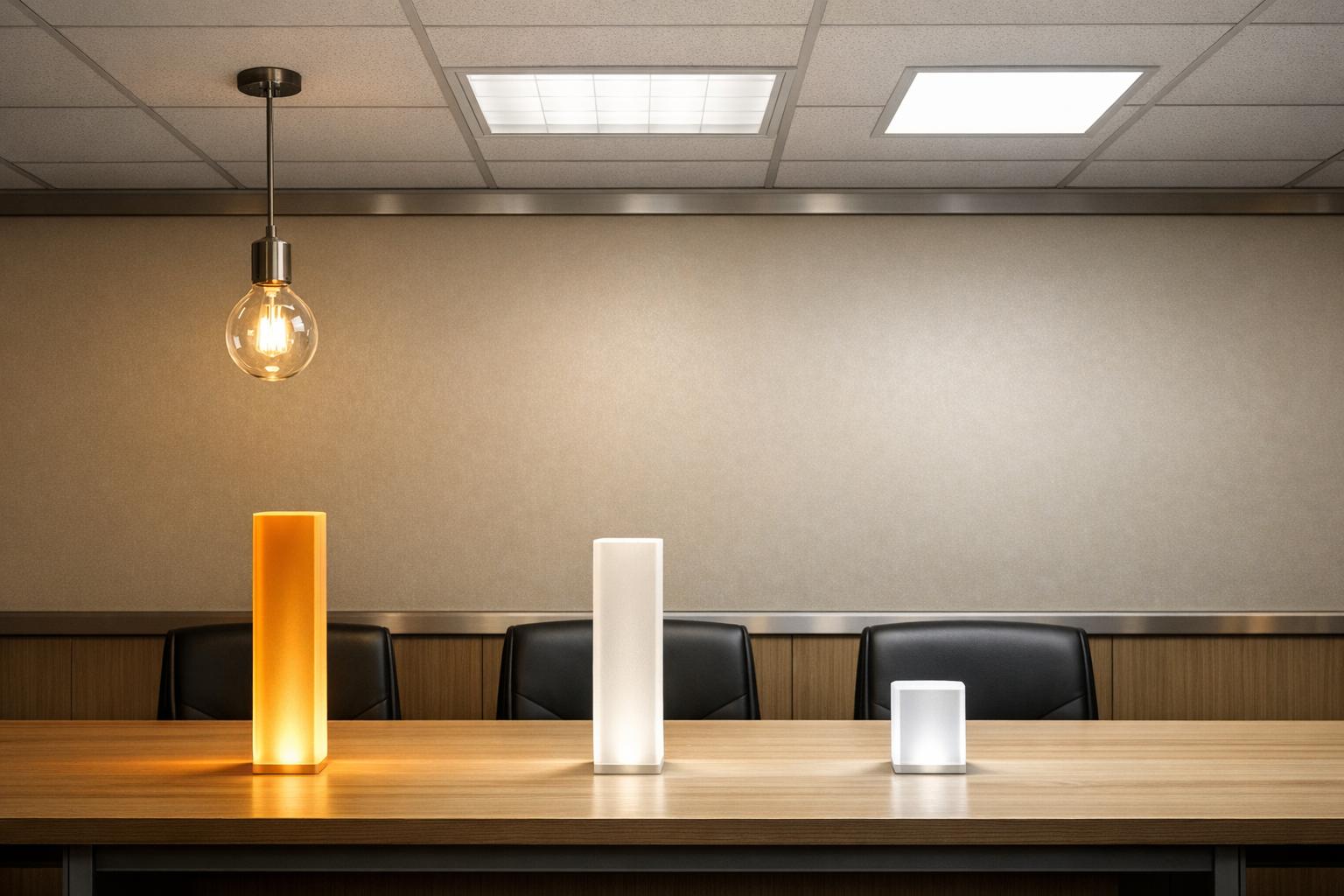
A Commercial Lighting Fixture Wattage Converter helps property managers, electricians, and facility teams quickly compare how much power different fixture types may use in the same space. If you're planning a retrofit, even a simple wattage comparison can reveal where meaningful energy reductions may be possible. Instead of guessing how incandescent, fluorescent, and LED options stack up, you can estimate the load side by side in seconds.
In offices, retail spaces, warehouses, and other commercial buildings, lighting often runs for long hours. That means fixture choice can affect overall energy demand more than many people realize. This tool calculates total wattage for your current setup, then estimates an equivalent target fixture load based on common conversion assumptions for similar brightness.
Whether you're reviewing a single room or an entire facility, this Commercial Lighting Fixture Wattage Converter offers a quick, readable snapshot of potential impact. It's useful for budgeting, early retrofit conversations, and identifying opportunities to lower connected load. For anyone comparing fixture technology, this lighting wattage calculator turns a rough estimate into a clearer decision point.
It uses simple conversion factors to estimate similar light output across fixture types. For example, LED is treated as using about 40% of incandescent wattage for comparable brightness, while fluorescent uses about 60%. These estimates are useful for quick planning, though real-world performance can vary by fixture design, lumen output, and application.
Yes, it’s especially helpful for early-stage planning. If you're comparing dozens or even hundreds of fixtures, this tool gives you a fast way to estimate the total wattage difference between your current lighting and a proposed replacement. For final project specs, it’s smart to confirm results with fixture cut sheets, lumen levels, hours of use, and utility rate data.
Because those values would create misleading or unusable results. A fixture count and wattage both need to be positive numbers to reflect a real lighting setup. By blocking invalid inputs and rounding outputs to whole numbers, the tool keeps the comparison clean, practical, and easy to read.


