.svg)
Discover how commercial facilities can adopt clean energy strategies, reduce emissions, and transition to sustainable power sources.

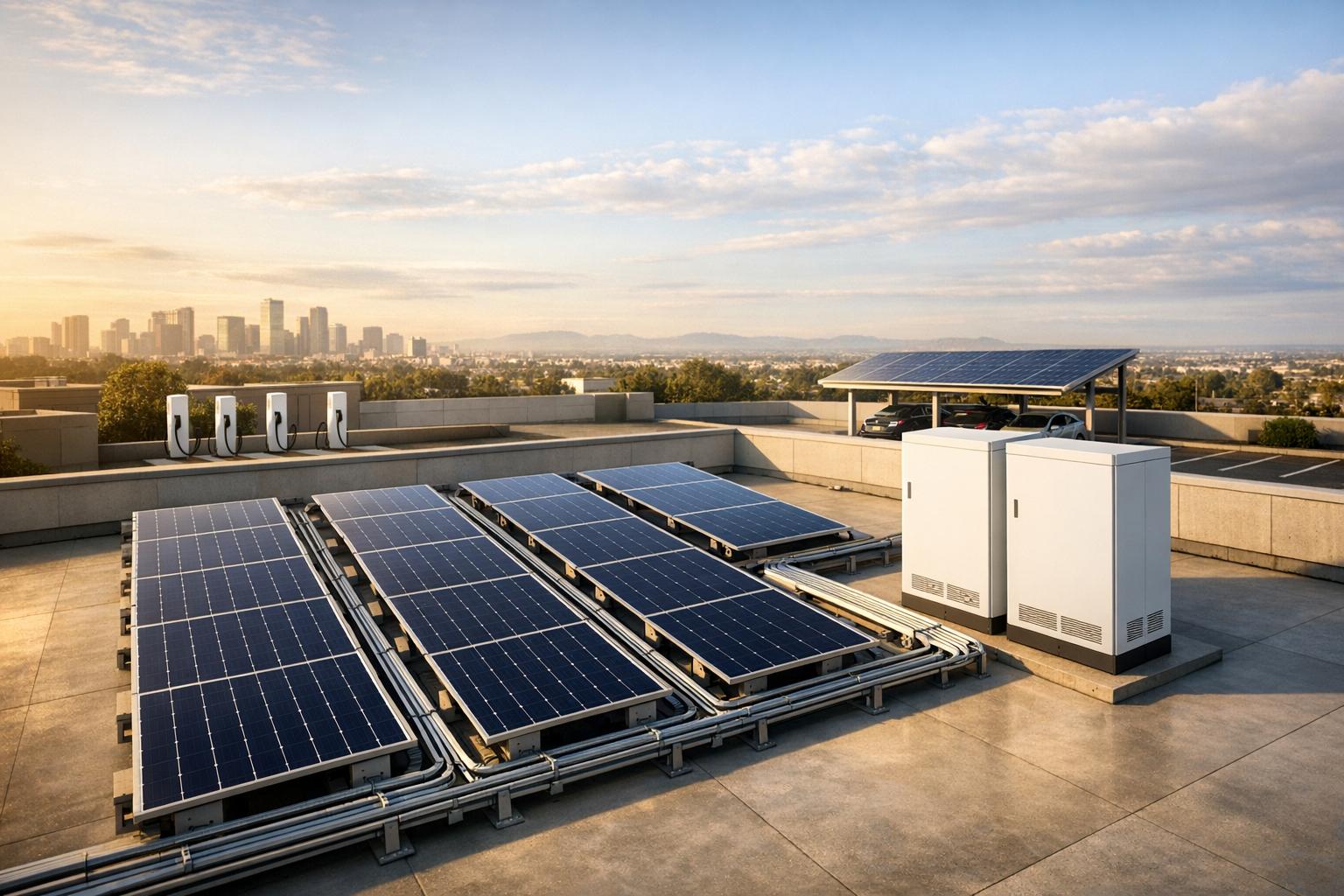
Transitioning to clean energy is no longer a distant ambition or a topic limited to environmentalists - it’s a pressing need for industries across the board, from asphalt production to large-scale commercial facilities. As the global push for sustainability accelerates, decision-makers in sectors like real estate, municipal management, and industrial operations must understand the technological advancements and challenges driving this shift.
The intricate process of adopting clean energy was the focus of a discussion featuring Peter Balish of the Department of Energy (DOE) on the "Pave It Black" podcast. His detailed insights explore how industries can align their goals with clean energy initiatives and what the road to net-zero emissions entails. In this article, we break down the conversation and provide actionable insights for commercial facility leaders navigating this complex and transformative era.
For commercial and industrial facilities, the transition to cleaner energy sources isn’t just about replacing diesel generators with solar panels. It requires a comprehensive understanding of the current energy landscape, available technologies, and the infrastructure barriers that must be overcome.
Peter Balish explains that while clean energy advancements - such as wind, solar, and carbon capture - are making headlines, they remain part of a broader ecosystem. This ecosystem includes traditional fossil fuels, nuclear energy, and innovative storage technologies, all of which play interconnected roles in powering the nation.
The DOE’s mission has always revolved around two pillars: ensuring energy security and advancing environmental responsibility. These goals, however, pose a balancing act. How can industries reduce carbon emissions while maintaining an uninterrupted supply of affordable energy?
For facility managers, this reveals an essential truth: the transition to clean energy isn’t a simple swap. It’s a process that must prioritize operational reliability, cost-effectiveness, and compliance with environmental mandates.
Renewable energy sources like wind and solar face inherent challenges with intermittency. Solar power doesn’t generate energy at night, and wind farms may operate at reduced capacity during specific weather conditions. For industries reliant on consistent energy, this variability raises concerns.
To mitigate this, the DOE is investing in long-duration energy storage solutions, such as advanced batteries and hydrogen storage, which aim to stabilize the grid even when renewable sources are offline.
The current grid infrastructure in the U.S. varies significantly by region. While areas like the PJM electricity market boast surplus capacity, states like California and Texas are grappling with reliability issues, including rolling blackouts. This uneven distribution complicates large-scale electrification efforts.
Facility managers must consider regional grid capacities when planning transitions to electric-powered fleets or equipment. Understanding local energy dynamics - such as regulatory bodies and utility investments - is crucial.
While federal incentives like tax credits for renewable energy adoption exist, they may not offset the higher costs of cleaner technologies. For instance, carbon capture systems are technically feasible but struggle with market competitiveness, as traditional fossil fuel-based systems remain cheaper to operate.
Leaders must adopt a portfolio approach - diversifying energy sources while gradually integrating renewables and clean technologies, balancing initial costs with long-term savings.
Despite these challenges, the clean energy transition presents numerous opportunities for industries willing to take proactive steps.
The Department of Energy offers funding opportunities through programs targeting renewable energy, advanced manufacturing, and energy efficiency. By collaborating on initiatives that align with their operational needs, facility managers can gain access to federal resources and expertise.
Innovative solutions such as biodiesel, ethanol, and even algae-derived fuels are being developed as potential substitutes for petroleum-based products. While still in early stages, these technologies could eventually provide scalable, clean alternatives for heavy machinery and industrial operations.
Electrification of fleets and equipment is a long-term goal, but it must be approached incrementally. Companies could begin by integrating hybrid systems or investing in backup power solutions to ensure reliability during the transition.
One of the most promising advancements in clean energy is carbon capture technology. This involves extracting CO2 from industrial emissions or directly from the air and storing it underground.
According to Balish, carbon capture is already deployable in certain industries - such as ethanol plants with high-purity CO2 streams - but scaling it across sectors like cement and natural gas power plants remains a work in progress.
For facility leaders, carbon capture offers a dual benefit: reducing emissions while maintaining existing production processes. However, the associated costs and infrastructure requirements mean this technology is likely to be adopted gradually over the next decade.
The transition to a cleaner energy future is a monumental task, and the road is paved with uncertainties. Yet, as Peter Balish emphasized, the nation’s energy sector is adapting to meet evolving environmental and operational demands.
For commercial facility leaders, the message is clear: start small, think big, and stay informed. By aligning with emerging technologies, leveraging federal programs, and prioritizing efficiency, your organization can play a vital role in shaping a sustainable and secure energy future.
Source: "The Future of Clean Energy In Asphalt: Insights from the U.S. Department Of Energy | S5EP9" - National Asphalt Pavement Assoc, YouTube, Dec 29, 2025 - https://www.youtube.com/watch?v=gOEPTLoOs2o


