.svg)
Mimicking daylight with tunable office lighting boosts alertness, productivity and sleep quality while cutting energy use.

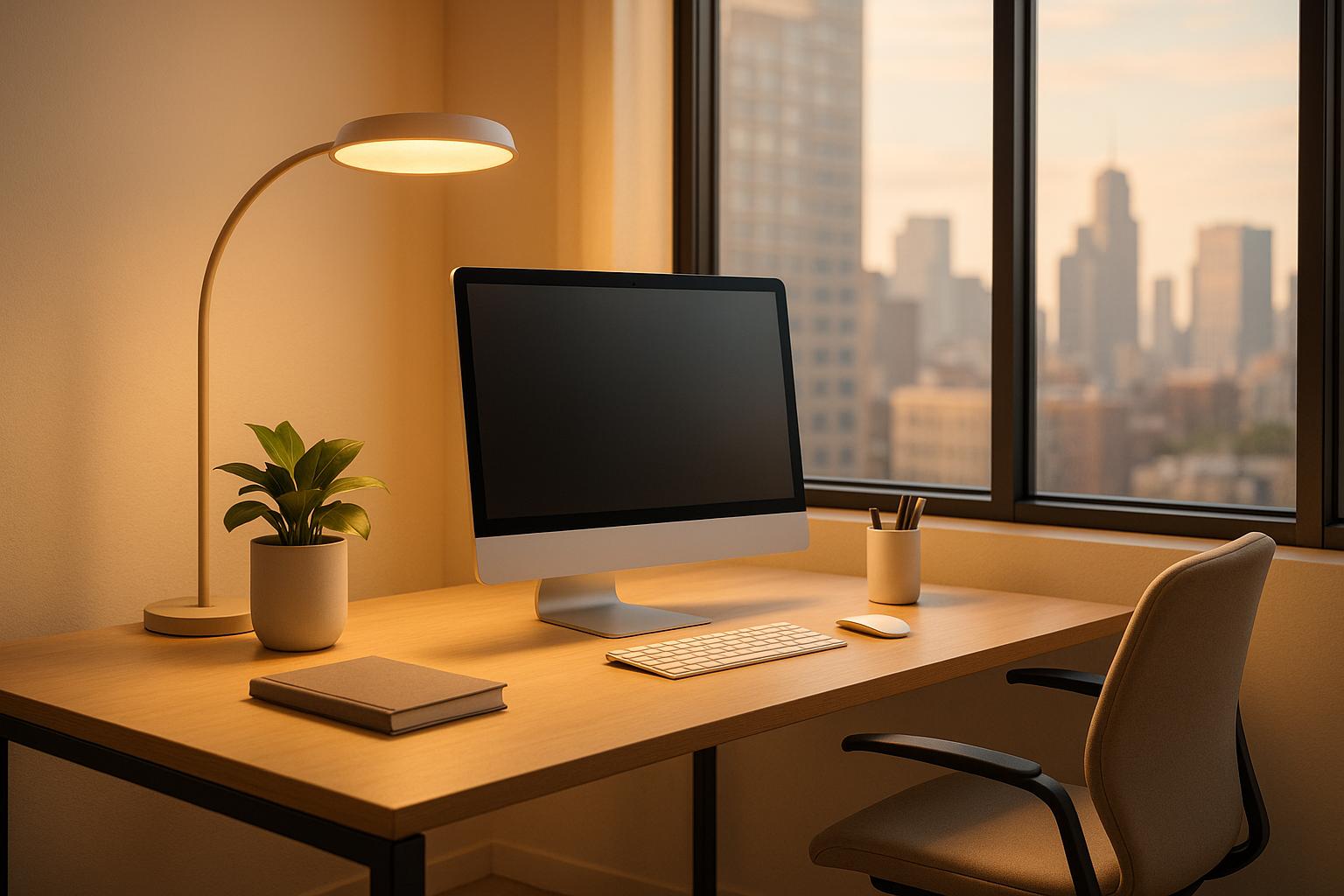
Circadian lighting adjusts indoor light to mimic natural daylight patterns, helping align with your body’s internal clock. This improves sleep, energy, focus, and overall well-being. Here's why it matters for workplaces:
Switching to circadian lighting can transform workspaces into healthier and more efficient environments. The article explains how it works, the benefits, and practical steps to implement it.
Poor lighting in the workplace can lead to a host of issues, from decreased productivity to serious health concerns.
Most fixed lighting systems maintain the same brightness and color temperature throughout the day, which can interfere with the body's natural rhythm. This disruption affects your circadian rhythm - the internal clock that governs sleep–wake cycles and hormone production, including melatonin. Constant exposure to static lighting can lead to fatigue, sluggishness after lunch, and daytime drowsiness. It may even cause melatonin to kick in too early, reducing nightly sleep quality by 1–2 hours. These effects can snowball, impacting focus and energy levels during the workday.
Poor lighting doesn’t just affect how you feel - it impacts how well you work. Studies show that employees working under static lighting conditions tend to complete tasks 10–25% slower and are more prone to errors, especially in detail-heavy tasks like data entry or design. In shared spaces like open-plan offices or cubicles, fixed lighting can create glare, flicker, and low-intensity illumination. These issues can reduce focus and shorten attention spans by as much as 20%. The result? More distractions and a disrupted workflow.
Outdated or insufficient lighting can take a toll on physical health too. Eye strain, headaches, and symptoms of digital eye strain often appear within just 4–6 hours of exposure. Workers in partitioned or basement offices, for instance, report 30–50% higher rates of headaches. Over time, chronic circadian disruption caused by poor lighting has been linked to more serious health risks, including cardiovascular issues, obesity, and depression. These health problems can lead to increased absenteeism - up to 20% more sick days - and lower morale in the workplace. On the flip side, studies suggest that brighter, blue-enriched light in the morning can improve sleep quality and reduce depressive symptoms.
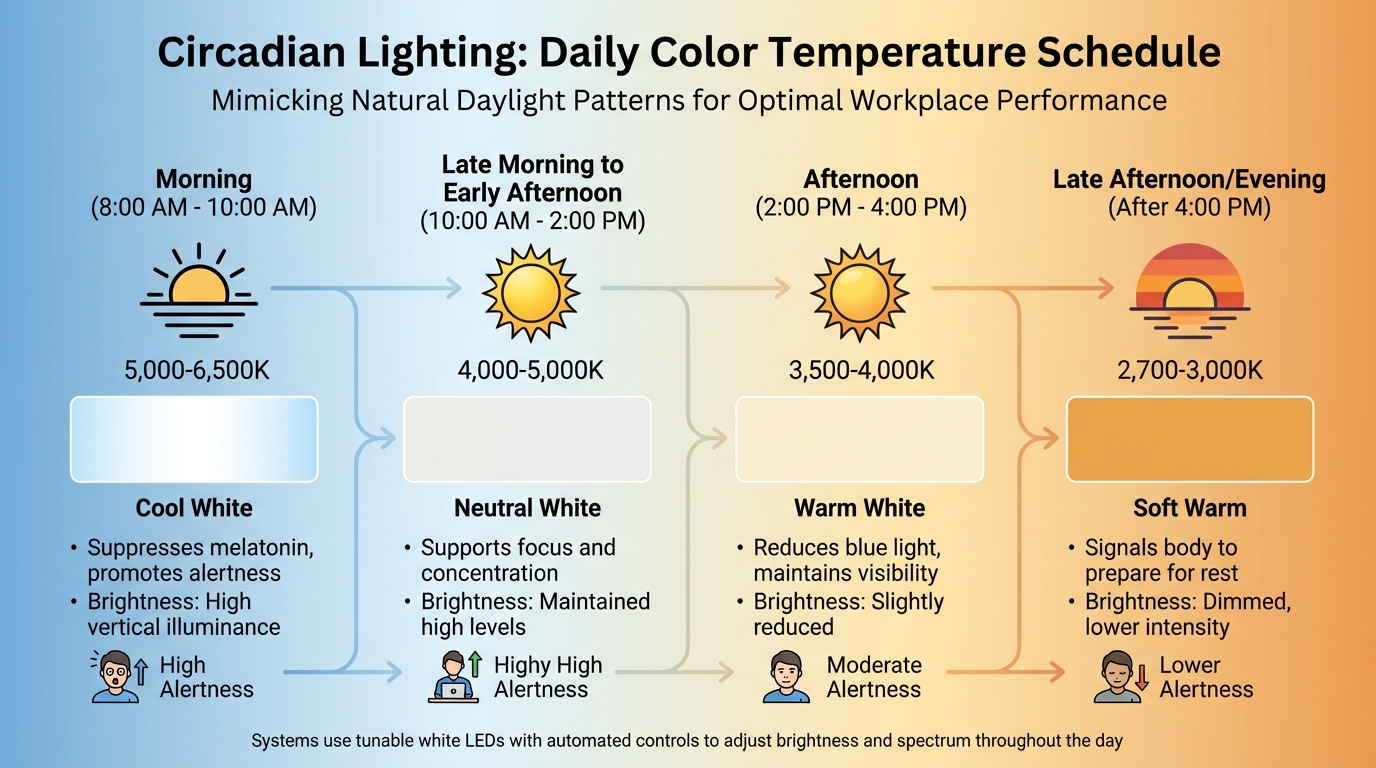
Daily Circadian Lighting Schedule: Color Temperature and Brightness Changes Throughout the Workday
Circadian lighting systems are designed to mimic the natural ebb and flow of daylight by using tunable white LEDs and digital controls to adjust both brightness and color temperature throughout the day. These systems align indoor lighting with the natural patterns our bodies are accustomed to, helping to reduce fatigue and enhance productivity in workplaces. By dynamically adapting to daylight variations, they provide specific benefits in terms of color, brightness, and automation.
Circadian lighting adjusts its color temperature throughout the day to align with natural light patterns. In the morning, typically between 8:00 a.m. and 10:00 a.m., the lighting emits a cool white tone in the range of 5,000–6,500K, replicating the blue-enriched light of a morning sky. This cooler light helps stimulate the circadian system by suppressing melatonin, promoting alertness and wakefulness.
From late morning to early afternoon (10:00 a.m. to 2:00 p.m.), the lighting shifts to a neutral-to-cool range of 4,000–5,000K, supporting focus and concentration during demanding tasks. As the afternoon progresses (2:00 p.m. to 4:00 p.m.), the system transitions to a slightly warmer range of 3,500–4,000K, reducing blue light exposure while still maintaining good visibility. By late afternoon and early evening, after 4:00 p.m., the lighting moves to warmer tones of 2,700–3,000K, particularly in areas like break rooms and corridors. These softer, dimmer tones mimic the qualities of sunset, signaling the body to prepare for rest.
Beyond color temperature, circadian lighting systems fine-tune brightness and spectrum to cater to biological needs. In the morning, the lighting increases vertical illuminance at eye level while boosting blue light exposure. This combination activates the cells responsible for regulating the body’s internal clock. Interestingly, the same brightness level with a blue-enriched spectrum can elicit a much stronger circadian response compared to warm light.
As the day progresses, the system reduces blue light exposure - either by lowering the color temperature or using multi-channel LEDs - and dims the overall brightness. This ensures visual comfort for tasks while minimizing circadian activation in the evening. Since circadian receptors are most responsive to light at eye level rather than just on work surfaces, these systems prioritize vertical illumination to maximize their impact.
To fully realize the benefits of circadian lighting, automated controls play a crucial role. These systems use a central scheduling engine, often integrated with a building management system, to adjust color temperature and dimming levels throughout the day based on a predefined circadian profile. Sensors for daylight and occupancy further refine lighting levels in real time, ensuring efficiency and alignment with natural cycles.
Advanced systems may even include personal control options, allowing individuals to adjust lighting within safe circadian limits while maintaining the overall schedule. This adaptability not only reduces energy consumption by limiting full-output operating hours but also helps meet U.S. energy codes like the IECC. Additionally, many commercial providers, such as Luminate Lighting Group, offer turnkey systems that combine schedules, sensors, and controls. These systems can help businesses qualify for utility rebates and tax incentives, making them both practical and energy-efficient solutions for modern workplaces.
Circadian lighting brings measurable improvements to both employee performance and workplace efficiency.
Circadian lighting helps tackle fatigue and mood-related challenges by aligning indoor lighting with natural biological rhythms. Bright, cool light in the morning (around 5,000–6,500K) enhances alertness and mental sharpness, while warmer, softer tones later in the day promote relaxation and reduce stress. Employees often experience better sleep and a more positive mood with this lighting approach. Research even shows that optimized circadian lighting can improve task performance by as much as 25%.
By improving focus and maintaining attention, circadian lighting helps employees work more efficiently, speeding up task completion and reducing mistakes in detail-heavy work. It also combats the common post-lunch energy dip. Normalized circadian rhythms contribute to better sleep and stronger immunity, which, in turn, lead to fewer sick days. For instance, a study from Cornell revealed that exposure to natural light significantly reduced symptoms like eyestrain, headaches, and blurred vision by 84%. These improvements not only enhance productivity but also cut operational costs.
Modern tunable LED systems offer significant energy savings. These systems combine high-efficiency LEDs with dimming features and sensors for occupancy or daylight, reducing lighting energy use by 20–50% compared to older technologies like fluorescent or HID lights. By adjusting light spectrum and intensity to provide optimal circadian benefits when needed - and dimming during less critical times - these systems conserve energy without compromising comfort. With lifespans of around 50,000 hours and sensor-driven dimming, operating and maintenance costs decrease significantly. Additionally, U.S. utility companies often provide rebates for energy-efficient upgrades, and projects may qualify for Section 179D tax deductions. Companies like Luminate Lighting Group can help identify incentives, with total savings often resulting in payback periods of just 3–7 years.
Implementing circadian lighting takes thoughtful planning. From choosing the right fixtures to designing workspace zones and tracking performance, every step matters to ensure employee well-being and achieve financial benefits.
For circadian lighting, tunable white LED fixtures are key. Look for fixtures with a color temperature range of 2,700K to 6,500K, smooth, flicker-free dimming down to 10%, and a high Color Rendering Index (CRI) - aim for 80+ or even 90+ in areas where design precision is critical. Compatibility with digital controls, such as 0–10V, DALI, or networked systems, is essential for flexibility. Ensure they meet UL/ETL safety standards and have DLC or ENERGY STAR certifications for energy efficiency. Opt for fixtures with a lifespan of 50,000–100,000 hours and warranties of 5–10 years to reduce maintenance and ensure long-term reliability.
Circadian lighting works best when tailored to specific areas and their functions. Here's how to approach different zones:
For tailored solutions, consider consulting experts like Luminate Lighting Group, who can help align lighting design with your floor plan and operational needs.
To make sure your investment in circadian lighting pays off, track both financial and human-focused outcomes. Start by documenting baseline metrics like energy use (kWh), lighting power density, and peak demand, then compare these figures after installation to calculate energy savings in dollars.
On the human side, measure indicators like error rates, productivity, and absenteeism - circadian lighting has been shown to improve alertness and reduce mistakes. Conduct pre- and post-install surveys to gauge employee comfort, stress levels, sleep quality, and overall satisfaction. Pair this feedback with hard data, such as reductions in sick days or improvements in task performance.
Don't forget to track maintenance costs by comparing lamp replacement and labor expenses before and after the upgrade. For a more comprehensive analysis, Luminate Lighting Group can provide energy audits, create detailed efficiency models, and help you take advantage of available incentives. This ensures you not only cut costs but also enhance employee performance and comfort.
Circadian lighting aligns workplace lighting with your body's natural rhythms, helping to combat fatigue and promote better sleep. Research shows that this type of lighting reduces common issues like eyestrain, headaches, and mistakes, while also boosting mood and sleep quality. Employees working under circadian lighting often complete tasks faster and with fewer errors - some studies even suggest performance gains of up to 25%.
In addition to improving well-being and efficiency, circadian lighting can also lead to cost savings. Facilities that switch to energy-efficient LED systems often see energy use drop by 20–50%. Plus, fewer sick days and reduced stress levels can mean less absenteeism and healthier profit margins. With these benefits in mind, upgrading your lighting system could be a game-changer for your workspace.
Getting started with circadian lighting doesn’t have to be complicated. Start by evaluating your current setup for issues like glare, flicker, or inadequate brightness. Focus on key areas such as open offices, meeting rooms, and individual workstations. Track metrics like energy usage, employee productivity, error rates, and overall satisfaction to measure the impact.
For expert guidance, consider working with Luminate Lighting Group. They can help with customized LED retrofits, conduct lighting audits, and even assist with utility rebates and Section 179D tax deductions. By choosing the right fixtures, controls, and design strategies, you can create a workspace that’s healthier, more efficient, and easier on energy costs - all while supporting your sustainability efforts.
Circadian lighting is designed to mimic the natural rhythm of daylight, working in harmony with the body's internal clock. This synchronization helps reduce fatigue, boost alertness, and sharpen focus throughout the workday.
By adjusting the lighting to match the time of day, employees often feel more energized and attentive, which can translate into higher productivity and better performance. Beyond just improving efficiency, this type of lighting creates a more comfortable and health-conscious workspace, contributing to overall well-being.
Circadian lighting is designed to mirror the natural shifts in daylight, creating a workspace that feels more in tune with our body's internal clock. This connection to our natural circadian rhythms can help combat fatigue, sharpen focus, and support overall well-being.
By encouraging healthier sleep cycles and boosting alertness during the day, circadian lighting contributes to both mental clarity and physical health. The result? Employees feel more refreshed and ready to tackle their tasks with greater energy and efficiency.
To get the most out of circadian lighting, businesses should begin with a professional lighting assessment. This step helps pinpoint areas that need improvement and highlights opportunities to enhance the workspace. Once the evaluation is complete, a customized LED lighting system can be installed. These systems are designed to mimic the natural patterns of daylight, which can help align with employees' circadian rhythms.
LED fixtures with adjustable color temperatures offer a range of benefits. They can boost productivity, combat fatigue, and even cut down on energy expenses. Working with an experienced lighting provider ensures the entire process - from planning and installation to securing permits and meeting regulations - goes smoothly and with minimal disruption. To keep the system performing at its best, regular maintenance and performance checks are essential.


