.svg)
Select cold-rated, vapor-tight LED fixtures with proper lumen output, 4000-5000K color, high IP protection, and smart controls for safe, energy-efficient cold storage.

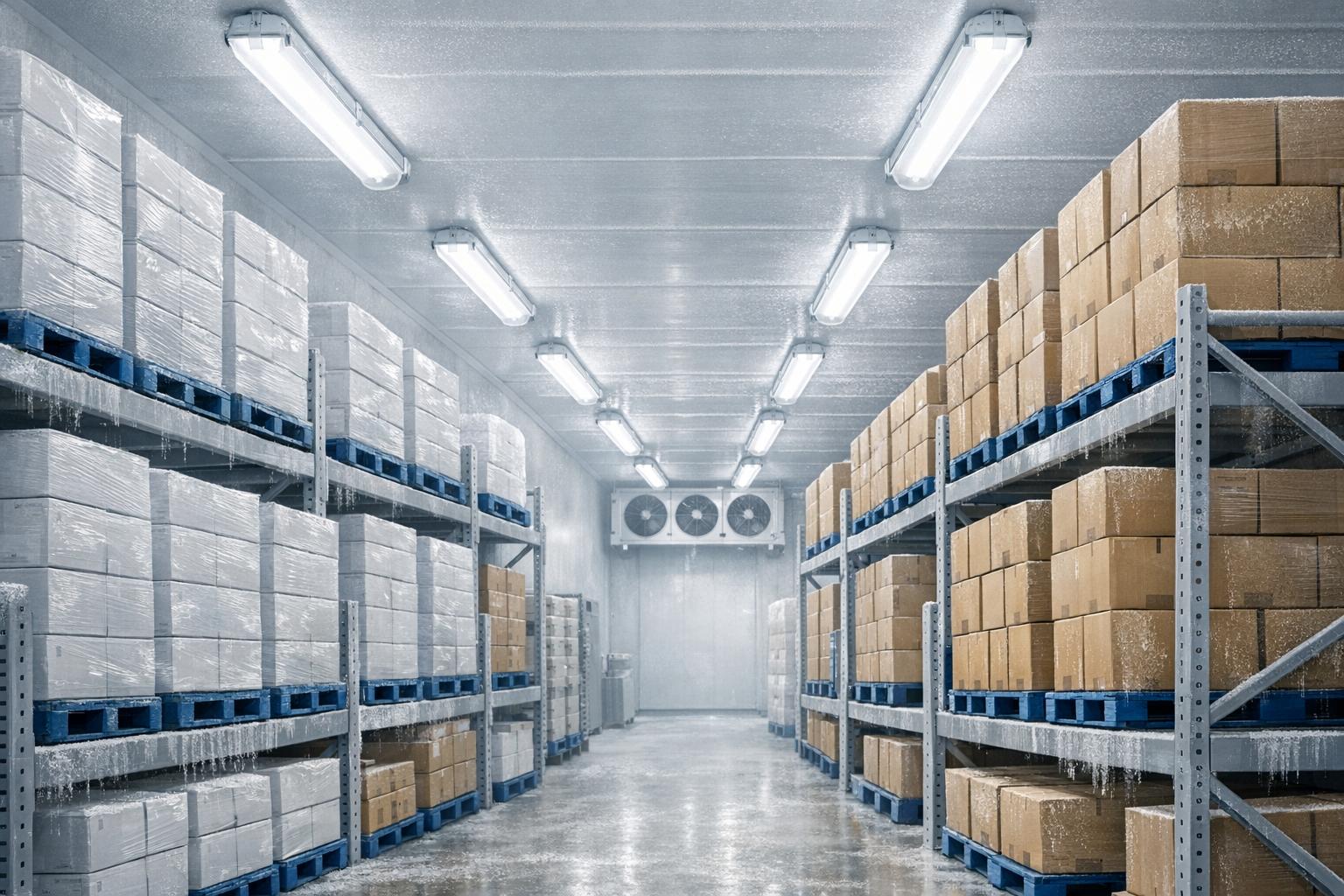
When selecting LED lights for cold storage, focus on these key factors:
LEDs outperform older lighting systems by providing instant-on brightness, long lifespans (50,000-100,000 hours), and lower maintenance needs. They also comply with regulatory standards like USDA and NSF, ensuring safety in food storage and processing.
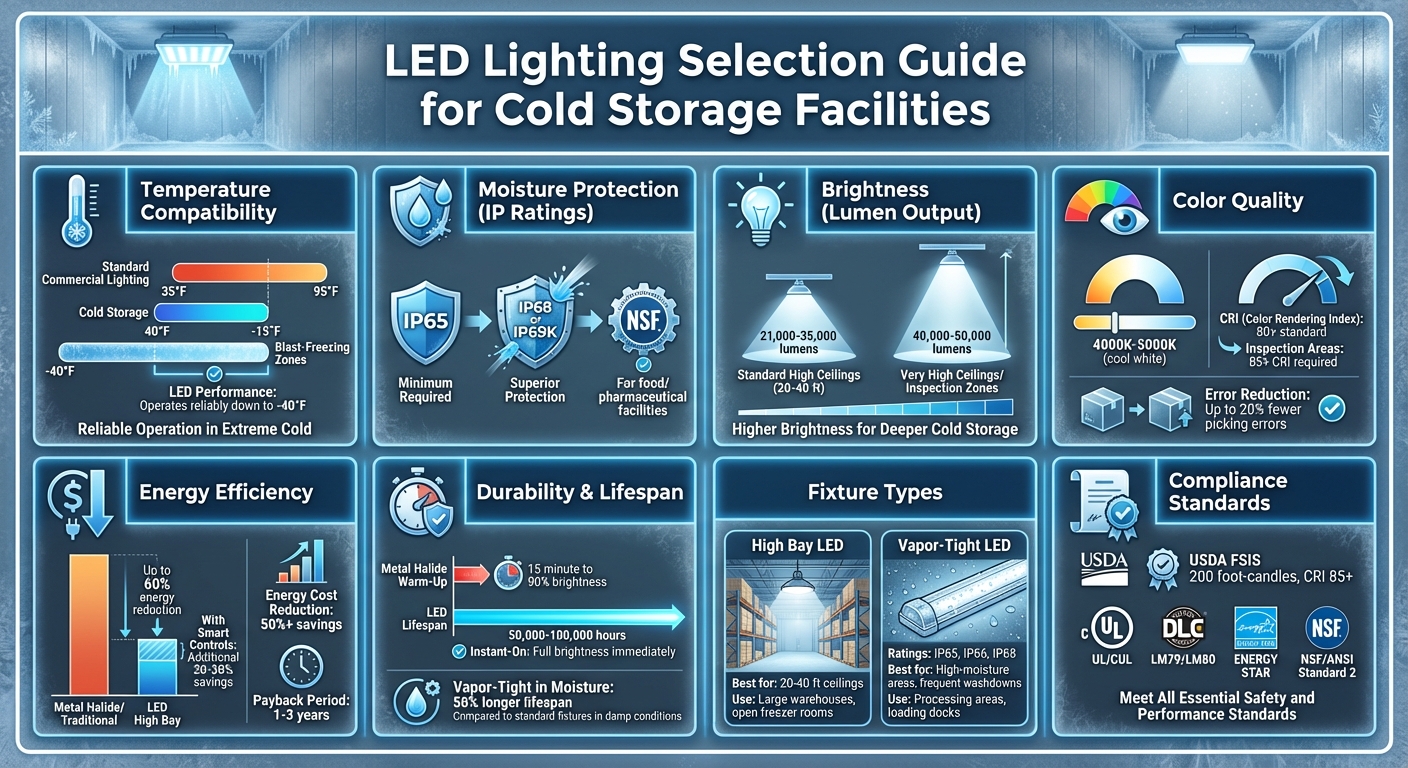
LED Lighting Requirements for Cold Storage Facilities: Key Selection Criteria
Cold storage facilities demand lighting systems designed to handle extreme conditions. Typical commercial lighting works well within a temperature range of 35°F to 95°F, but cold storage environments operate in much harsher conditions - ranging from 40°F to as low as -15°F for frozen goods. Blast-freezing zones push the limits even further, reaching temperatures as low as -40°F. To ensure reliable and safe operation, LED fixtures must be specifically rated for such cold temperatures. Here’s what to consider when evaluating LED fixtures for cold storage.
Not all lighting systems can handle freezing conditions. Standard LED fixtures often fail when temperatures drop below -25°F. However, LEDs designed for cold storage excel in these environments, operating reliably down to -40°F without losing brightness or reducing their lifespan. Interestingly, the cold helps dissipate heat from the LED components, which can improve efficiency and extend the fixture's life. Unlike traditional lighting, LEDs maintain - or even enhance - their light output as temperatures drop. When choosing fixtures, always confirm they are rated for the lowest temperatures your facility experiences.
Cold storage environments present unique challenges beyond temperature. Condensation from warm, humid air meeting cold surfaces can lead to corrosion, short circuits, or even fires in poorly protected fixtures. Additionally, frequent high-pressure washdowns with harsh cleaning chemicals are common in food and pharmaceutical facilities. For this reason, LED fixtures need robust protection. Look for fixtures with at least an IP65 rating, though higher ratings like IP68 or IP69K - or NSF certification - offer superior resistance to water, dust, and chemical exposure. Fixtures with seamless, chemically-welded designs are ideal, as they eliminate weak points like gaskets and clips that can fail under these conditions.
LED fixtures with lifespans between 50,000 and 100,000 hours significantly reduce maintenance needs, especially in hard-to-reach areas. Their instant-on capability ensures full brightness immediately, even in sub-zero environments. This eliminates the warm-up delays and dimming issues often seen in traditional lighting systems. It also makes LEDs perfect for use with occupancy sensors and frequent on-off cycling without compromising their performance. In contrast, traditional metal halide fixtures can take up to 15 minutes to reach 90% brightness and require an additional 5 to 15 minutes to restart after being turned off - creating potential visibility hazards that LEDs completely avoid.
After understanding the specific conditions of your cold storage environment, the next step is to assess LED fixtures based on performance factors that influence visibility, safety, and operational costs. Pay close attention to lumen output, color quality, and energy efficiency. These three factors determine if your lighting system will provide the brightness, clarity, and savings your facility needs. By aligning these performance metrics with the environmental requirements you’ve identified, you can ensure your fixtures meet both practical and financial objectives.
Lumen output measures how much light a fixture emits, which is critical for maintaining visibility in high-ceiling spaces. Facilities with ceilings ranging from 20 to 40 feet typically require fixtures producing 21,000 to 35,000 lumens for balanced brightness and efficiency. For areas with very high ceilings or tasks needing maximum illumination - like inspection zones - fixtures with 40,000 to 50,000 lumens may be necessary. Ensuring adequate lumen levels helps workers read labels, navigate aisles, and identify hazards around racks and pallets. This makes lumen output a key factor in creating a safe and functional workspace.
Color temperature, expressed in Kelvins (K), impacts how workers perceive their environment. For cold storage, cool white light in the 4000K to 5000K range is ideal, as it enhances visibility while minimizing eye strain. Additionally, selecting fixtures with a CRI (Color Rendering Index) of 80 or higher ensures workers can easily distinguish between similar products and identify issues like spoilage or damage. Inspection areas, particularly in food processing facilities, require even stricter standards: the Food Safety and Inspection Service (FSIS) mandates 200 foot-candles of shadow-free light with a CRI of at least 85. Research from the National Institute of Standards and Technology also highlights that high CRI lighting can reduce picking errors in warehouses by up to 20%. These factors significantly enhance both productivity and accuracy.
To achieve long-term savings, look for fixtures with high lumens-per-watt (lm/W) ratings. LEDs can reduce lighting energy costs by 50% or more, and in many cases, savings exceed that threshold. Beyond electricity, LEDs also produce minimal heat, which eases the burden on refrigeration systems and lowers cooling expenses. Most LED retrofit projects offer a payback period of 1 to 3 years, making them a financially sound choice for cold storage facilities. By prioritizing energy efficiency, you not only cut costs but also improve overall operational efficiency.
Once you've assessed the performance metrics, it's time to select fixtures that align with your facility's specific layout and requirements. For example, high bay fixtures work best in spaces with tall ceilings, while vapor-tight models are perfect for areas prone to moisture. Below, we'll break down the unique advantages and uses of each type.
High bay LED fixtures are tailored for expansive cold storage spaces with ceilings ranging from 20 to 40 feet high. These fixtures deliver a powerful lumen output and wide beam angles, making them ideal for illuminating large refrigerated areas such as warehouses and open freezer rooms. Look for fixtures rated for low temperatures - at least -4°F for medium cold storage and as low as -40°F for frozen or blast-freezing environments. Unlike older lighting technologies, LEDs actually become more efficient in colder conditions, offering brighter light and greater energy savings. In fact, high bay LED fixtures can cut energy use by up to 60% compared to traditional metal halide lights in warehouse settings.
In areas where moisture and frequent cleaning are the norm, vapor-tight fixtures are the go-to choice. These fixtures are built with sealed enclosures that carry IP65, IP66, or IP68 ratings, ensuring protection against water, dust, and corrosive substances. This design not only enhances durability but also shields the fixtures from damage caused by harsh cleaning routines and condensation. Constructed with tough polycarbonate casings that resist physical impacts, these fixtures are built to withstand demanding conditions. Vapor-tight LEDs can last up to 50% longer in high-moisture environments compared to standard LEDs, which means fewer replacements and lower maintenance costs. They are particularly well-suited for processing areas, loading docks, and any space that requires frequent washdowns.
Once you've assessed the performance of LED lighting, incorporating smart controls can take energy efficiency to the next level. When combined with LED's instant-on functionality, smart lighting controls revolutionize energy management in cold storage facilities. For example, occupancy sensors are highly effective in areas with low foot traffic, such as narrow aisles and corridors. These sensors automatically activate lights when workers or forklifts enter and turn them off when the space is unoccupied.
Another valuable tool is dimming controls, which adjust light levels based on activity. During busy periods, lights can operate at full brightness, while during slower times, they automatically dim to conserve energy. Using advanced LED controls, facilities can achieve an additional 20-30% reduction in energy use. Furthermore, programming lights to switch on or off at specific times or assigning zones to separate circuits allows for tailored energy management, minimizing waste.
Emerging systems are set to include enhanced sensors, automated dimming, and Internet of Things (IoT) integration, connecting LED fixtures with facility management software. This level of connectivity offers real-time monitoring and insights into energy consumption across the facility. While energy savings are a key benefit, it’s equally important that lighting systems align with regulatory standards to ensure safety and compliance.
Cold storage facilities are subject to stringent regulations to safeguard food safety and worker well-being. The USDA Food Safety and Inspection Service (FSIS) requires up to 200 foot-candles of shadow-free light with a Color Rendering Index (CRI) of at least 85 in inspection areas. Proper lighting is critical for maintaining sanitary conditions, as it ensures contaminants can be easily detected and removed.
When choosing lighting fixtures, look for those that comply with NSF/ANSI Standard 2 and hold certifications like UL/CUL, DLC, LM79/LM80, and ENERGY STAR to guarantee reliable performance. For especially harsh environments, such as those requiring high-pressure steam cleaning, fixtures with an IP69K rating provide the maximum level of protection. These certifications are essential in the demanding conditions of cold storage, where both durability and sanitation are non-negotiable.
Additionally, using certified products with smart controls can open the door to utility rebates and 179D tax deductions. Companies like Luminate Lighting Group assist clients in navigating these programs, helping you secure rebates while ensuring your facility meets all necessary regulatory standards.
Choosing the right LED lighting for cold storage comes down to a few key factors: temperature ratings to ensure reliable performance in freezing environments, IP protection levels to guard against moisture and condensation, sufficient lumen output for clear visibility, and energy efficiency to help cut costs. LED fixtures excel in extreme temperatures and provide instant, reliable brightness.
For even greater energy savings, consider combining high bay or vapor-tight fixtures with smart controls like occupancy sensors and dimming options. Plus, the long lifespan of quality LED fixtures makes the return on investment even more appealing.
Safety and compliance are critical, so look for certifications such as UL/CUL and DLC to protect workers and maintain the integrity of stored products.
Every cold storage facility has its own specific needs, and lighting solutions should reflect that. Luminate Lighting Group specializes in creating customized LED lighting designs that enhance performance, maximize rebates, and align with 179D tax deduction requirements. Their team of application engineers offers photometric layouts, control system integration, and hands-on support throughout the entire process - from design to installation.
Whether you're retrofitting an existing facility or starting a new construction project, working with experienced lighting professionals ensures energy-efficient solutions that are built to last.
When selecting LED lights for cold storage, it's crucial to choose fixtures built to handle freezing conditions, such as -15°F or lower. Opt for lights with a high IP rating (IP65 or above) to guard against moisture and dust, and make sure they include low-temperature-rated drivers to ensure dependable operation. Look for models that deliver a strong and consistent lumen output in cold settings and are made with durable materials to withstand corrosion and impact. These features help maintain energy efficiency, extend the lifespan of the lights, and provide reliable illumination even in harsh environments.
LED lighting controls offer a practical way to cut down energy use in cold storage facilities. By ensuring lights are only active when needed, these systems not only lower electricity bills but also reduce the heat generated by lighting. This, in turn, eases the burden on refrigeration systems, improving overall efficiency.
Here are some effective ways to save energy with lighting controls:
By adopting these strategies, cold storage facilities can see a noticeable drop in utility costs, reduce the strain on refrigeration systems, and lessen their environmental footprint.
In cold storage environments, LED lights need a high IP rating - typically IP65 or above - to ensure they can withstand the challenging conditions. These ratings indicate how well the lights are protected from dust and moisture, which are common issues in areas prone to condensation, high humidity, or even direct water exposure.
A high IP rating is essential because it prevents water or debris from infiltrating the light fixture. This not only reduces the risk of electrical hazards but also cuts down on maintenance requirements and increases the overall lifespan of the lighting system. For cold storage facilities, this feature is a key consideration when choosing reliable and durable lighting solutions.


