.svg)
How explosion-proof high-bay LED lights improve safety, cut energy use up to 90%, reduce maintenance, and enhance visibility in hazardous industrial spaces.
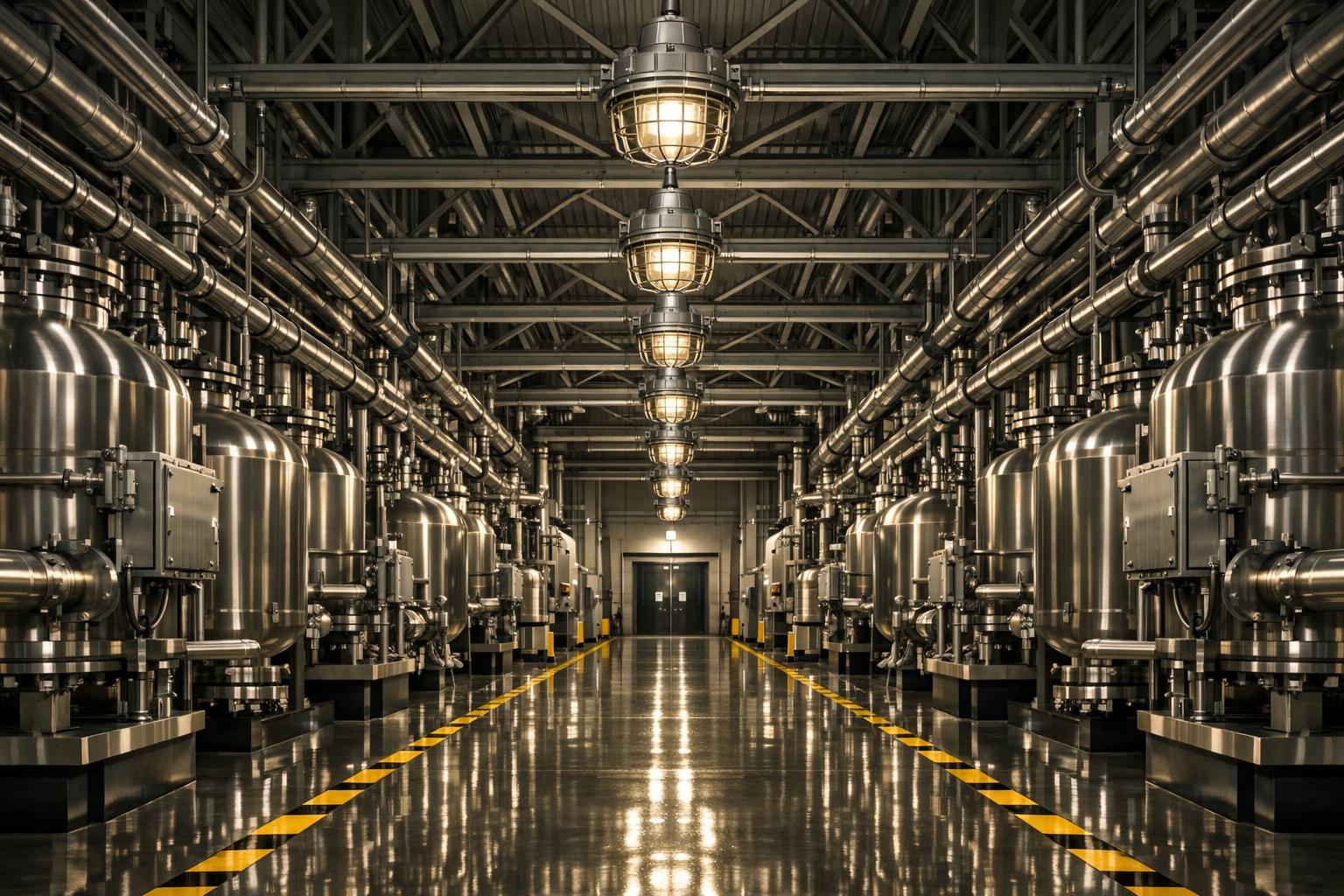
Explosion-proof high-bay LED lights are a must-have for hazardous industrial environments like refineries, chemical plants, and grain elevators. These lights are engineered to prevent ignition in areas with flammable gases, vapors, or dust while delivering energy efficiency, durability, and improved visibility. Here's why they stand out:
These lights combine safety and efficiency, making them an ideal solution for high-risk industries. Switching to explosion-proof LEDs not only protects workers but also reduces operational costs over time.
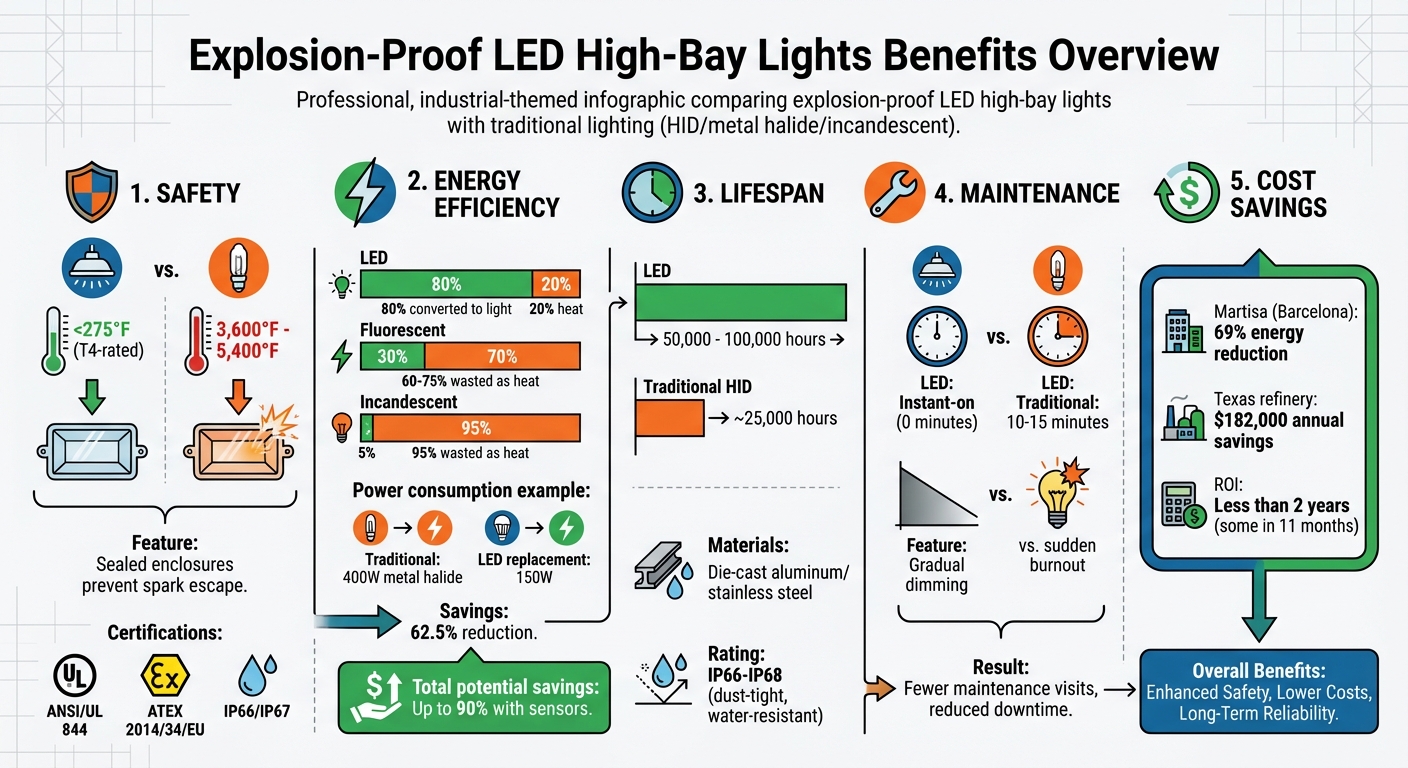
LED vs Traditional Lighting: Energy Efficiency and Lifespan Comparison for Hazardous Environments
Explosion-proof high-bay LED lights are specially designed to prevent ignition in areas where flammable gases, vapors, or dust are present. These fixtures achieve this level of safety through advanced engineering, including sealed enclosures made from materials like die-cast aluminum or stainless steel. These enclosures trap any internal explosion within the fixture itself, while engineered flame paths allow gases to escape safely by cooling them below the ignition temperature of the surrounding atmosphere.
Temperature control is another critical feature. These fixtures use a T-code rating to ensure their surfaces stay below ignition points. For instance, T4-rated fixtures maintain surface temperatures under 275°F, whereas traditional HID lamps can reach extreme temperatures of 3,600°F to 5,400°F.
To ensure reliability, these lights meet stringent standards such as ANSI/UL 844 in North America and the ATEX Directive 2014/34/EU in Europe. They undergo rigorous testing, including hydrostatic pressure and dust-tight evaluations (IP66/IP67), to confirm their durability and safety in hazardous conditions. This meticulous design not only prioritizes safety but also highlights the broader benefits of high-bay LED technology, including efficiency and long-term performance.
"The enclosure must be strong enough to contain an explosion and prevent the ignition of a specified gas or vapor surrounding the enclosure by arresting any sparks, flame, hot gases or flashes created inside the fixture." - Shine Lighting
Explosion-proof high-bay LEDs don’t just improve safety - they also deliver impressive energy savings and operational efficiency.
These LEDs use significantly less electricity than traditional lighting. For example, swapping a 400-watt metal halide fixture for a 150-watt LED high bay can cut energy use by 62.5% while maintaining or even improving light output. Utility savings can range from 30% to 70%, and when paired with features like motion sensors or daylight harvesting, energy savings can hit 90%.
The secret lies in how LEDs convert electricity into light. Unlike incandescent bulbs, which lose up to 95% of their energy as heat, or fluorescents, which waste 25–40%, LEDs transform about 80% of energy into light. This reduced heat output not only saves energy but also lowers the strain on cooling systems, leading to further cost reductions.
Take Martisa, a Spanish automotive parts manufacturer, as an example. In September 2025, the company replaced its high-pressure sodium lamps with 150-watt Durosite LED high-bay lights. The result? A 69% drop in lighting energy consumption, the elimination of long restart times after power outages, and a significant reduction in maintenance costs for their high-ceiling fixtures.
"That old 400-watt metal halide high bay is an energy hog. A comparable LED high bay doing the same thing might be only 100 to 150 watts - that's often a 50-75% decrease in energy usage!"
- Steve Shepherd, Lighting Expert, Hyperlite
Another key advantage of LEDs is their instant-on capability. Unlike conventional lamps, which need 10 to 15 minutes to warm up, LEDs reach full brightness immediately. This feature makes them ideal for sensor-triggered use in hazardous areas, allowing lights to turn off during downtime without compromising safety or efficiency. It’s a win-win for energy conservation and operational effectiveness.
Explosion-proof high-bay LEDs are designed to go the distance, offering operational lifespans between 50,000 and 100,000 hours - a stark contrast to the roughly 25,000 hours you’d get from traditional HID lamps.
This impressive longevity is tied to their tough construction. These fixtures are made from die-cast low-copper aluminum or stainless steel, materials known for their strength and resistance to corrosion. On top of that, they feature fully sealed enclosures (rated IP66 to IP68), which means they’re dust-tight and can handle high-pressure water jets or even brief submersion without issue.
"LED lighting is innately rugged because it's solid state. It's essentially a solid diode that emits light. There's no glass bulbs, shells, or other fragile components."
The durability doesn’t stop there. These LEDs are mounted on metal core printed circuit boards (MCPCB) and protected by thick, impact-resistant glass or polycarbonate lenses. This setup allows them to withstand heavy vibrations and mechanical shocks, making them ideal for demanding industrial settings.
What does this mean in practice? A maintenance-free lighting solution that reduces downtime for repairs and replacements. A great example is GEFCO in Oklahoma. When they upgraded their truck paint booths with 120-watt explosion-proof LED fixtures, they cut energy use by 50% and drastically reduced downtime in their hazardous spray environment. These features not only enhance safety but also improve long-term operational efficiency by minimizing maintenance needs and interruptions.
LED fixtures, with their impressive lifespan of 50,000 to 100,000 hours, significantly cut down on maintenance visits and system downtime. Unlike traditional HID systems, which often require frequent bulb replacements and ballast repairs, LEDs keep things running smoothly for much longer periods.
Thanks to their sturdy construction, these fixtures also help reduce repair costs. Their reliability means fewer instances where you need to haul out ladders, bucket trucks, or scissor lifts for maintenance. And since these tasks typically involve specialized equipment and certified technicians, avoiding them saves not only on labor but also on rental fees and production losses. This operational efficiency ties directly to the energy and cost savings already highlighted.
"Since hazardous areas require strict safety procedures for maintenance, fewer replacements mean reduced downtime and lower labor costs."
Take the example of Martisa, a metal parts manufacturer in Barcelona. In September 2025, they swapped their 400-watt high-pressure sodium lamps for 150-watt LED high-bay lights. The change eliminated ongoing expenses for replacement lamps and access equipment. The new LEDs, with a 60,000-hour lifespan and a 5-year warranty, drastically reduced their maintenance needs.
Another advantage? LEDs dim gradually over time rather than burning out suddenly. This feature allows for planned maintenance, reducing the likelihood of unexpected interruptions.
In hazardous environments, clear visibility isn't just helpful - it can be lifesaving. Explosion-proof high-bay LED lights provide excellent color rendering, closely resembling natural sunlight. This makes it easier for workers to identify critical safety elements like color-coded warning signs, emergency stop buttons, and intricate instrumentation, especially in high-stakes situations where quick action is essential.
Unlike older fluorescent fixtures, high-quality LEDs eliminate the strobe effect caused by flickering lights. This issue can dangerously distort the appearance of rotating machinery, making it seem stationary. LEDs also focus light directly on work areas and inspection points, reducing wasteful dispersion and ensuring optimal visibility. These benefits not only improve safety but also align with stringent industry safety standards.
"Without good vision, work safety is impossible. Providing your workforce with safe lighting is best done with LEDs."
- Daniel Henderson, Relumination
Regulatory compliance is another critical factor in hazardous locations. The National Electrical Code (NEC/NFPA 70) mandates that all lighting in these areas be explosion-proof. This means fixtures must be certified by a Nationally Recognized Testing Laboratory, such as UL, CSA, or Intertek, to meet OSHA requirements. Additionally, they must be rated for the specific hazards present - whether flammable gases, combustible dust, or ignitable fibers - based on class, division, and group.
Temperature ratings are equally important. Fixtures should display a T-Code (ranging from T1 to T6) to ensure their surface temperature stays below the auto-ignition point of nearby materials. For example, a T6-rated fixture has a maximum surface temperature of 185°F (85°C), offering the highest level of safety. It's also wise to verify that fixtures carry IP66 or IP67 ratings, which protect against dust and moisture compromising the explosion-proof seal.
Choosing the right fixtures with appropriate certifications and T-Codes tailored to your specific hazards not only protects workers but also prevents expensive regulatory penalties and operational disruptions.
Explosion-proof high-bay LED lights offer a powerful combination of safety, efficiency, and durability. Their sealed designs prevent sparks from escaping and generate 90% less heat compared to traditional incandescent bulbs, making them ideal for hazardous environments. These lights meet stringent safety standards, including Class 1 Division 1/2 and ATEX certifications, ensuring reliable performance in areas with flammable gases, combustible dust, or extreme temperatures.
The financial advantages are hard to ignore. LED technology can slash energy consumption by up to 90% compared to older lighting systems, often paying for itself in less than two years. Take, for example, a Texas refinery that saved $182,000 annually and recouped its investment in just 11 months. With lifespans ranging from 50,000 to 100,000 hours, these lights also cut down on replacement and maintenance costs - adding even more value over time.
On top of the cost savings, explosion-proof LEDs provide instant, flicker-free lighting that improves worker accuracy and reduces eye strain. Their high-quality color rendering helps employees quickly identify warnings and read critical instrumentation, which is essential in high-pressure situations.
At Luminate Lighting Group, we specialize in creating tailored lighting solutions for hazardous industrial spaces. Our team conducts thorough facility assessments, designs systems to meet your specific Class and Division requirements, and oversees every step of the process - from securing utility rebates to coordinating installations around your schedule. Whether for warehouses, industrial facilities, or municipal operations, we help clients meet energy codes while improving safety and cutting costs.
Switching to explosion-proof high-bay LED lights is more than an upgrade - it’s a smart investment that safeguards your team, reduces expenses, and sets your facility up for long-term success.
When determining the right Class/Division rating for your facility, start by identifying the types of hazardous materials present. Are you dealing with gases or vapors, or is the concern dust? This distinction is key:
Next, evaluate the likelihood of these hazards occurring. Division 1 refers to situations where the hazard exists under normal operating conditions. On the other hand, Division 2 covers areas where hazardous conditions might arise only under abnormal circumstances.
To ensure compliance and choose the safest lighting for your facility, consult relevant safety standards and work with a qualified professional who understands these classifications. Proper guidance can make all the difference in creating a safe work environment.
The right T-code for a hazardous area is determined by the specific classification of the environment, such as Class 1 Division 1 or Class 1 Division 2. This classification ensures that the lighting fixture meets the safety requirements for areas with explosive atmospheres. It's crucial to confirm your space's classification to choose the correct T-code.
Explosion-proof LED high bays often recoup their costs within 6 months to 3 years. This fast return on investment comes from two key factors: substantial energy savings and reduced maintenance expenses. These qualities make them an economical option for industrial and commercial environments.


