.svg)
Arizona's Corporation Commission repealed energy efficiency standards amid data center growth and cost concerns.

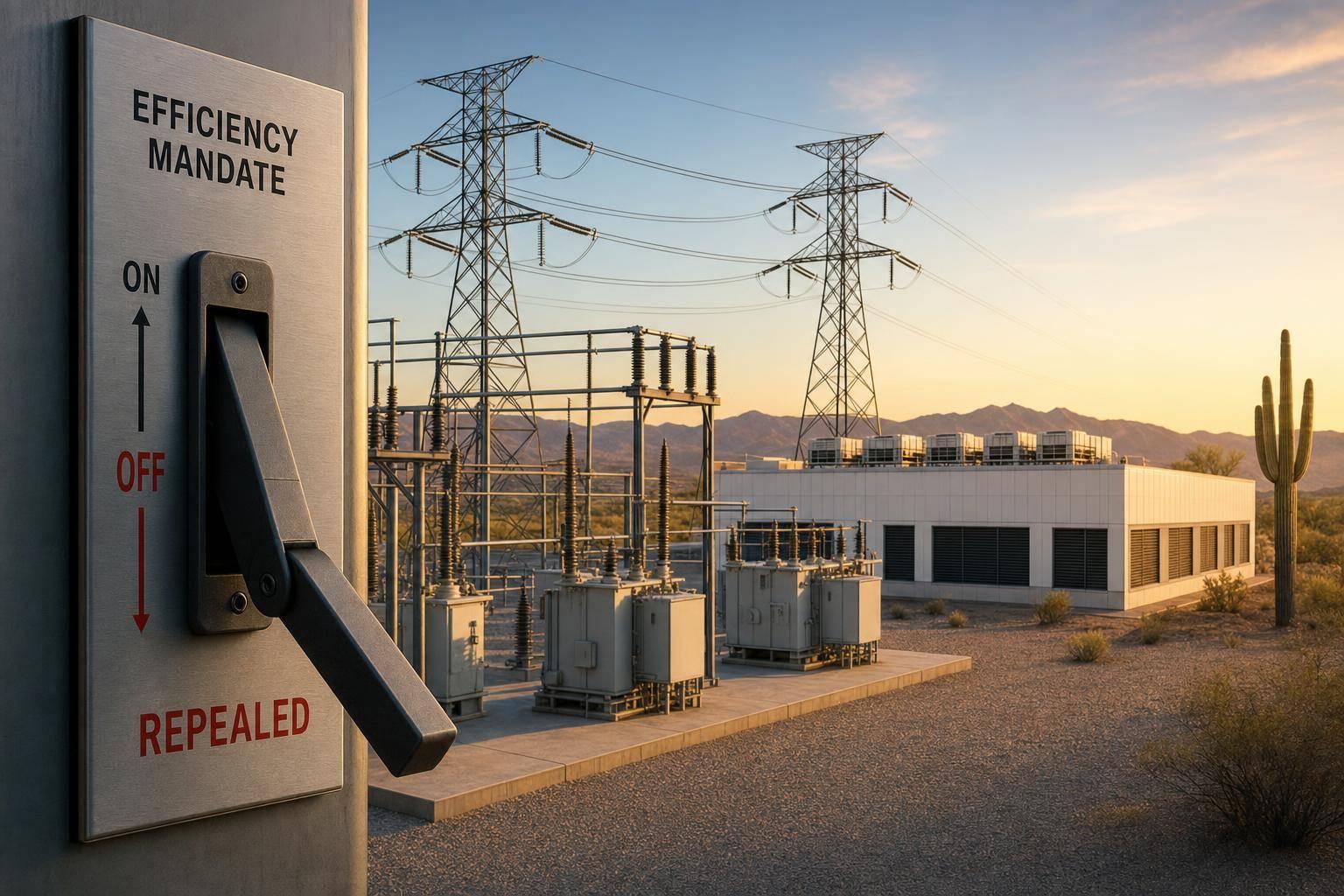
Arizona regulators have voted to repeal the state’s electric utility energy efficiency standards, ending a program that had remained on the books even though it was not updated after 2020.
The decision came from the all-Republican Arizona Corporation Commission, which said the standards no longer matched the state’s changing power demands, including growth from data centers and factories. Commissioner René Lopez said the rules were "done with the best intention" but provided diminishing returns for the over $1 billion in utility spending.
Arizona first adopted the standards in 2010. They required regulated electric utilities to achieve annual savings of at least 22 percent by 2020. Utilities used the program to encourage energy-efficient appliances, promote smart thermostats and reward customers for reducing demand during peak periods.
Commissioners said the outdated standards could create risk for utilities as they add large industrial customers. Arizona is already one of the top states for data center development, and the state’s largest electric utilities have said their load could nearly triple because of the influx of tech infrastructure in the coming decades.
"When you bring on large load customers, there’s no way to be more efficient", Lopez said at Wednesday’s commission meeting.
Data presented to the commission showed that regulated utilities and electric cooperatives had met or exceeded the standards. Arizona Public Service reached 26 percent cumulative energy savings, while Tucson Electric Power reached 28.5 percent.
Opponents of the repeal argued that the age of the rules was a reason to revise them, not remove them. Environmentalists and ratepayer advocates said efficiency programs can help lower customer bills and should be updated to reflect current grid conditions and technology.
A staff analysis of the repeal found that ending the program could result in "higher energy consumption and long-term utility bill increases" for residential customers because utilities would lose incentives to consider energy efficiency. Staff also said customers could see short-term bill benefits if surcharges used to fund statewide efficiency programs are removed.
"This is a short-sighted moment for this commission", said Will Greene, Arizona representative for the Southwest Energy Efficiency Project. "There will be plenty of opportunity in the future to bring forward the kind of performance-based efficiency and demand-side management programs that we know work, but in the short term we’re going to be reliant on utilities to do this with no requirements and no reporting."
According to the American Council for an Energy-Efficienct Economy, Arizona was one of 26 states plus the District of Columbia with utility efficiency requirements. In a February report, the group said utility efficiency programs can help meet growing grid needs at less than half the cost of new gas-fired power plants.
The debate in Arizona comes as the Trump administration has scaled back federal work on energy efficiency and clean building standards. Last week, the Department of Energy proposed changes to its energy efficiency standards program for home appliances, a move critics said could make it harder to improve equipment efficiency in the future.
Commissioners said the repeal does not prevent utilities from continuing efficiency efforts on their own. Commissioner Rachel Walden said utilities can still include demand response or efficiency in their long-range resource plans and said the commission would support measures "that don’t have a cost shift."
Under demand response programs, utilities pay customers to reduce electricity use when the grid is strained, such as homeowners lowering air conditioning use or data centers reducing activity. Walden also said too many benefits from efficiency spending had gone to wealthy households that could afford to replace appliances or comply with building codes.
In a statement, Tucson Electric Power spokesperson Joe Barrios said "energy efficiency and demand response remain part of our resource planning process."
Barrios said the utility will keep funding previously approved programs and that "TEP will continue to evaluate the cost-effectiveness of measures that can provide benefits to customers and our local energy grid."
A spokesperson for Arizona Public Service did not immediately respond to a request for comment Wednesday, though the utility has previously told the commission it would continue to offer efficiency programs.
The vote adds to a broader rollback of power-sector mandates by the Arizona Corporation Commission. In March, the commission unanimously repealed renewable energy standards adopted in 2006.
"This Arizona Corporation Commission continues to eliminate every possible tool we have to keep energy affordable in Arizona", said DJ Portugal, organizing director at the Chispa Arizona grassroots organization, in a statement. "This commission is clearly looking out for the interests of greedy electricity companies, while leaving Arizonans to drown in expensive light bills.


